
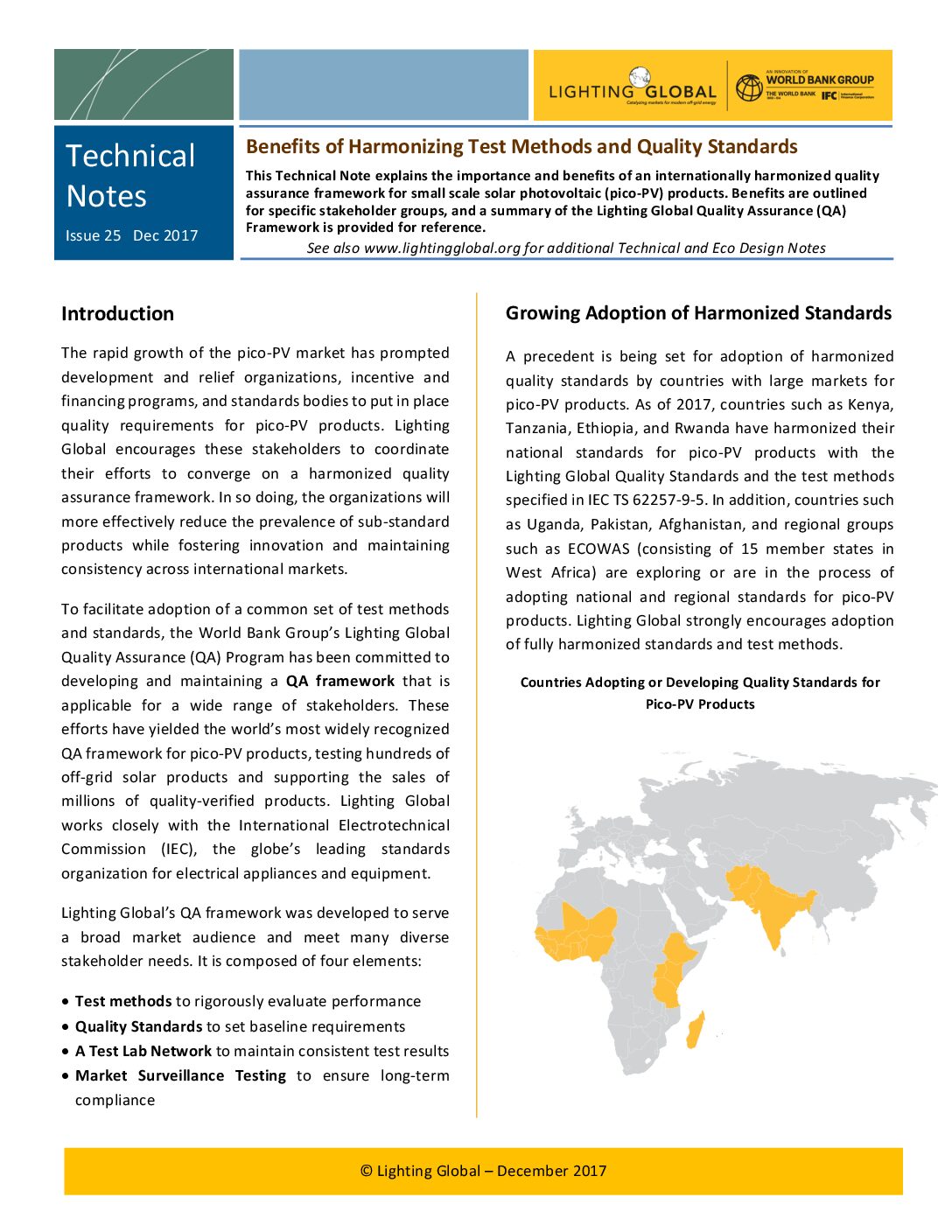
This brief explains the importance and benefits of an internationally harmonized quality assurance framework for small scale solar photovoltaic (pico-PV) products. Benefits are outlined for specific stakeholder groups, and a summary of the Lighting Global Quality Assurance (QA) Framework is provided for reference.
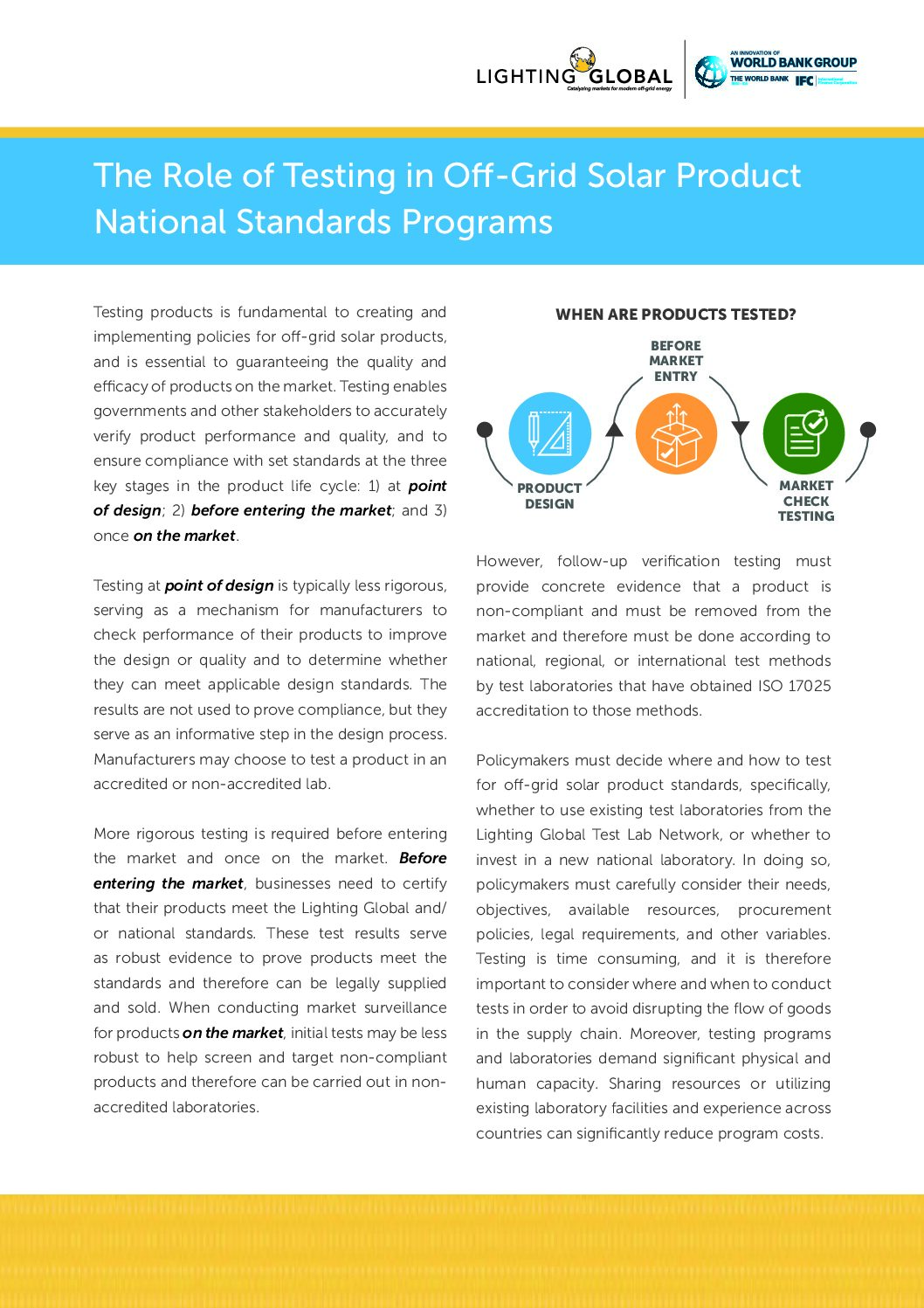
This brief explains the role of product testing in standard-setting for off-grid solar products. It provides recommendations based on good practices and explains how the Lighting Global Quality Assurance Program can help governments implement and enforce standards.
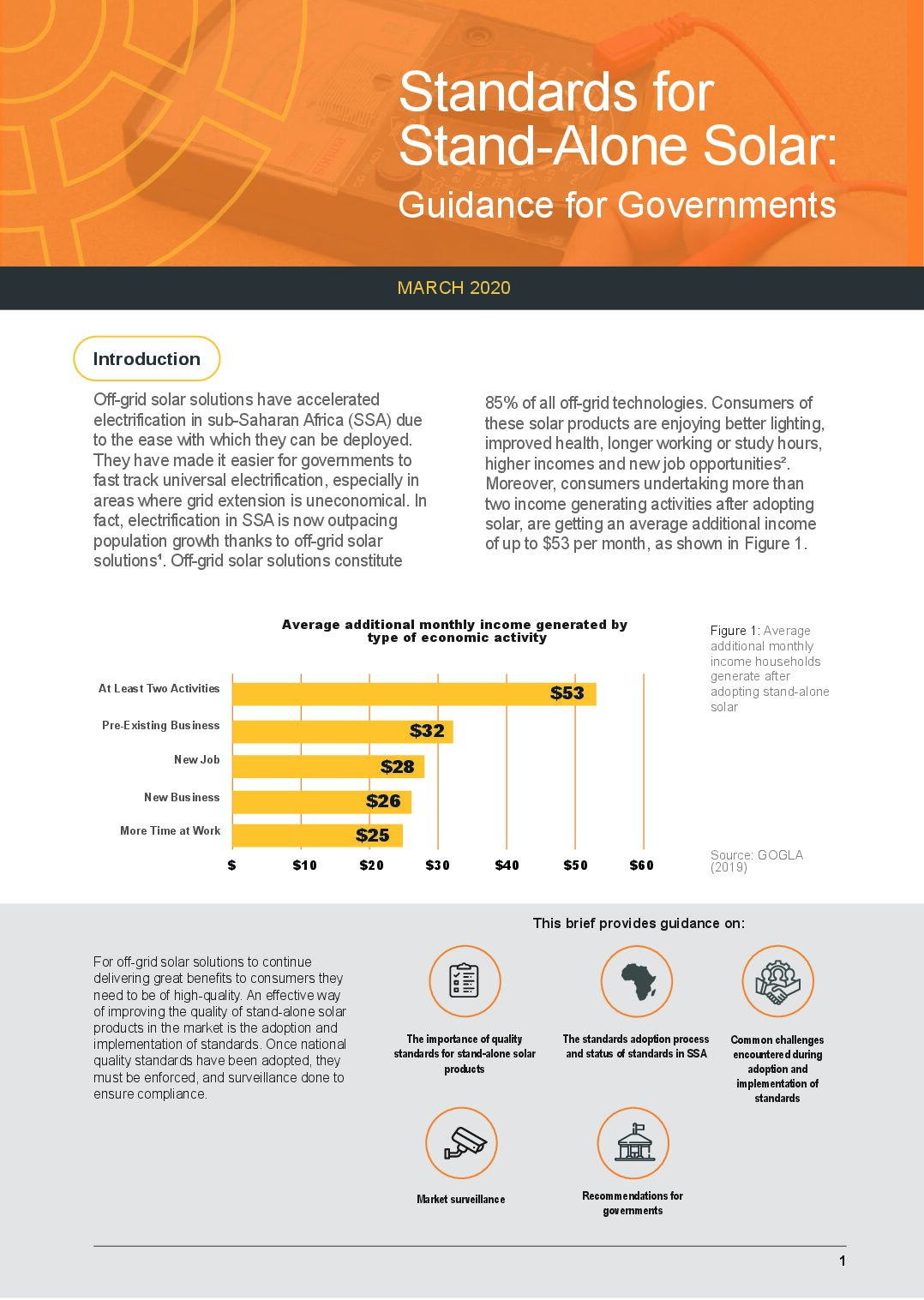
This policy brief provides guidance on the importance of quality standards for stand-alone solar products; how to develop and adopt standards, and the current status in Africa; common challenges encountered in this process; and market surveillance; as well as recommendations for governments.
This explainer by the German Heinrich Böll Foundation provides a quick overview of green hydrogen, the way it is produced, the role it can play in the energy transition, and the main challenges.
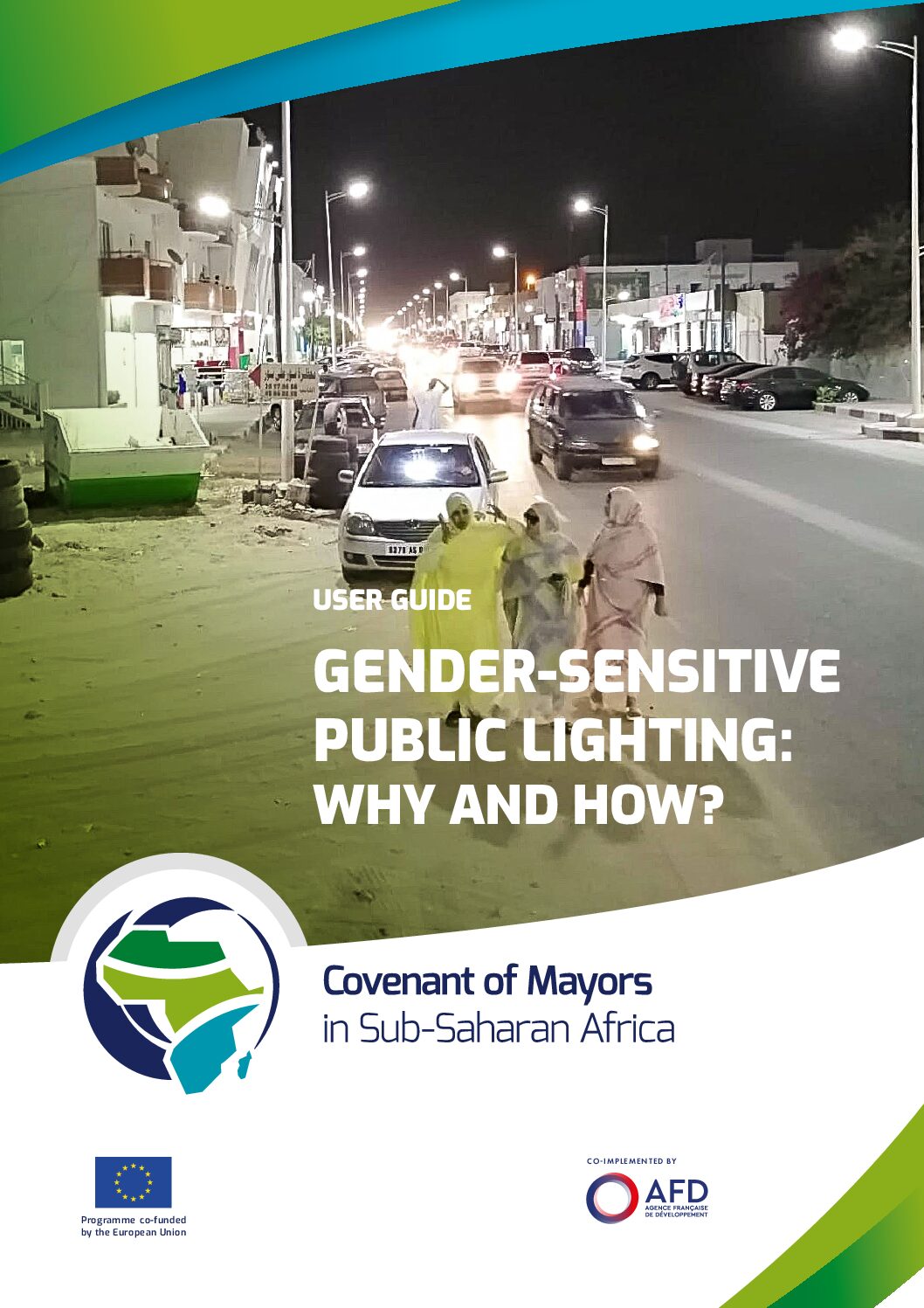
This guide by the Covenant of Mayors of Sub-Saharan Africa shows that urban planning tends to be gender blind, with the design of urban street lighting as a key example. It provides a manual, aimed at African cities, on how to develop gender-responsive public lighting projects. English: https://comssa.org/download/rxeWs6zcOXbTl8qRidGZ9nCB7EFAI4Pa/Gender-sensitive-public-lighting.pdf French: https://comssa.org/download/U3kjdTBHqV6FGKfoI71EgLY2wZrSvtz8/Eclairage-public-sensible-au-genre.pdf
This report explores ways to identify and mitigate energy transition investment risks in the low- and middle-income countries, pointing out 1) that better energy planning can attract greater investment in renewable energy, 2) that sustainable fuels will play an important role in delivering the energy transition, and 3) that the social dimensions of the transition … Continue reading “A Just and Inclusive Energy Transition in Emerging Markets and Developing Economies: Energy Planning, Financing, Sustainable Fuels and Social Dimensions”
This article explores how system planning, and in particular assessments of system adequacy, will need to innovate and evolve to allow power systems to keep delivering secure and affordable electricity supply during energy transitions.
This report examines the critical role of modeling for transmission planning for energy transitions.
This report challenges the prevailing narrative that green hydrogen is primarily a product for export from renewable-rich and industry-poor countries; rather, it underscores green hydrogen’s potential as a catalyst for sustainable development within developing countries that can contribute to economic growth, environmental sustainability and social progress.
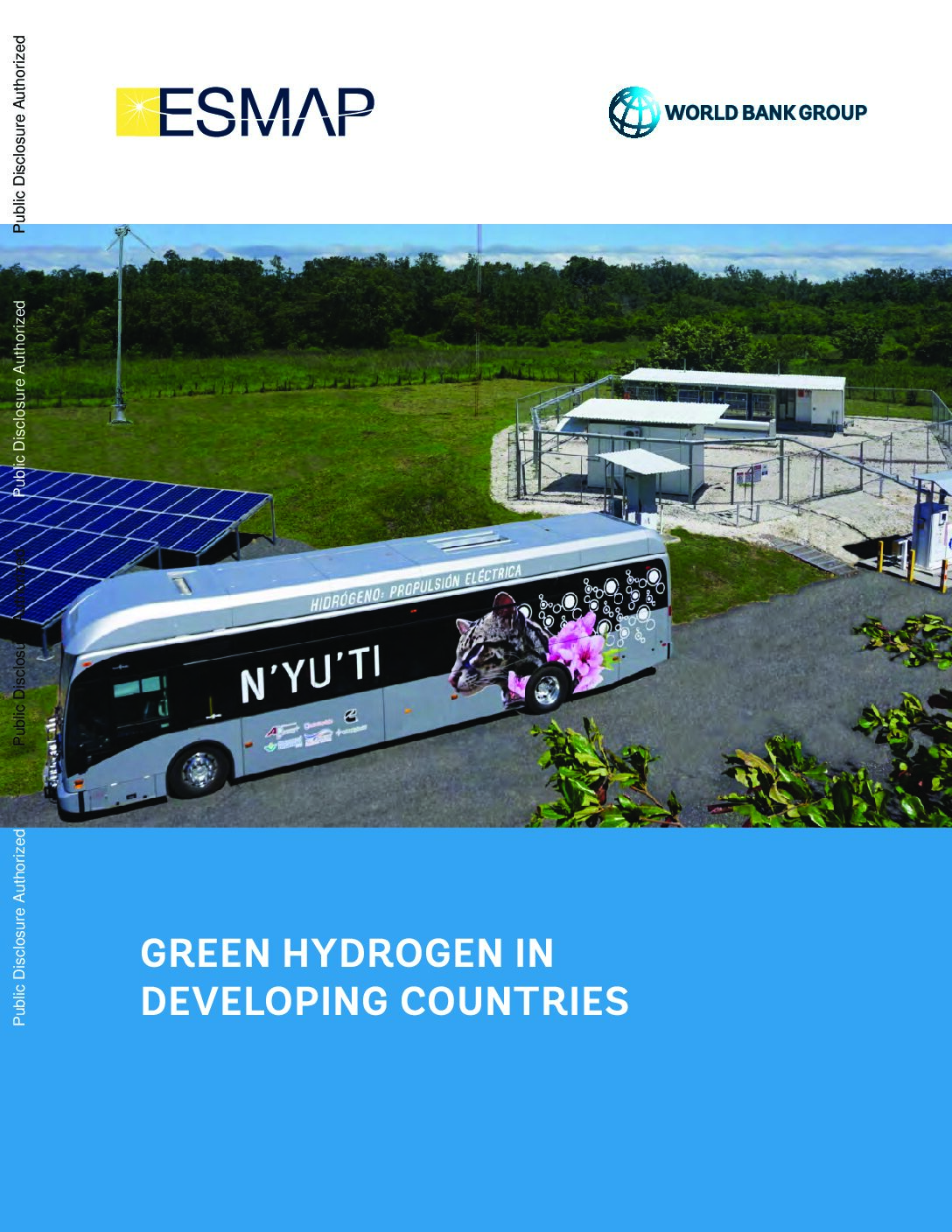
This report focuses on how green hydrogen and fuel cell technologies could be initially rolled out in developing countries by presenting a series of applications that could be initially deployed in some locations and later scaled up.