
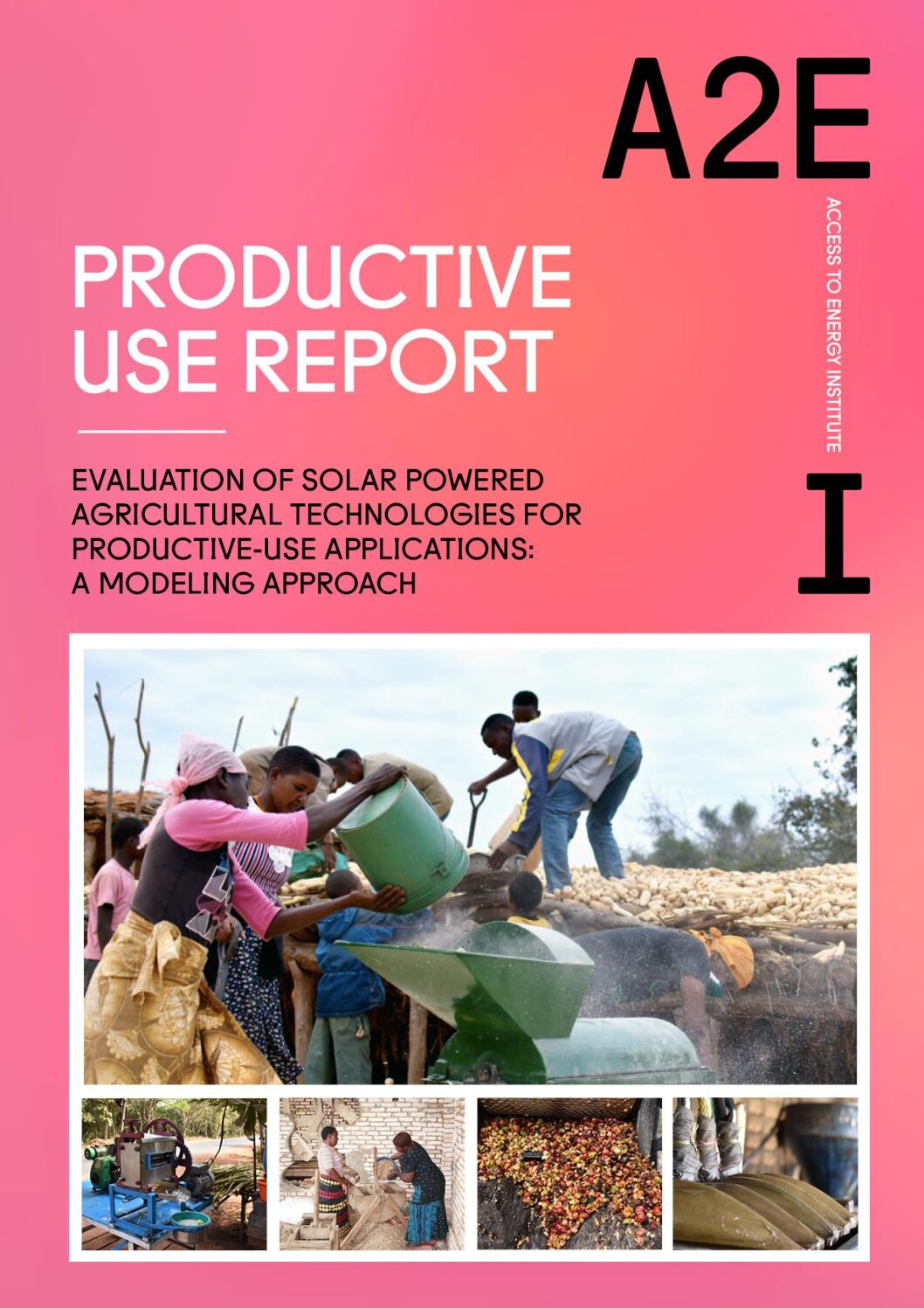
This report uses economic modelling to investigate the viability of ten different productive use applications of solar power in agriculture (oil extraction, maize shelling, rice hulling, fruit juice making, sugar cane juicing, fruit drying, flour milling, peanut shelling and coffee pulping). It investigates each technology in detail and then calculates the profits and other benefits … Continue reading “Productive Use Report – Evaluation of solar-powered agricultural technologies for productive-use applications: A modelling approach”
This brief report introduces the concept of the WEF nexus and explains how the FAO has applied the nexus approach in its work, with many case study examples.
This webpage provides an introduction to smart grids, an overview of recent progress and recommendations for governments and utilities.
This toolkit presents a glossary and a list of useful resources on the water-energy-food nexus.
The Global Innovation Hub aims to promote transformative innovations for a low-emission and climate-resilient future.
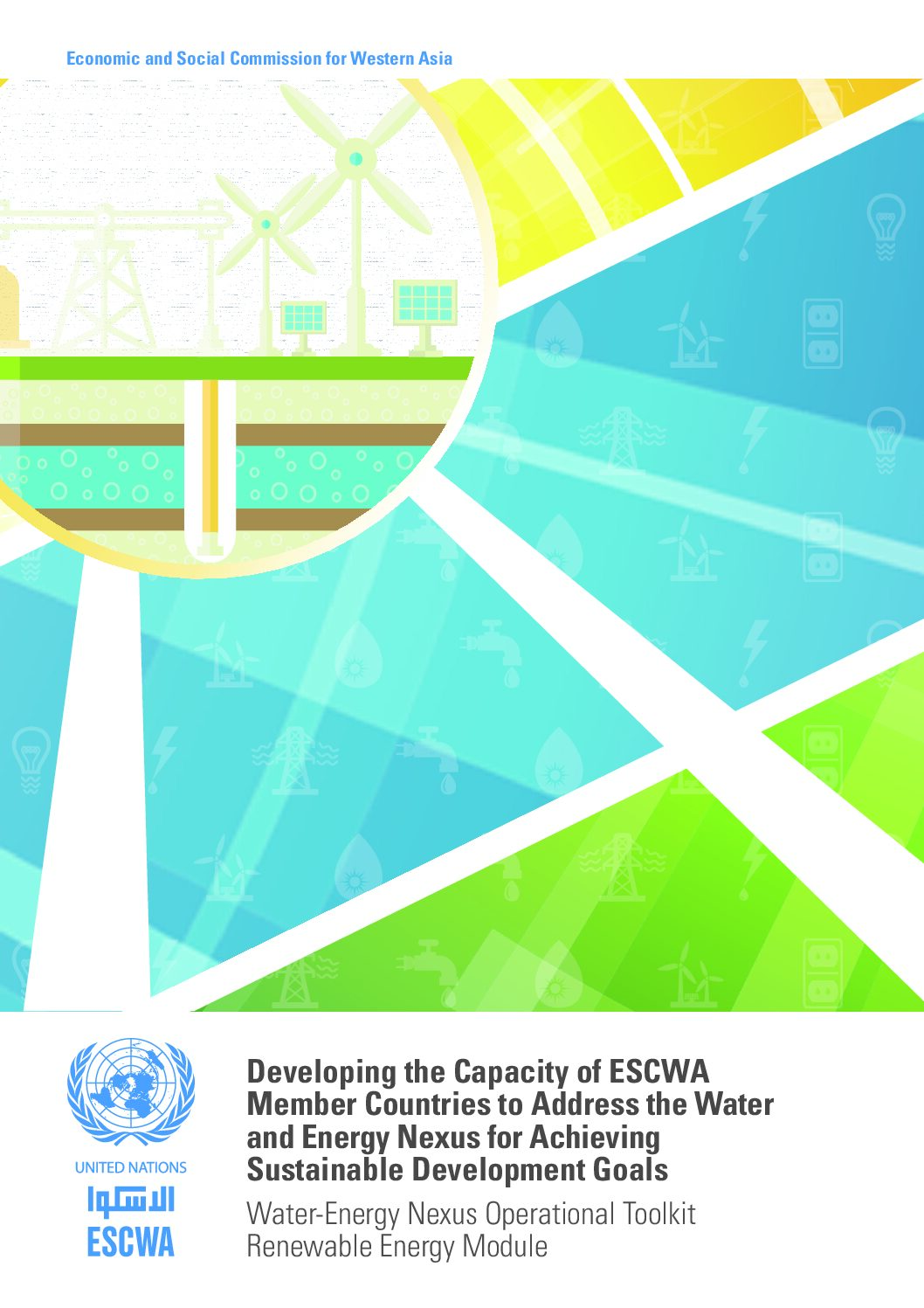
This is a training module on the nexus between renewable energy and water management.
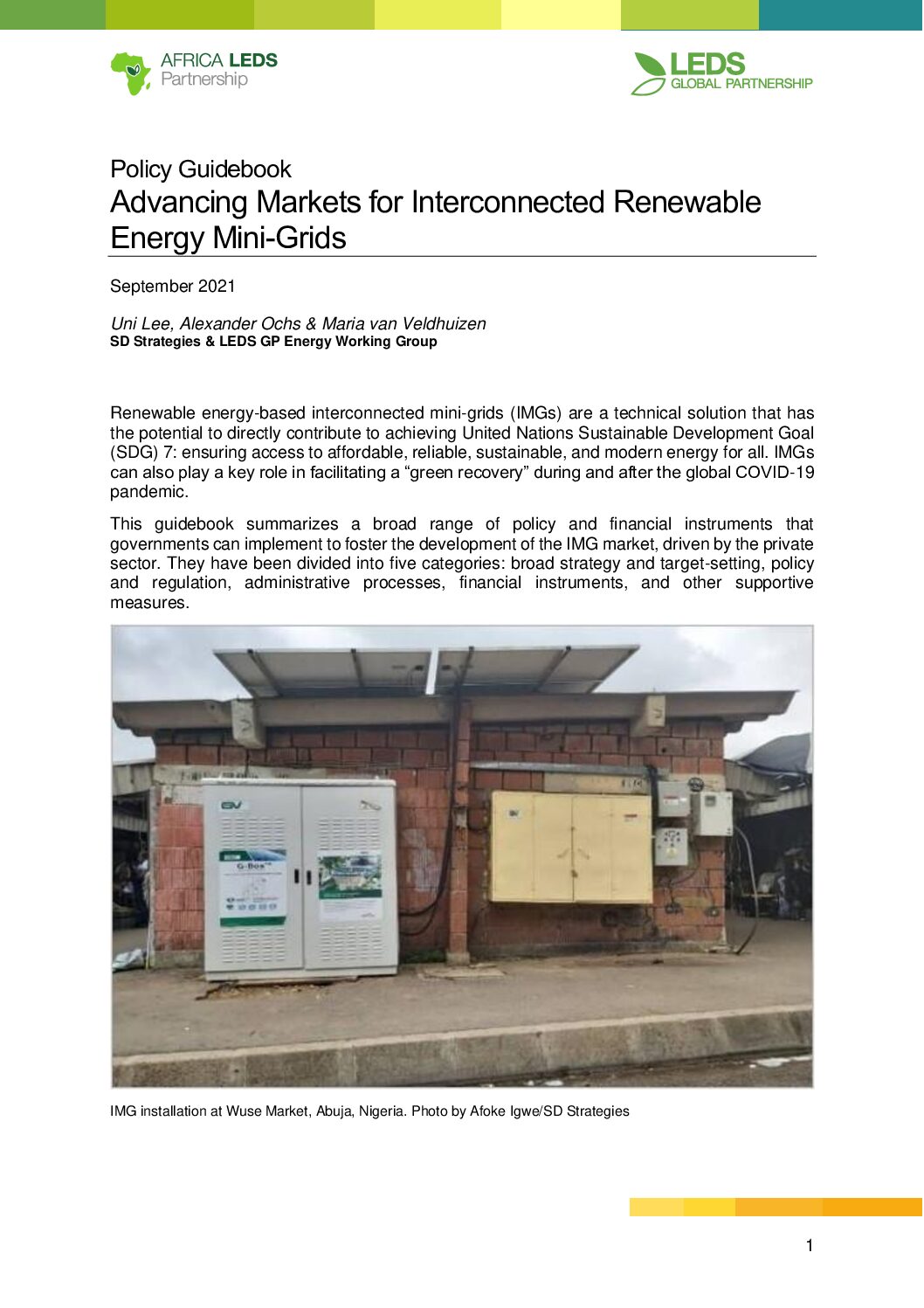
This guidebook summarizes a broad range of policy and financial instruments that governments can implement to foster the development of the interconnected mini-grid market, driven by the private sector.
This article explores how system planning, and in particular assessments of system adequacy, will need to innovate and evolve to allow power systems to keep delivering secure and affordable electricity supply during energy transitions.
This database presents the current status, policy barriers, and key innovations for electrification of mobility, heating and cooling, and hydrogen production.
This report explores the critical intersections of AI development, gender equality and energy transitions, emphasizing how AI applications can advance a sustainable, equitable and just energy transition.