
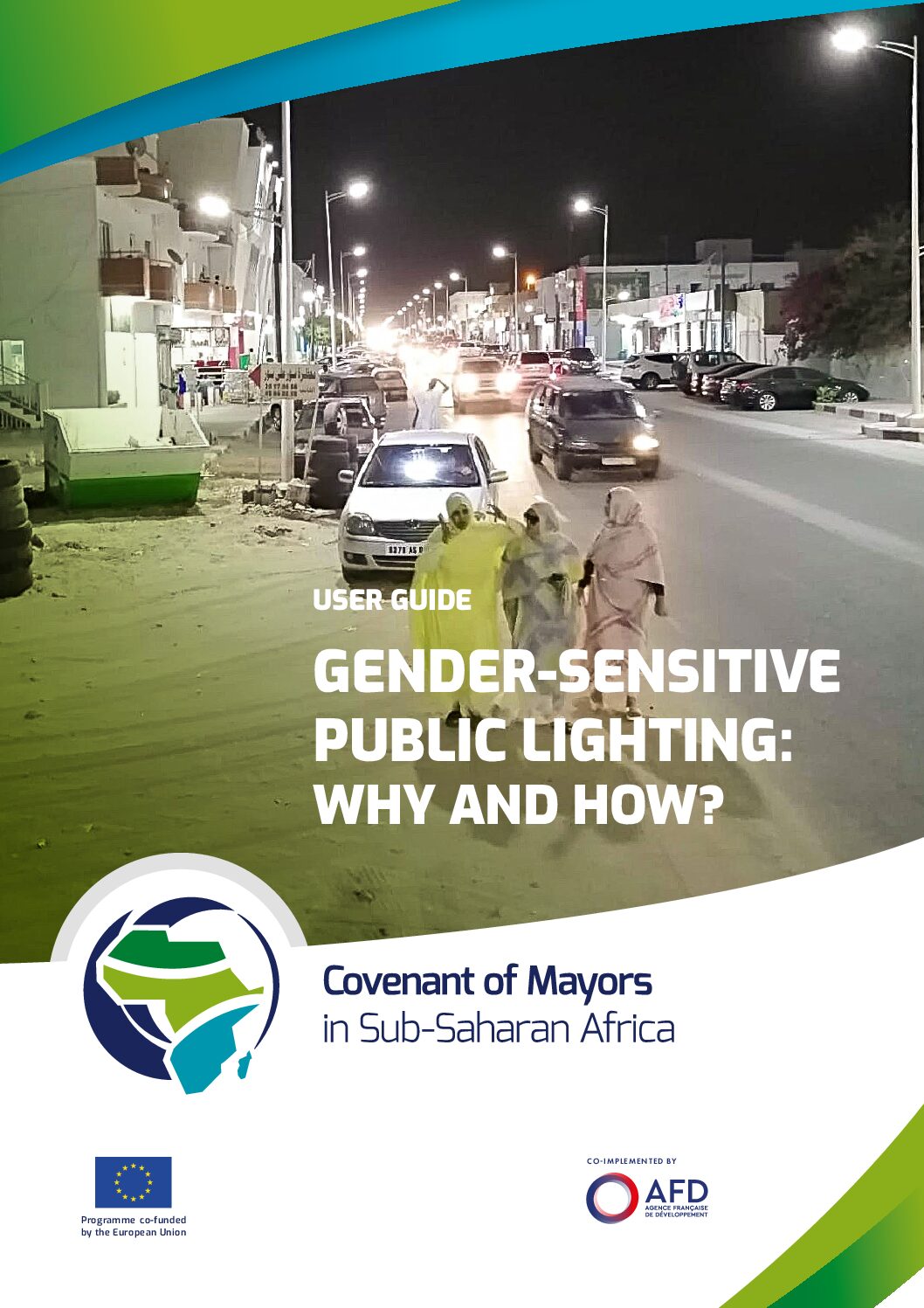
This guide by the Covenant of Mayors of Sub-Saharan Africa shows that urban planning tends to be gender blind, with the design of urban street lighting as a key example. It provides a manual, aimed at African cities, on how to develop gender-responsive public lighting projects. English: https://comssa.org/download/rxeWs6zcOXbTl8qRidGZ9nCB7EFAI4Pa/Gender-sensitive-public-lighting.pdf French: https://comssa.org/download/U3kjdTBHqV6FGKfoI71EgLY2wZrSvtz8/Eclairage-public-sensible-au-genre.pdf
This website contains a range of learning resources on Integrated Resource Planning (a methodology for least-cost planning by public utilities), including load forecasting, tariff policies, amd demand side management. It also includes exercises and case studies.
This report identifies and analyses key risks and barriers to private-sector investment in interconnected mini-grids in Nigeria, and evaluates policy and financial instruments designed to address them.
This plan provides a comprehensive, forward-looking least-cost plan for the development of the country’s power sector, including both on-grid and off-grid.
This study critically assesses the policy and regulatory frameworks for the digitalisation of energy systems in support of energy transitions in Nigeria and South Africa.
This step-by-step guide suggests the key elements that municipal officials need to consider to implement clean energy/energy efficiency projects in waterworks or other municipal operations. It provides information on developing strategies, formulating plans, providing adequate capacity and mobilising resources for successful origination and implementation of a project.
Water infrastructure is among the biggest users of electricity in many municipalities. This policy brief makes recommendations to government (national, provincial and local) for cleaner energy (renewable energy and energy efficiency) policies related to municipal waterworks and their operations.