
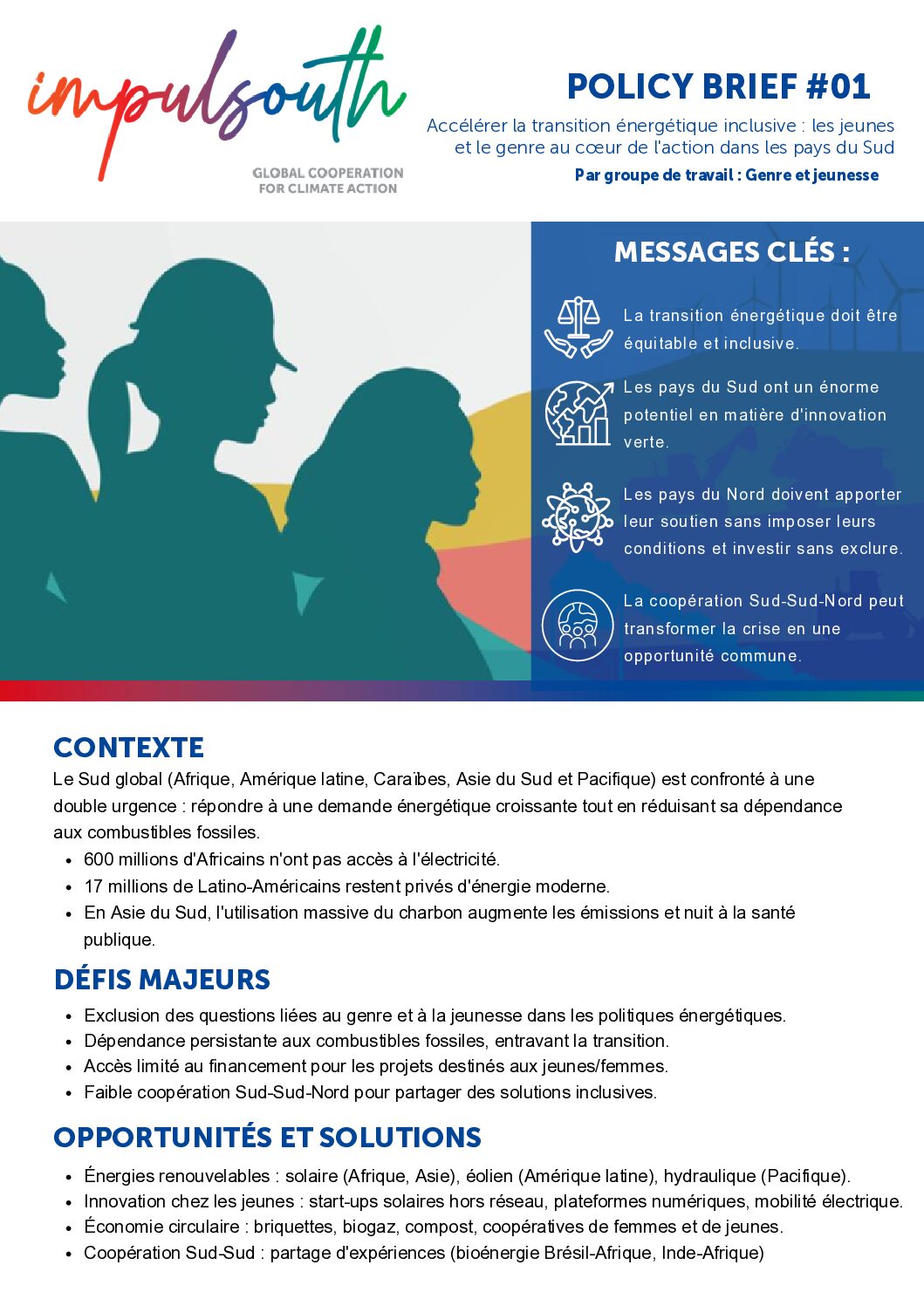
Cette ressource a été élaborée par les membres du groupe de travail « Genre et jeunesse », qui fait partie de la communauté de pratique d’Impulsouth.
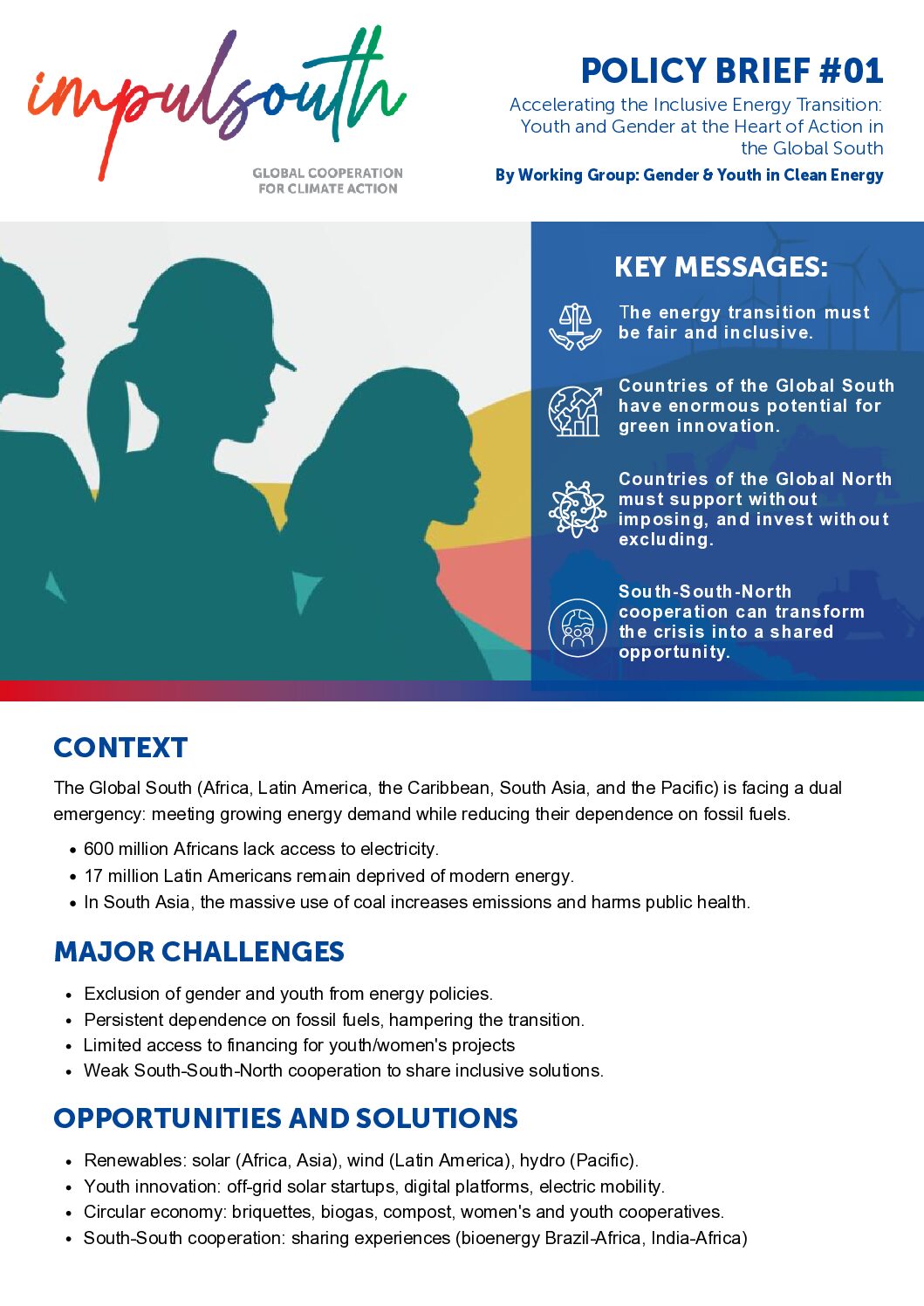
This resource was developed by members of the Working Group on Gender & Youth in Clean Energy, within Impulsouth’s Community of Practice.
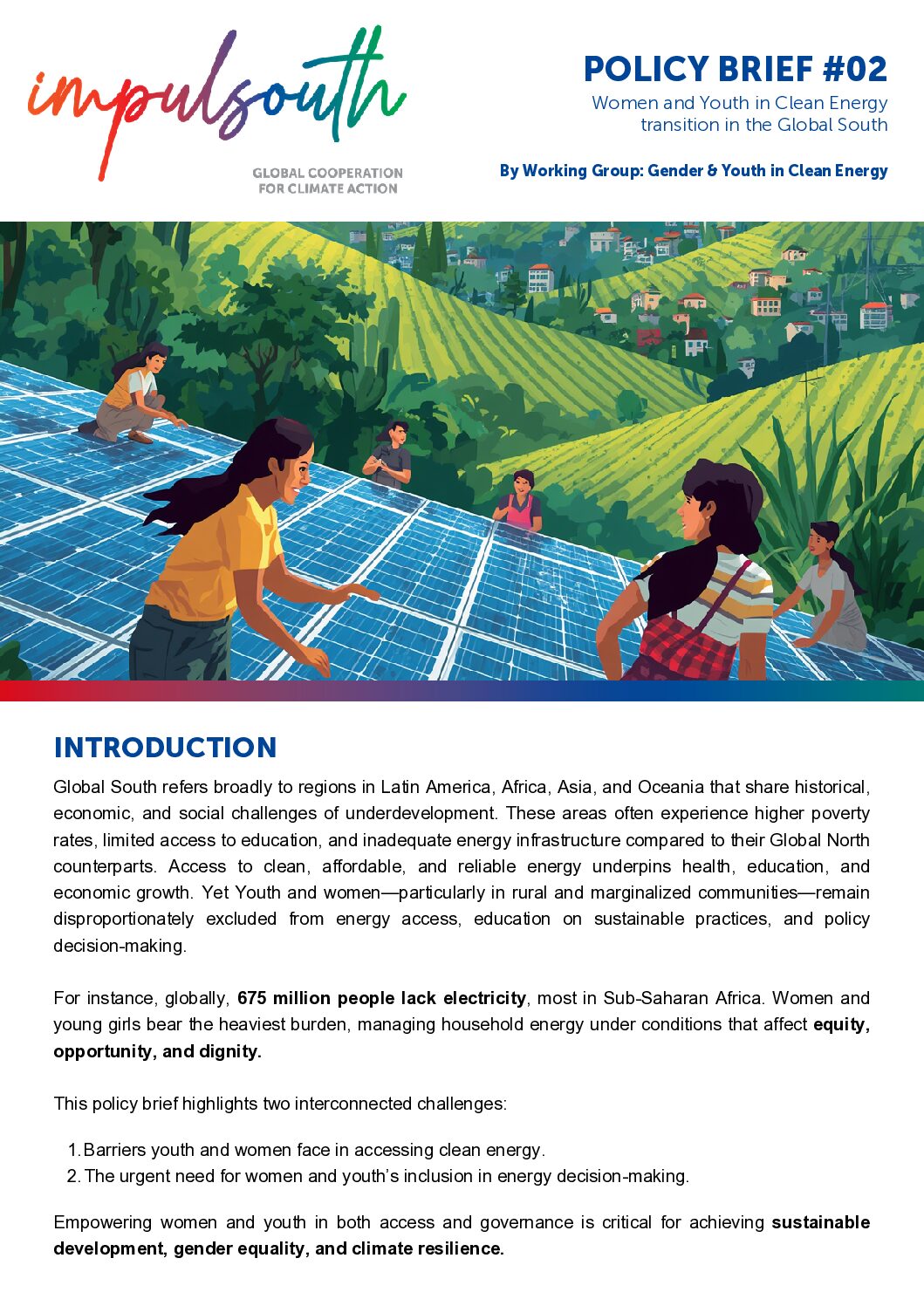
This resource was developed by members of the Working Group on Gender & Youth in Clean Energy, within Impulsouth’s Community of Practice.
This article announces the adoption of harmonised minimum energy performance standards for air conditioners and refrigerators in the 16 member countries of the Southern African Development Community (SADC). It also explains the process by which these harmonised standards were developed and adopted.
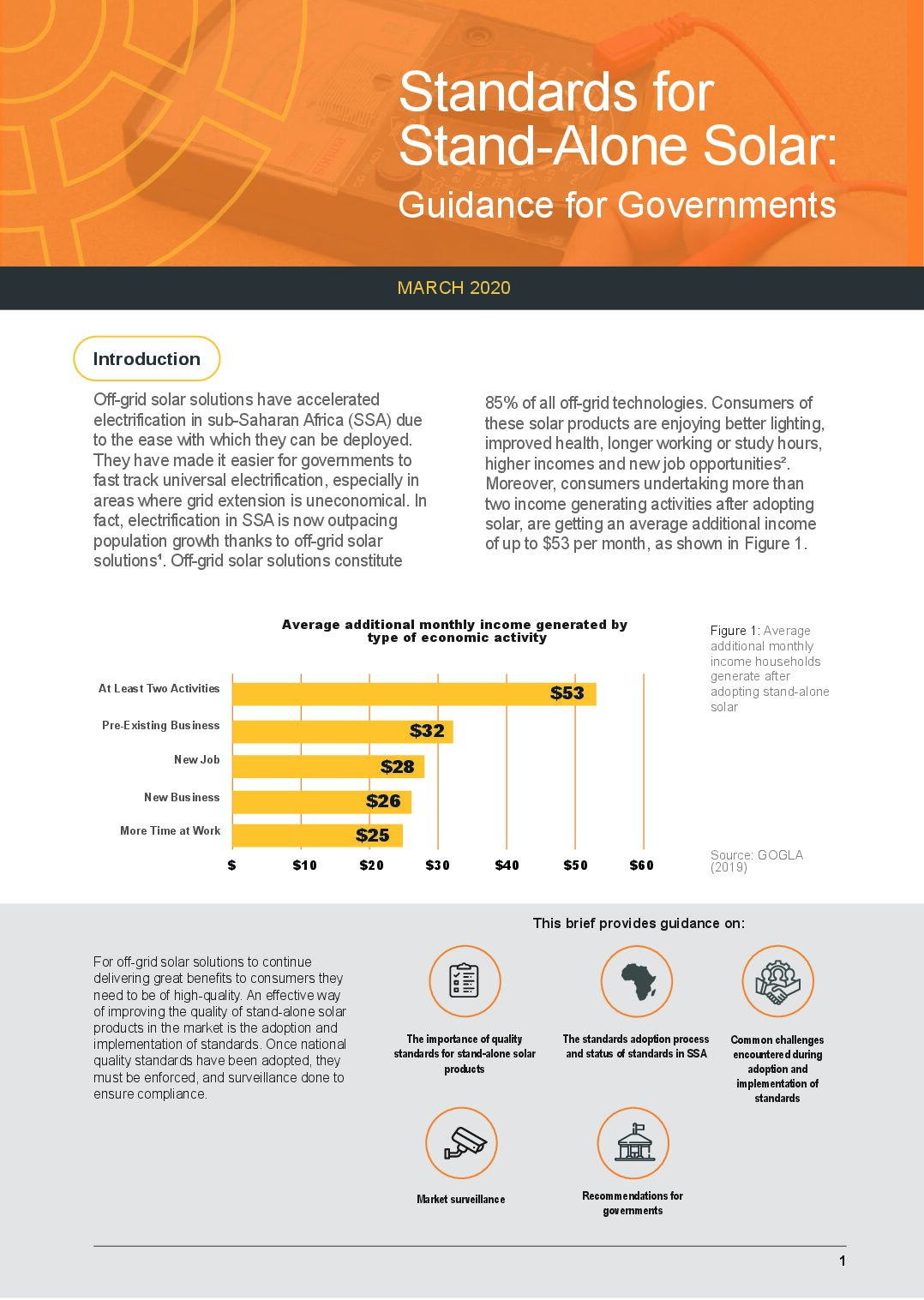
This policy brief provides guidance on the importance of quality standards for stand-alone solar products; how to develop and adopt standards, and the current status in Africa; common challenges encountered in this process; and market surveillance; as well as recommendations for governments.
This study explores the impact of energy poverty on the health gap between men and women in Ghana, showing that, especially in households suffering from energy poverty, women report significantly worse health than men.
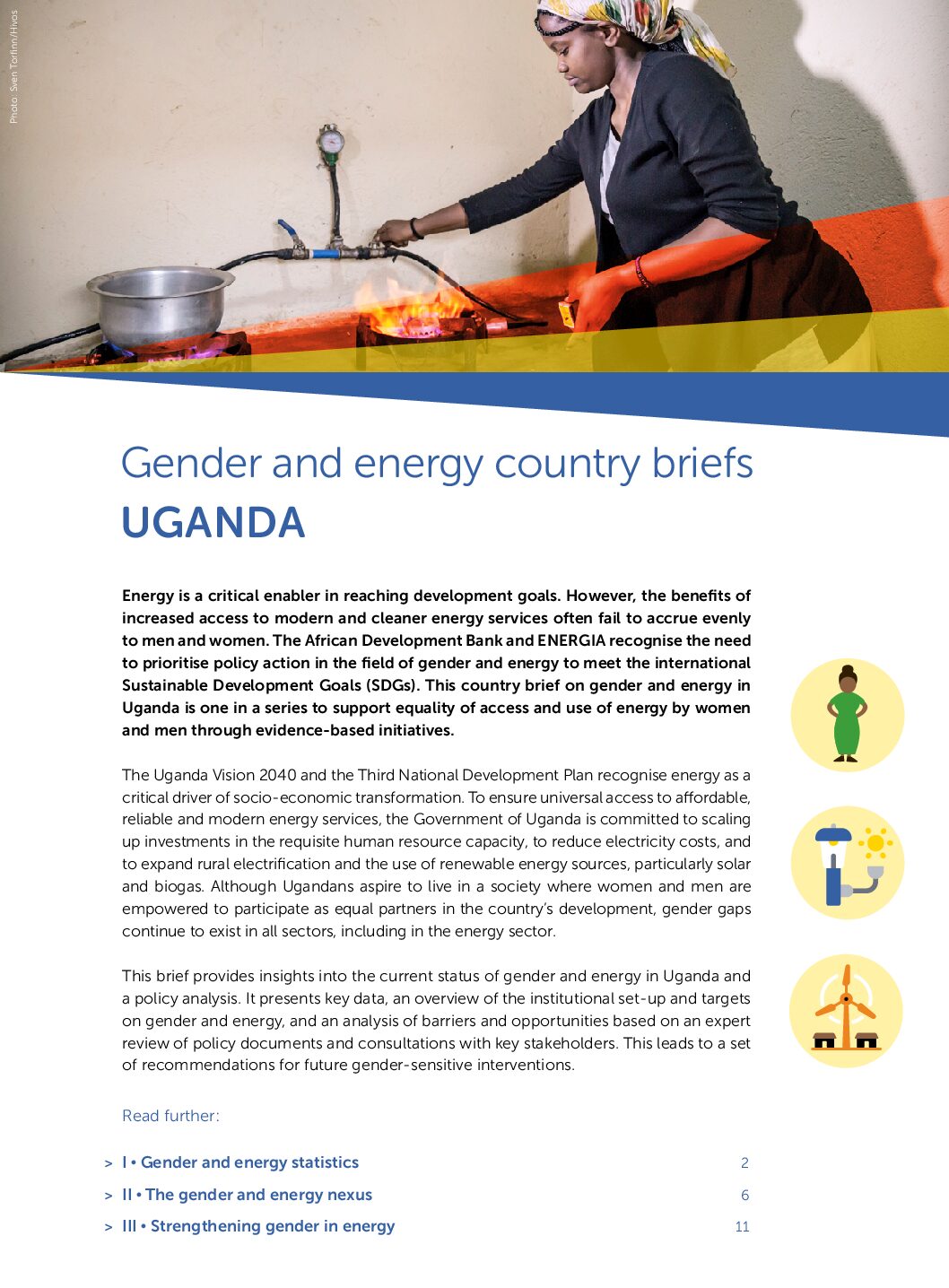
This brief provides statistics about gender and energy in Uganda, as well as an analysis of relevant policies and recommendations to further close gender gaps.
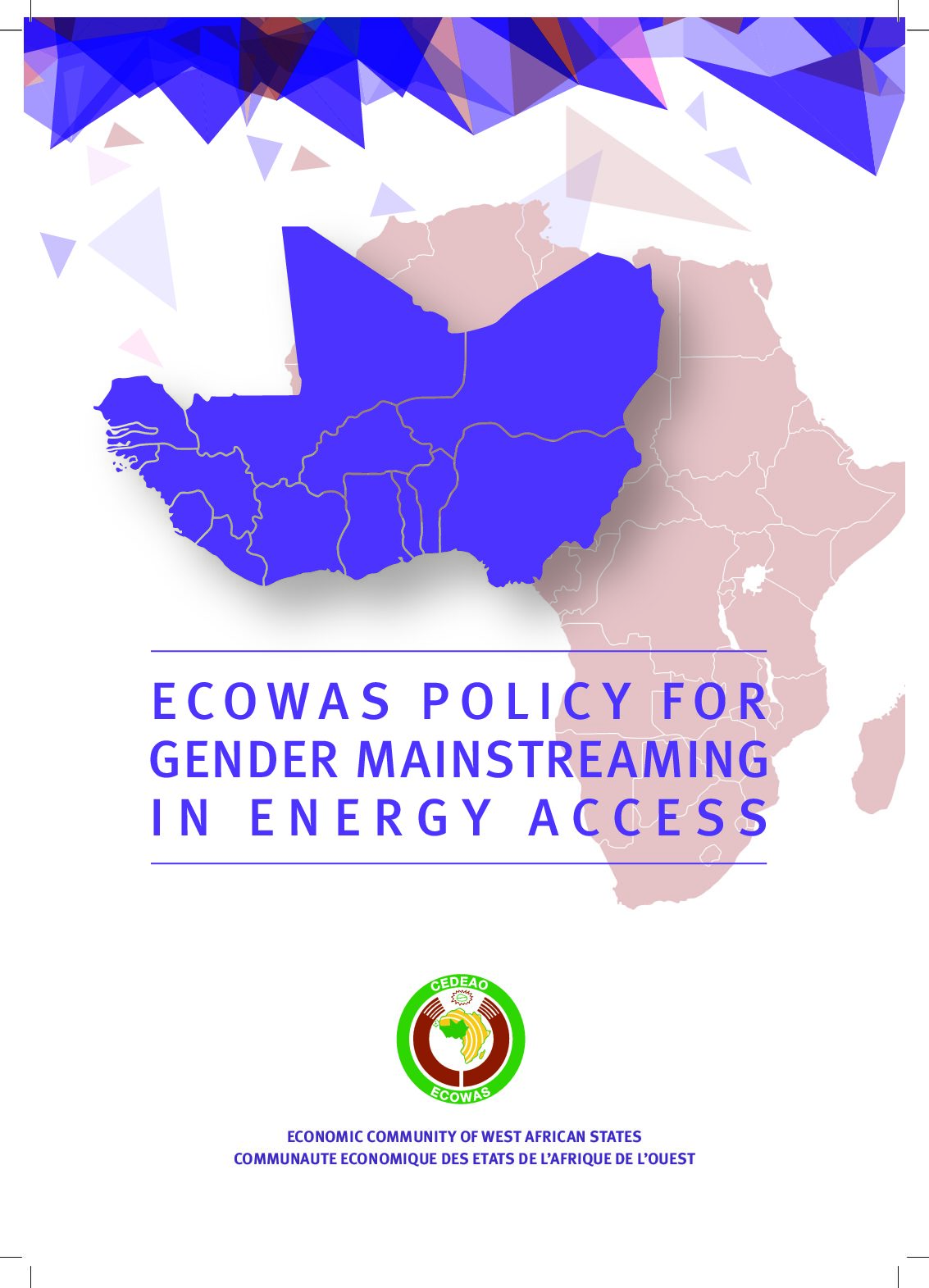
This is a good practice example of a regional policy that mainstreams gender equality concerns in energy access policies and programmes.
This article investigates the benefits to women of electricity access, beyond just economic benefits.
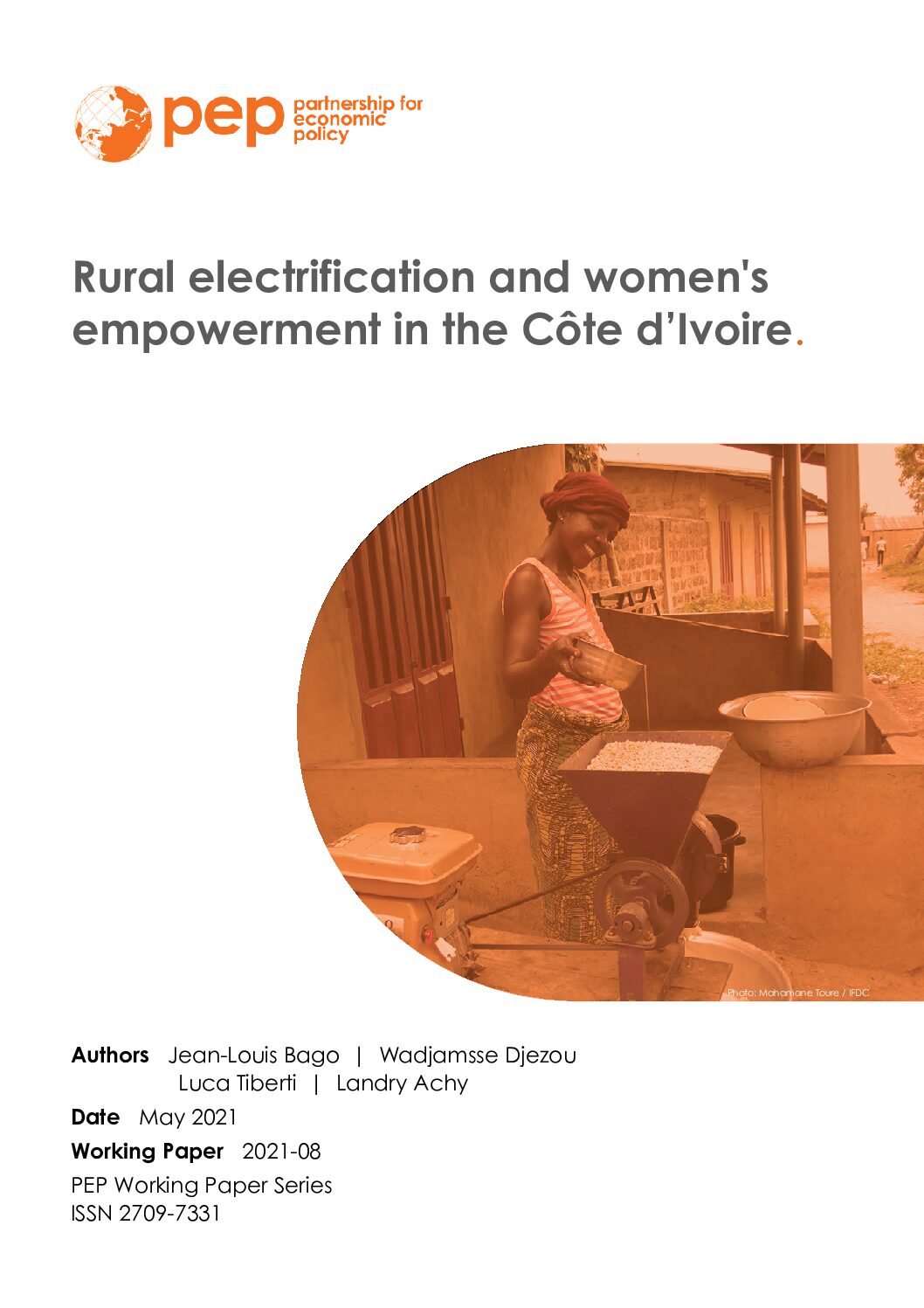
This report assesses the impact of the Ivorian National Rural Electrification Programme on the lives and empowerment of rural women.