
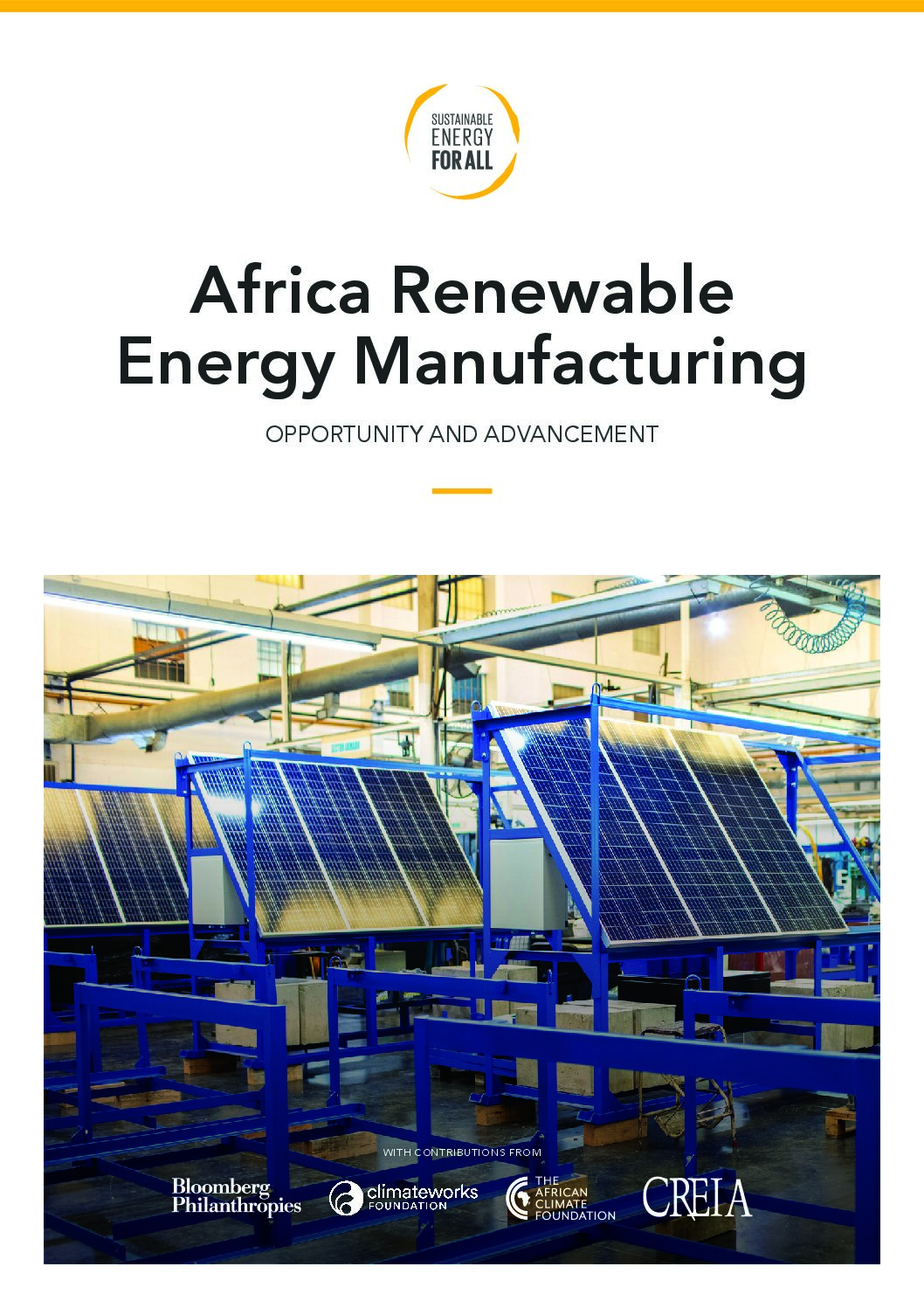
This report identifies opportunities for and barriers to renewable energy component manufacturing in African countries, and proposes interventions to accelerate investment in the space.
This guide addresses the challenges faced by rural energy enterprises in developing countries, and sets out solutions such as business models offering cooking energy as a service.
This action plan, developed with support from ECREEE, lays out the bioenergy strategy of Côte d’Ivoire for 2021-2030. It includes an extensive background and context section, as well as strategic priorities and measures to promote these.
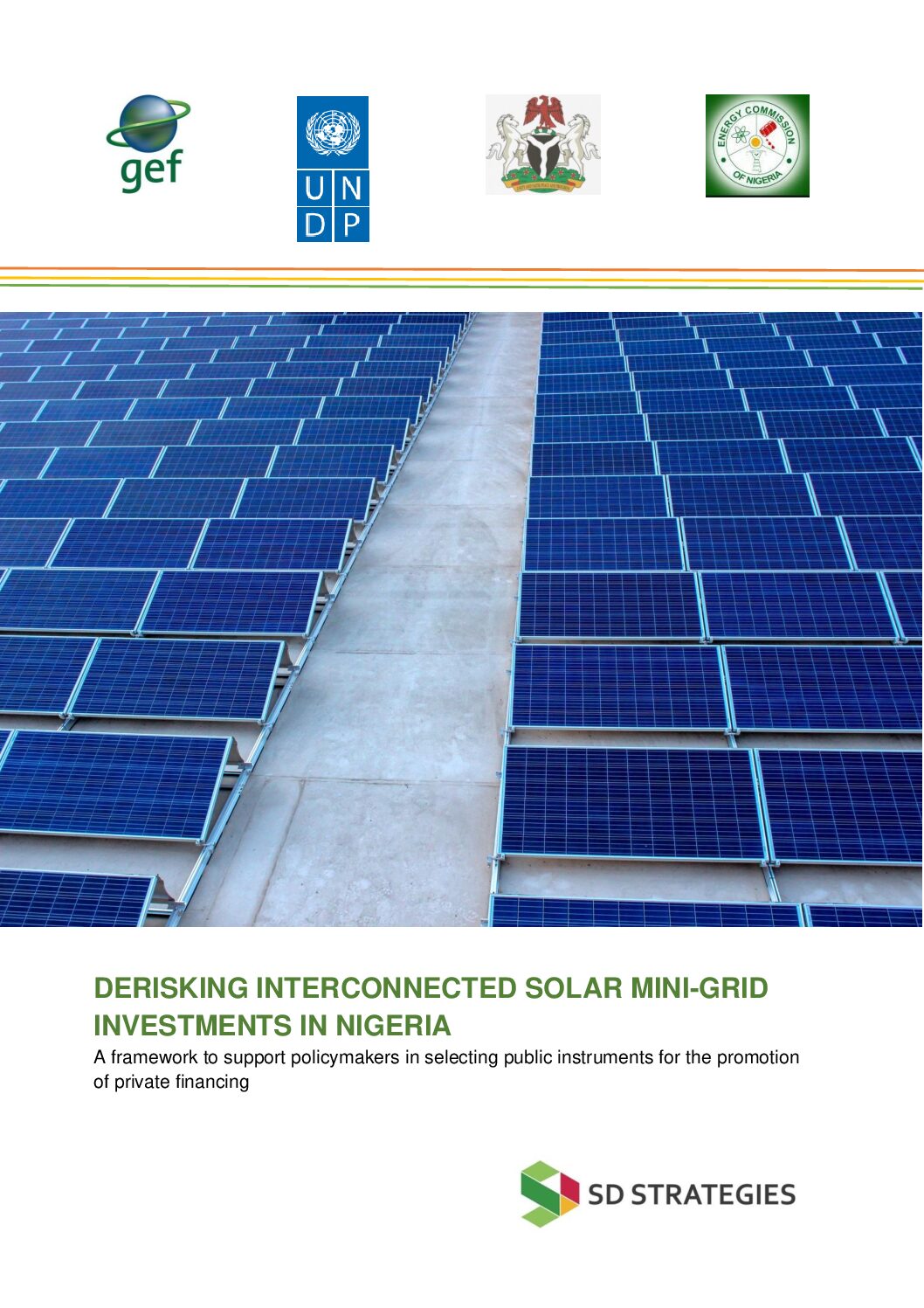
This report identifies and analyses key risks and barriers to private-sector investment in interconnected mini-grids in Nigeria, and evaluates policy and financial instruments designed to address them.
This report describes regulatory barriers reported by 25 ESCO associations, and offers advice to policymakers to address these barriers.
The goal of this market guide is to serve as a reference document for early exploration of the market for energy service companies in Uganda (ESCOs) with a focus on energy and cost savings for agri-food processing companies.
This memo describes the current market for ESCOs in Uganda, barriers to the growth of the sector, and strategies to address these barriers.
This web page describes the concept of a Super ESCO, a facility usually established by governments to play the role of a market catalyzer, kickstarting a market for ESCOs.
This paper presents the results of a techno-economic study of a potential waste-to-energy plant in Kampala, Uganda, including modeling to project energy generation potential and the payback period for the initial investment.
This brief presents the regulatory framework and country context for waste-to-energy projects in Côte d’Ivoire.