
This report highlights the problem cost of capital poses for the energy transition in low- and middle-income countries, and highlights promising solutions.
This second edition from 2025 provides an update to the landmark report from 2019, based on a new survey of 1192 individuals working in the sector, and 233 companies and organizations. The headline finding was that despite widespread efforts, the share of women in renewable energy has not grown over the past six years: it … Continue reading “Renewable energy: A gender perspective (Second edition)”
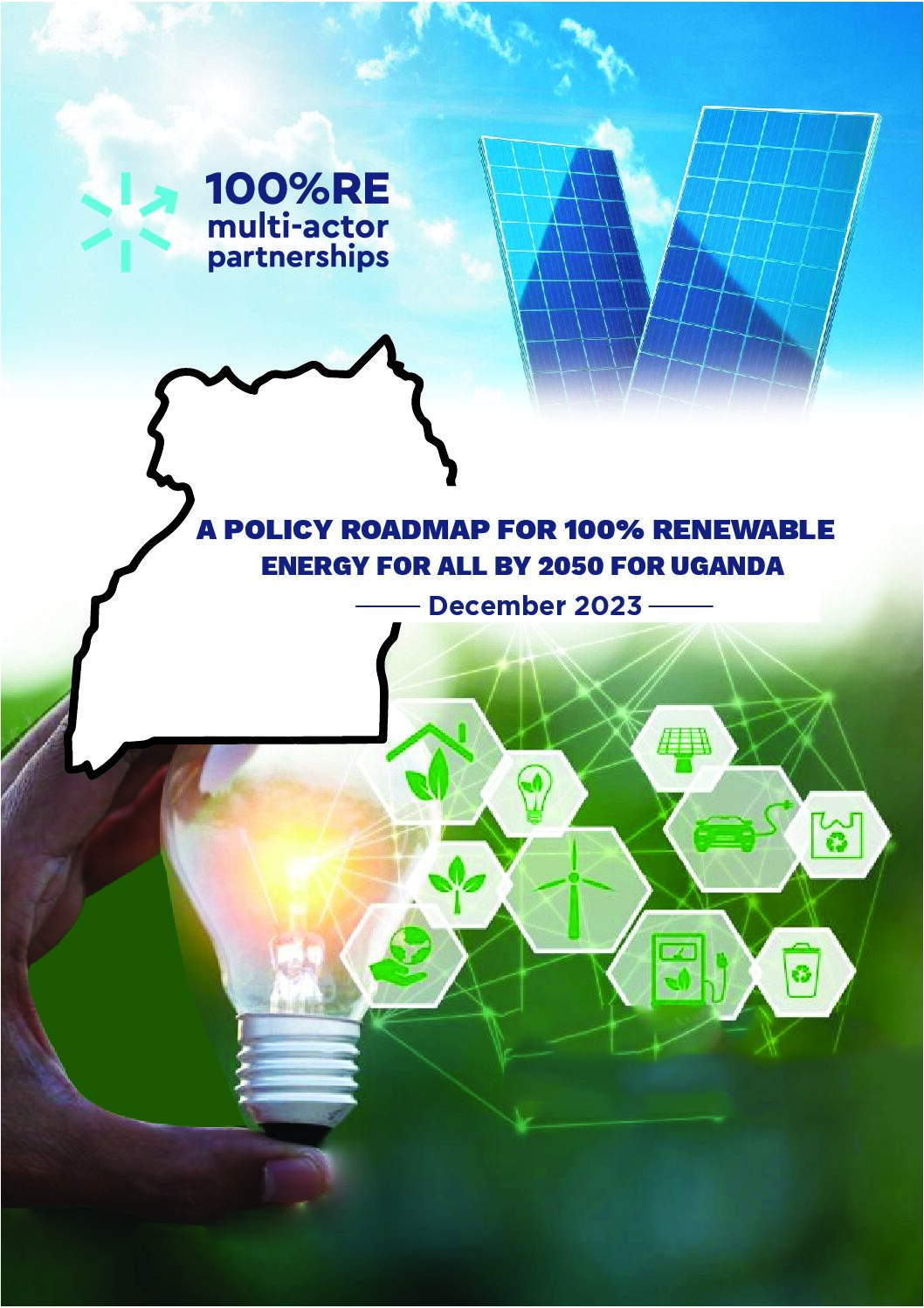
This is an example of an energy transition roadmap for Uganda. It explores different renewable energy scenarios and identifies the actions, investments and policies that are required to make these reality.
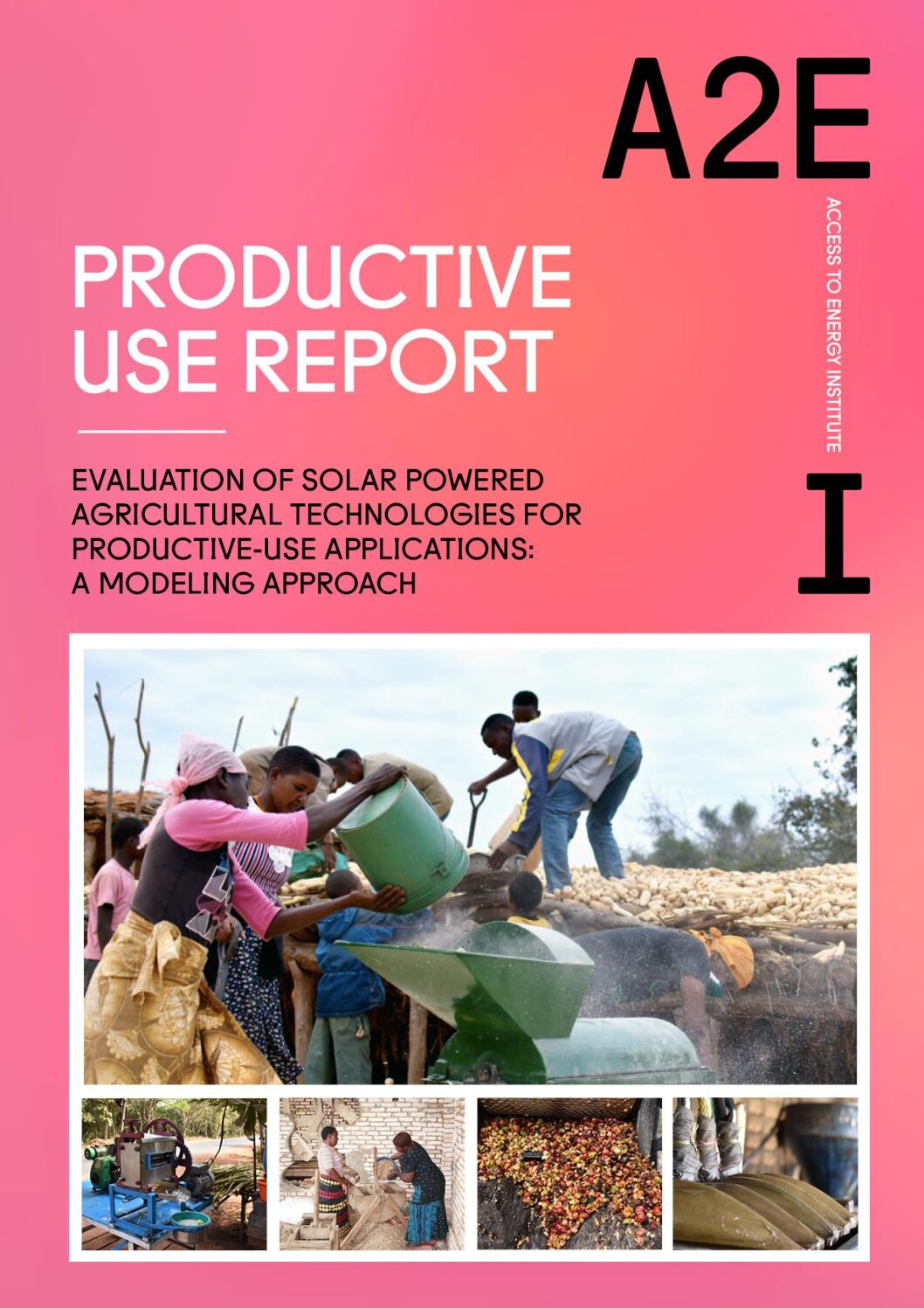
This report uses economic modelling to investigate the viability of ten different productive use applications of solar power in agriculture (oil extraction, maize shelling, rice hulling, fruit juice making, sugar cane juicing, fruit drying, flour milling, peanut shelling and coffee pulping). It investigates each technology in detail and then calculates the profits and other benefits … Continue reading “Productive Use Report – Evaluation of solar-powered agricultural technologies for productive-use applications: A modelling approach”
GET.invest is a programme funded by the EU and several of its member states, that mobilises investment in renewable energy in low- and middle-income countries, including by providing coaching to renewable energy companies and linking them with investors. This report assesses the current state of PUE finance, highlights challenges to scaling up investment in PUE, … Continue reading “Financing and Scaling Productive Use of Energy: Challenges and opportunities for catalytic growth”
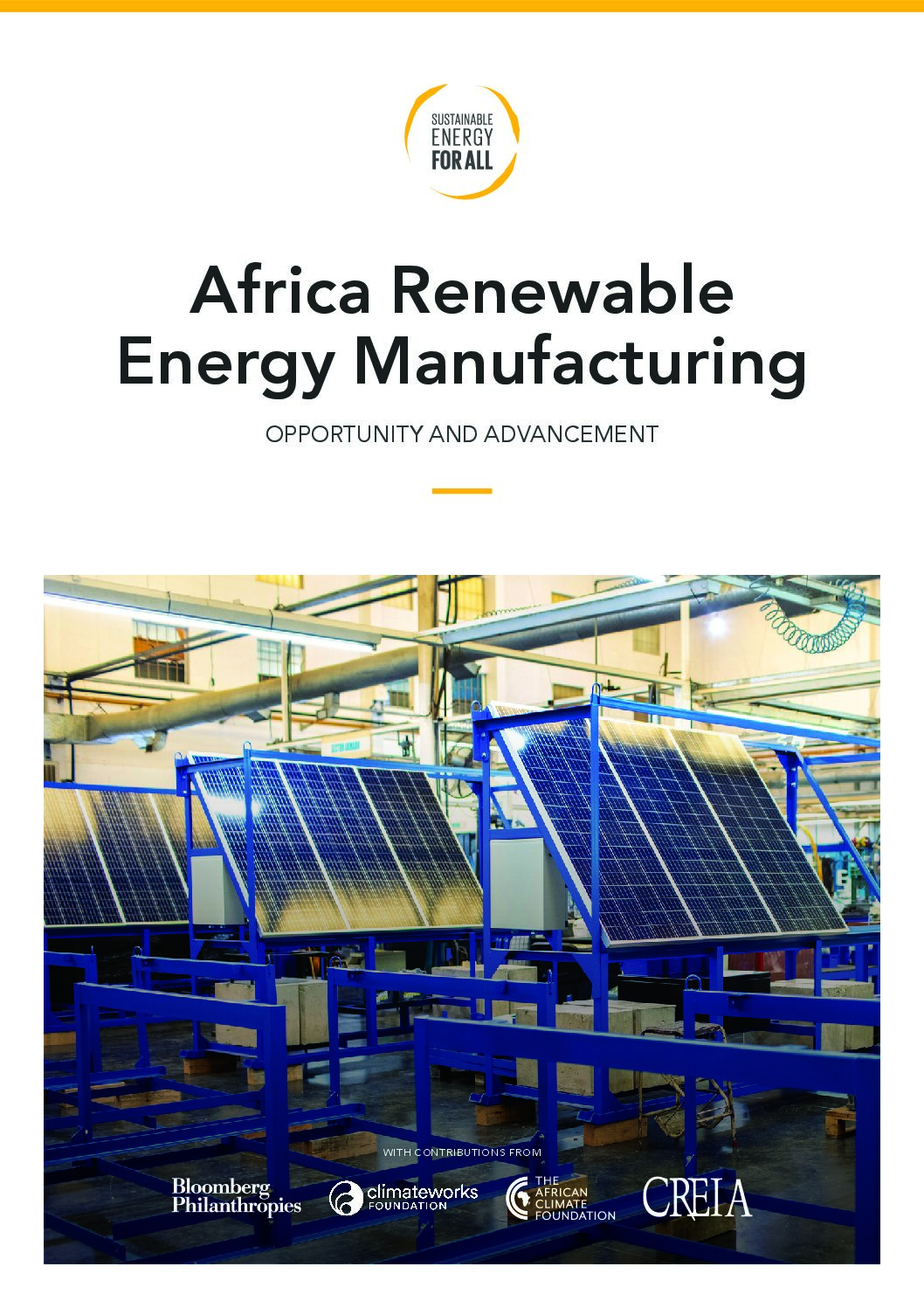
This report identifies opportunities for and barriers to renewable energy component manufacturing in African countries, and proposes interventions to accelerate investment in the space.
This study explores the impact of energy poverty on the health gap between men and women in Ghana, showing that, especially in households suffering from energy poverty, women report significantly worse health than men.
This report shares insights and tools to support more inclusive and effective entrepreneurship education and training, especially for people from underrepresented and marginalized groups. It includes a list of assessment criteria to evaluate whether a programme is gender-smart.
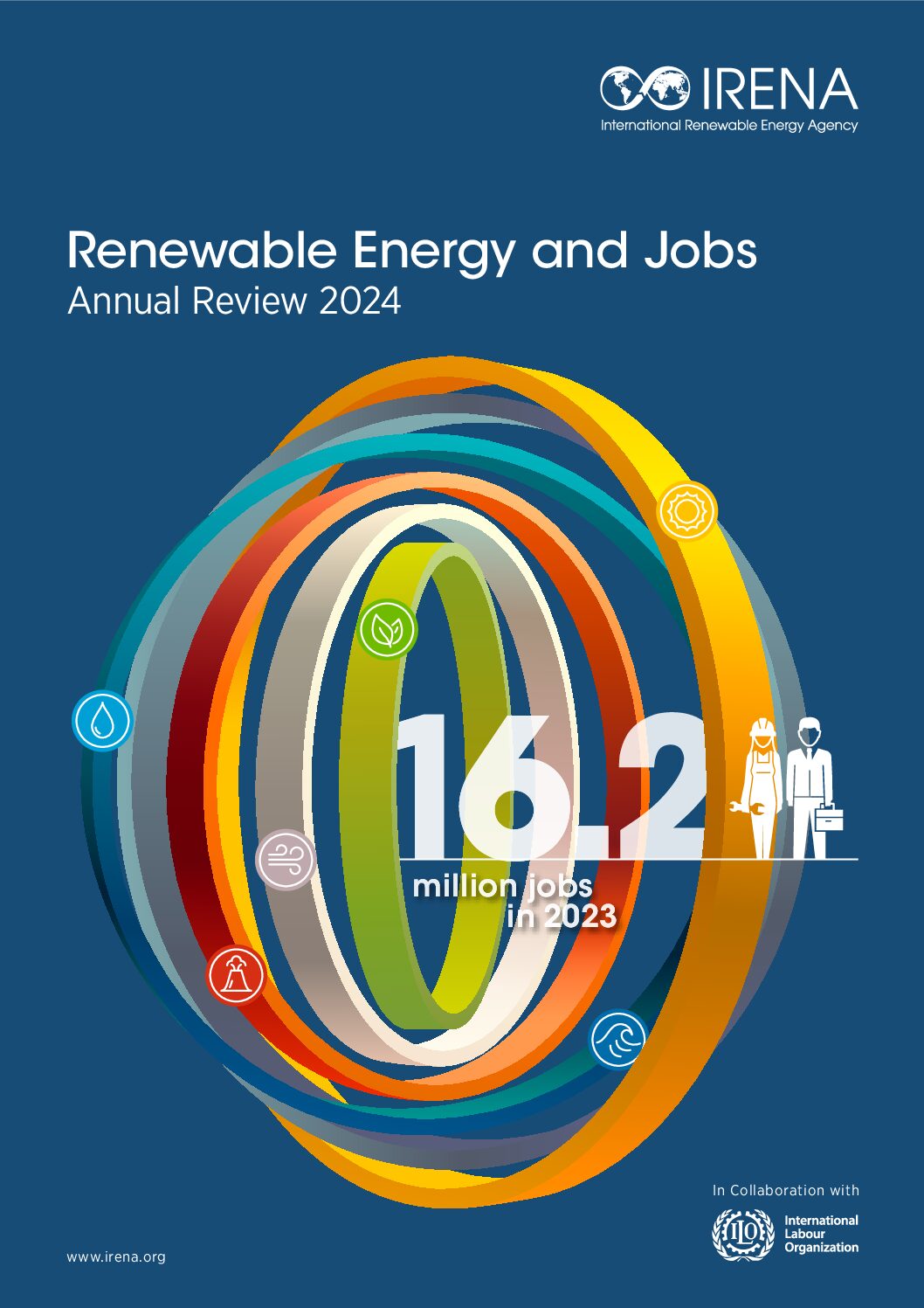
This resource provides the latest data and insights on global renewable energy employment, highlighting trends in renewable energy deployment and supply chains as well as the influence of geopolitical and geoeconomic factors. The resource serves as a valuable tool for stakeholders aiming to understand and address the employment implications of the global shift towards renewable … Continue reading “Renewable Energy and Jobs: Annual Review 2024”