
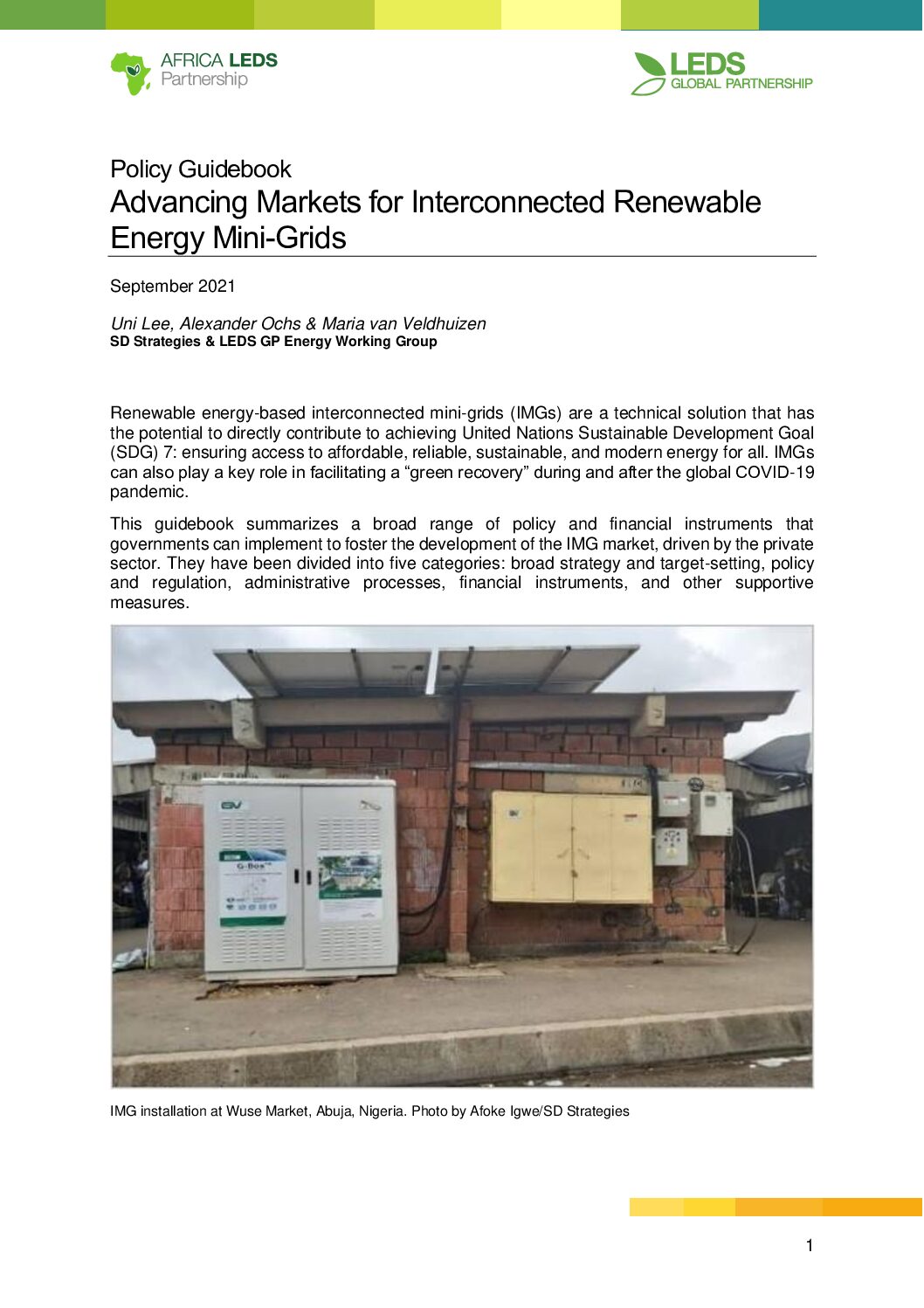
This guidebook summarizes a broad range of policy and financial instruments that governments can implement to foster the development of the interconnected mini-grid market, driven by the private sector.
This report highlights the economic, social and environmental benefits that energy and transport sector-coupling and a transition towards EV- and RE-based, efficient systems can create in small island settings, and provides tools for the planning of such a transition.
This report provides an overview of renewable energy financing in the Dominican Republic and proposes innovative mechanisms.
This extensive slide deck provides an energy transition roadmap, including an overview of challenges and extensive data.
This report outlines a 6-step vision to help developing countries create a virtuous cycle to raise financing and accelerate the clean energy transition.
Sustainable Energy Transitions in Uganda: Influential Determinants of the Renewable Energy Landscape
This article provides an overview of the renewable energy landscape of Uganda, discussing the interplay between policy, technology, financing and societal awareness. It provides recommendations to advance the energy transition.
This report describes the potential for financial aggregation to unlock new sources of capital for off-grid solar and e-mobility projects in Uganda.
This report discusses potential social and environmental risks associated with the roll-out of the GETFiT renewable energy investment programme in Zambia, as well as mitigation measures.
This note aims to provide a high-level analysis of the preconditions for stimulating green investments with a focus on financial sector supervisory framework needed to address climate risks (physical and transition), current landscape of green finance in Zambia, and the demand-side opportunities for green investments in key sectors.
Uganda’s Energy Transition Plan sets goals for different sectors and discusses enablers for implementation, including financing.