
This report explores ways to identify and mitigate energy transition investment risks in the low- and middle-income countries, pointing out 1) that better energy planning can attract greater investment in renewable energy, 2) that sustainable fuels will play an important role in delivering the energy transition, and 3) that the social dimensions of the transition … Continue reading “A Just and Inclusive Energy Transition in Emerging Markets and Developing Economies: Energy Planning, Financing, Sustainable Fuels and Social Dimensions”
This paper gives an overview of waste to energy technologies, discusses barriers to its wider adoption in developing countries, and helps researchers and decision-makers to make informed decisions on the feasibility of WtE as a pathway for sustainable waste management and renewable energy generation.
This paper provides general guidelines for conducting Environmental Impact Assessments for waste-to-energy projects.
This article discusses the potential of heat and electricity co-generation from biomass waste to both expand energy access and improve waste management in rural areas.
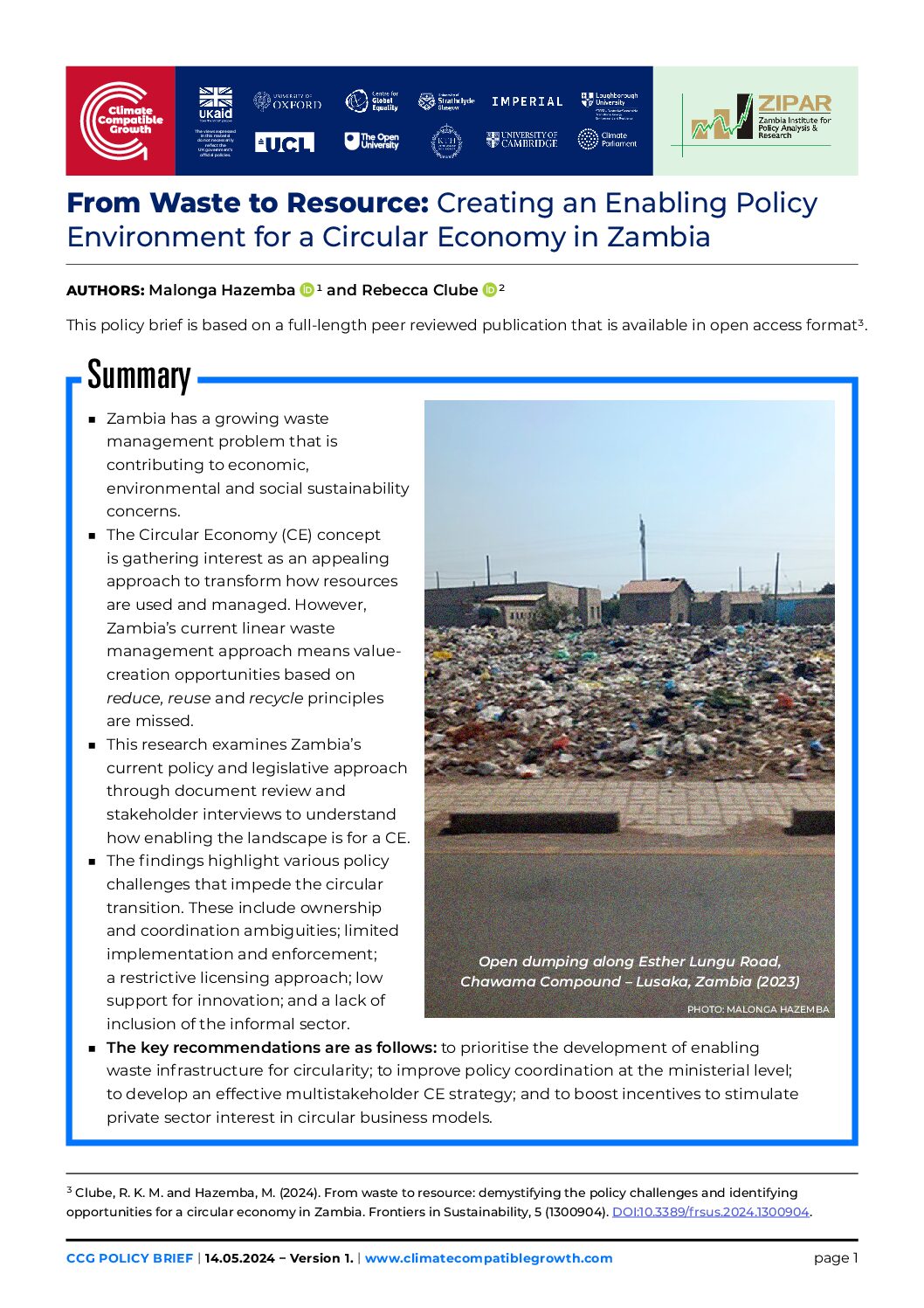
This policy brief investigates Zambia’s policy and legislative framework for energy generation from waste, and provides recommendations for improvements.
This study aims to determine the viability of electricity generation from municipal solid waste in Ndola, Zambia, and finds that the most suitable technology is biomethanation.
This article explores how system planning, and in particular assessments of system adequacy, will need to innovate and evolve to allow power systems to keep delivering secure and affordable electricity supply during energy transitions.
This report examines the critical role of modeling for transmission planning for energy transitions.
This plan provides a comprehensive, forward-looking least-cost plan for the development of the country’s power sector, including both on-grid and off-grid.
This report presents the results of a survey undertaken to investigate the current status of gender equality in the biogas sector, and compares these with a baseline survey conducted in 2012.