
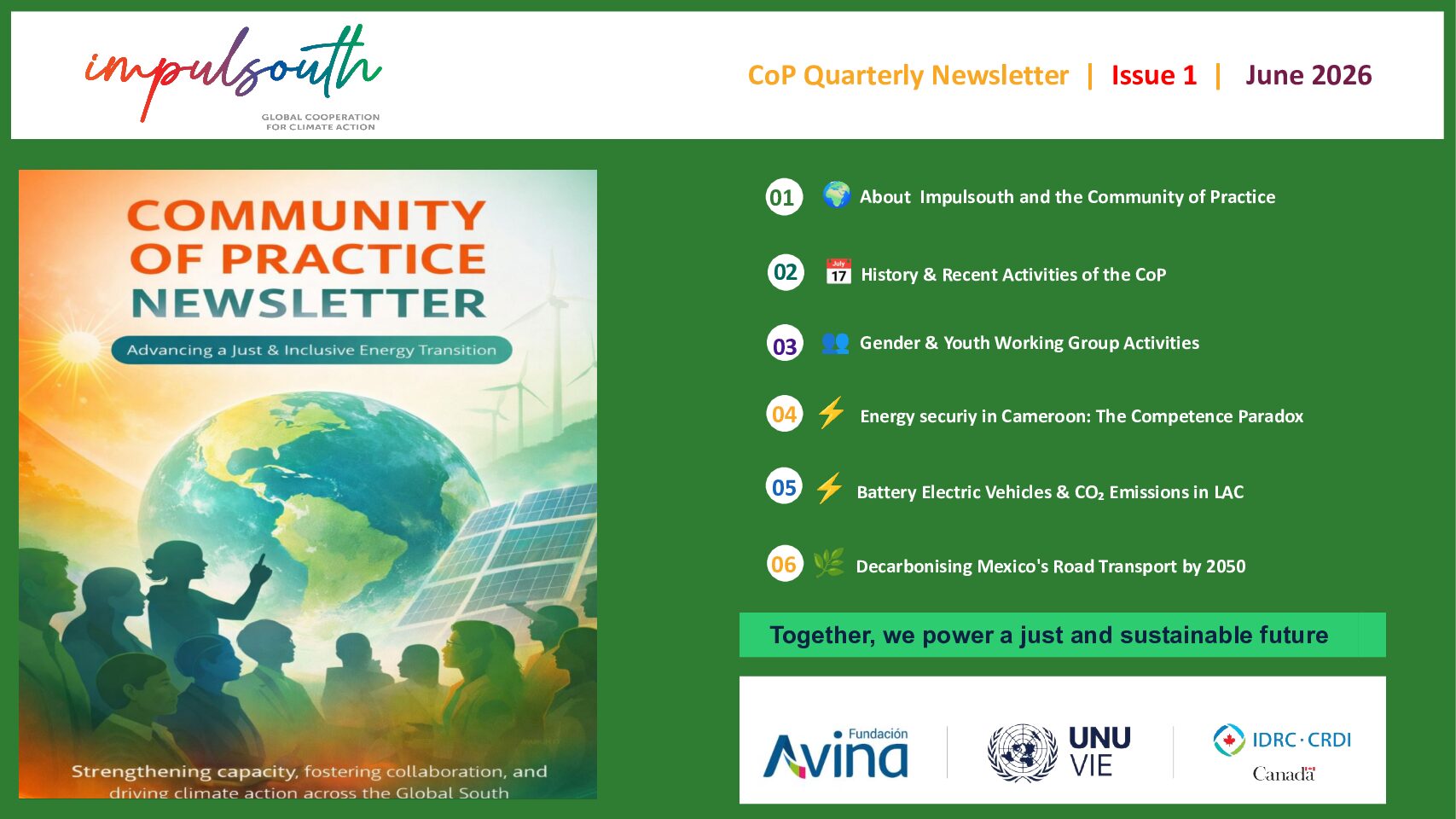
This is the Impulsouth Community of Practice (CoP) newsletter. The CoP is a collaborative platform that strengthens capacities within the energy sector, supporting a just and inclusive energy transition with a strong focus on gender equality. Bringing together diverse stakeholders, the CoP fosters knowledge exchange, strengthens institutional capacity, and promotes effective South-South cooperation across nine … Continue reading “CoP Quarterly Newsletter – Issue 1 – June 2026”
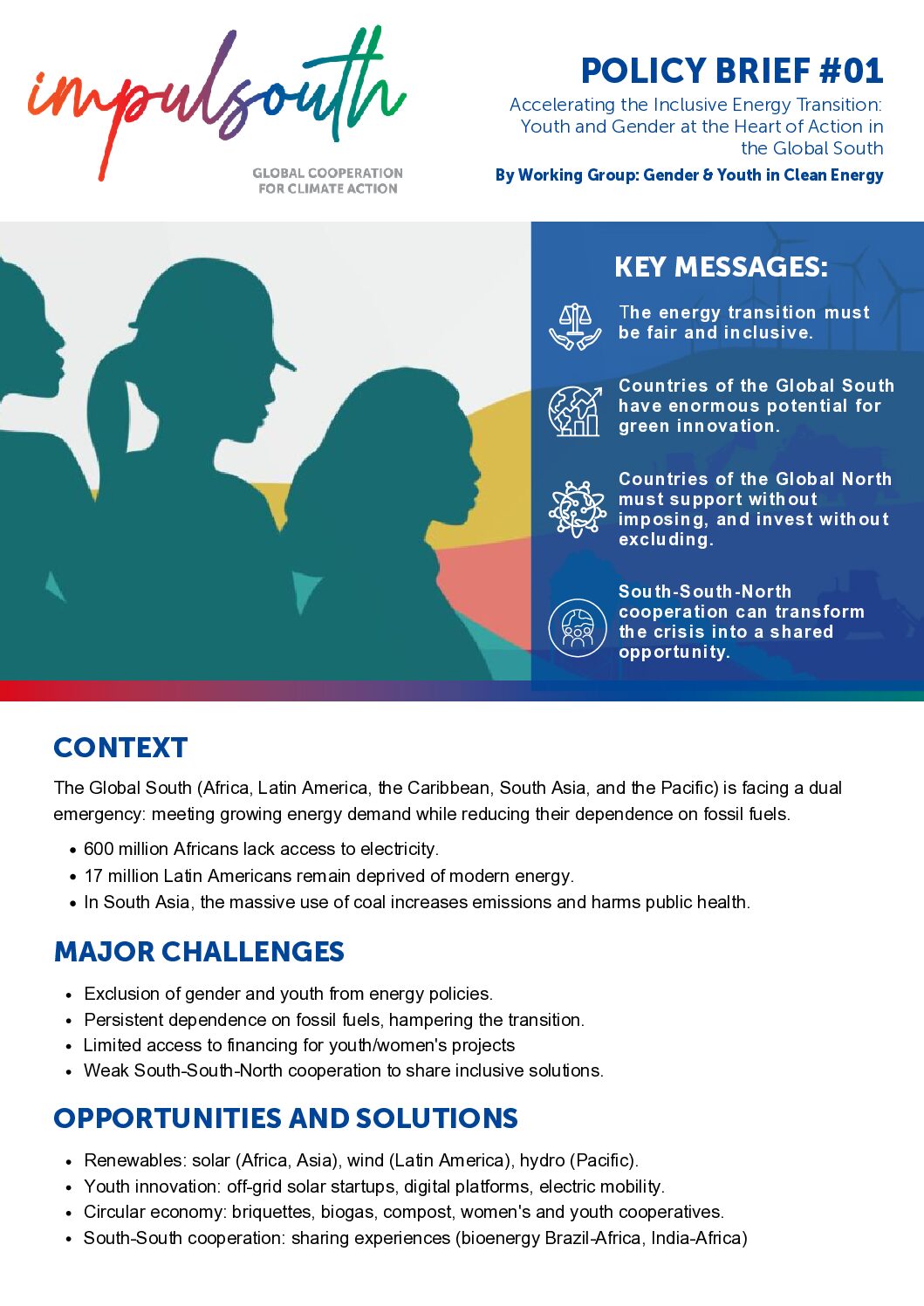
This resource was developed by members of the Working Group on Gender & Youth in Clean Energy, within Impulsouth’s Community of Practice.
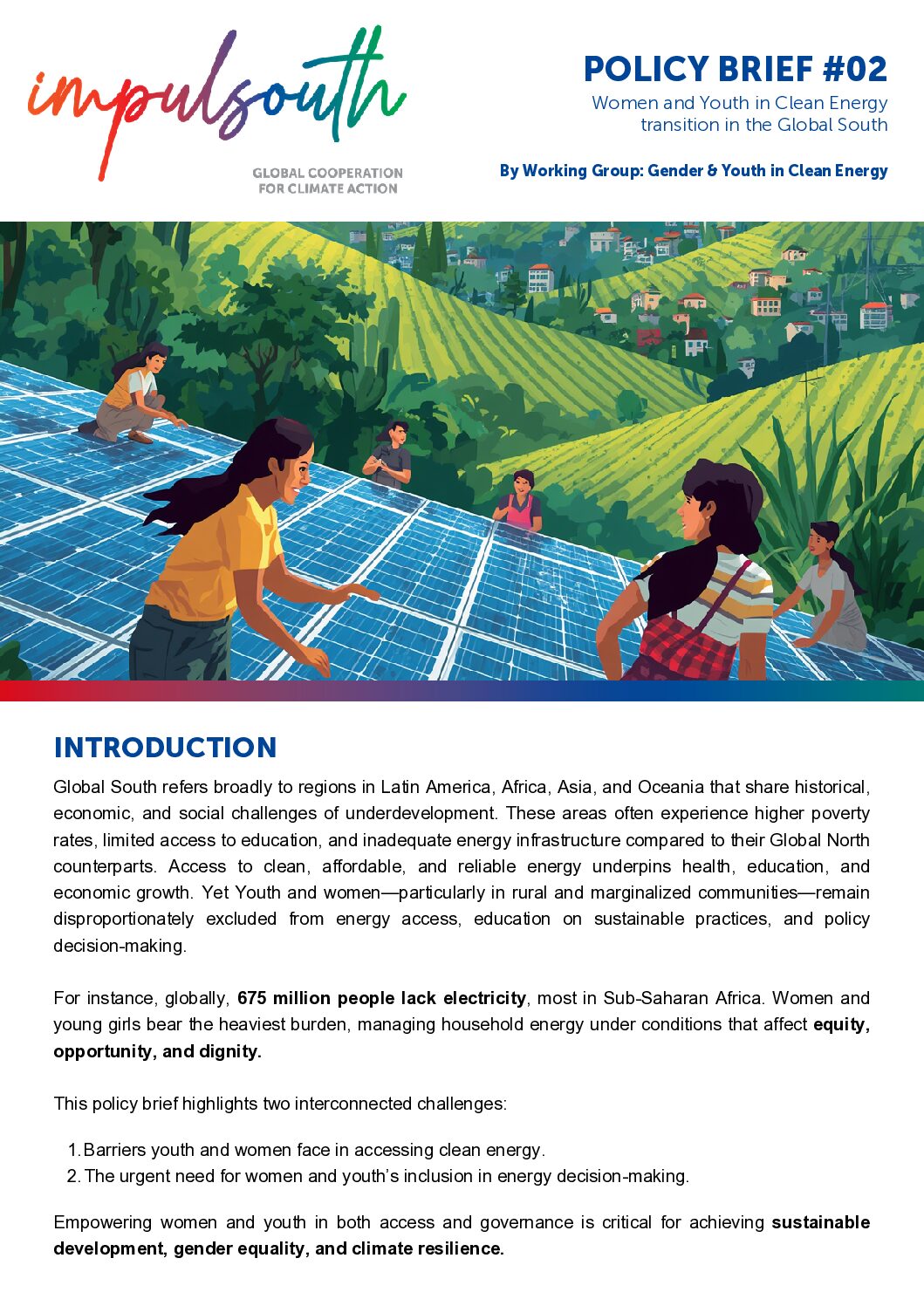
This resource was developed by members of the Working Group on Gender & Youth in Clean Energy, within Impulsouth’s Community of Practice.
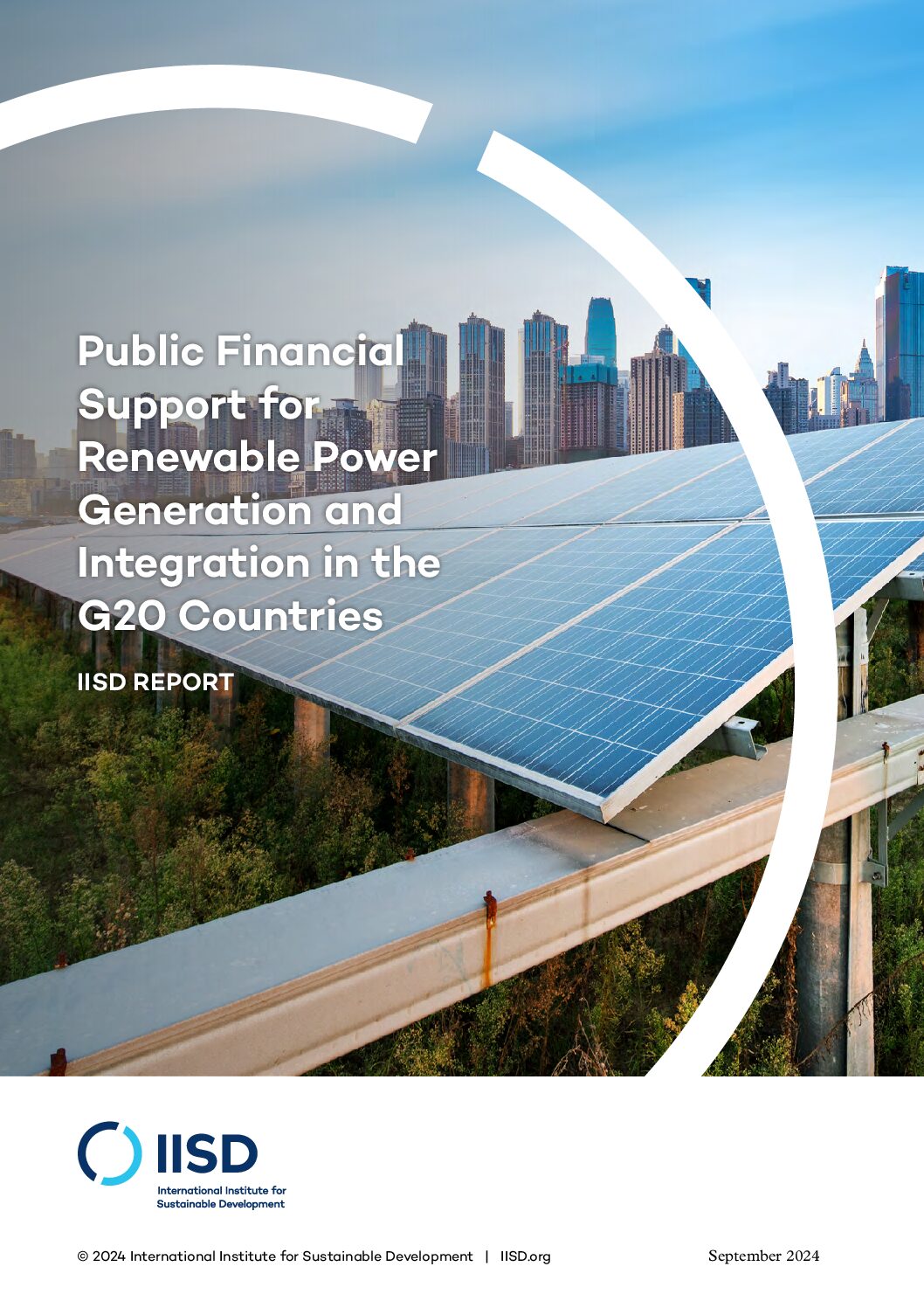
Government spending and other forms of actual support to renewable energy is a blind spot at the international level. To help address the knowledge gap, IISD developed an inventory of public financial support for renewable energy generation and integration by G20 governments. It shows that G20 governments provided over $168 billion in public financial support … Continue reading “Public Financial Support for Renewable Power Generation and Integration in the G20 Countries”
Despite strong calls for energy subsidy reforms, governments around the world still spend billions subsidising fossil fuel consumption each year. This report investigates how reforms can be designed that work in practice, drawing on over a decade of World Bank experience supporting these processes.
This article provides a summary of a webinar in which experts discussed how trade policies can boost renewable energy manufacturing in Africa and other regions of the Global South.
This is a visual summary of a report that explores how trade policy, including the setting or elimination of tariffs and other measures, can support the expansion of solar and wind generation worldwide.
This article announces the adoption of harmonised minimum energy performance standards for air conditioners and refrigerators in the 16 member countries of the Southern African Development Community (SADC). It also explains the process by which these harmonised standards were developed and adopted.
This article explores how the Central American Integration System (SICA) has helped lead the way to improve energy efficiency in appliances at the regional level, and the opportunities that further harmonisation could generate.
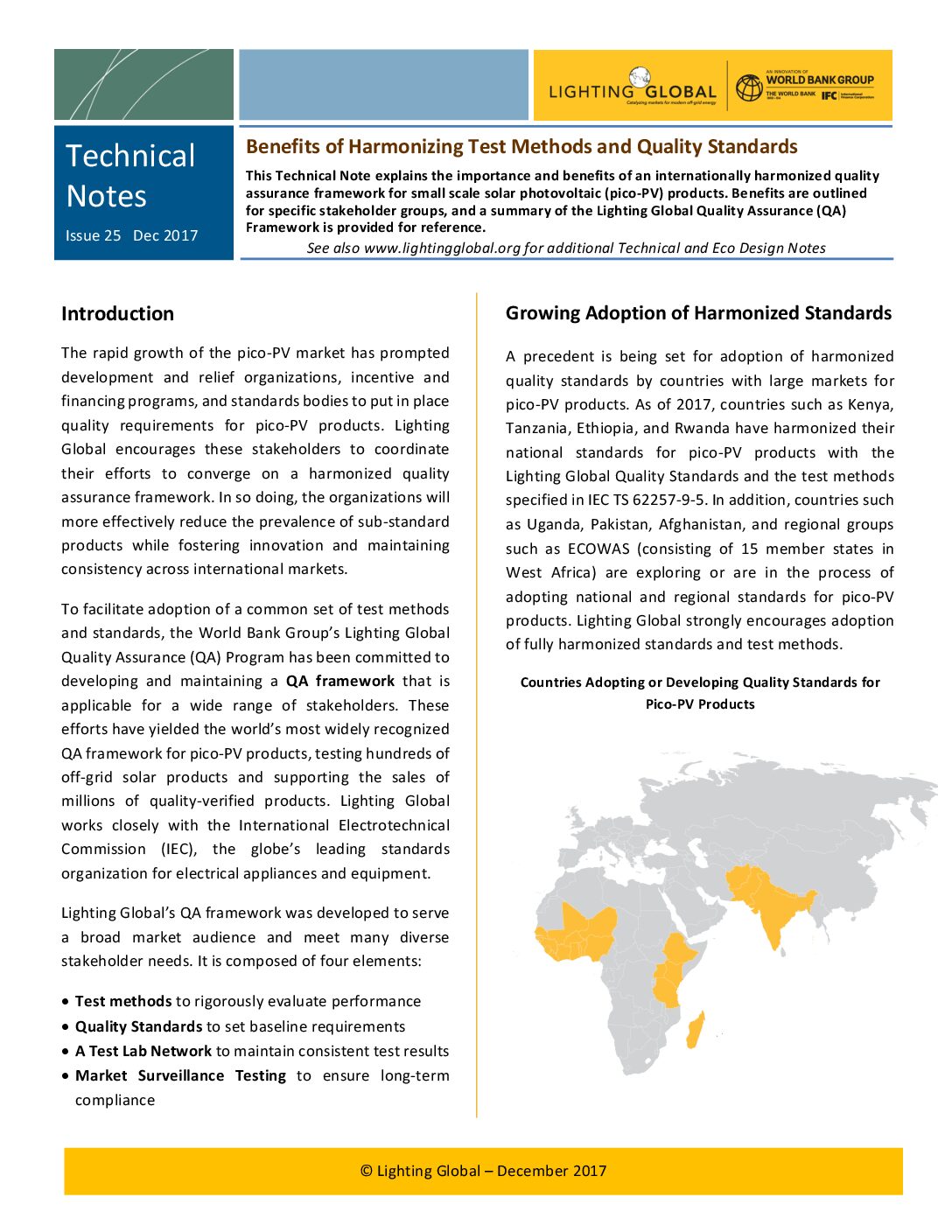
This brief explains the importance and benefits of an internationally harmonized quality assurance framework for small scale solar photovoltaic (pico-PV) products. Benefits are outlined for specific stakeholder groups, and a summary of the Lighting Global Quality Assurance (QA) Framework is provided for reference.