
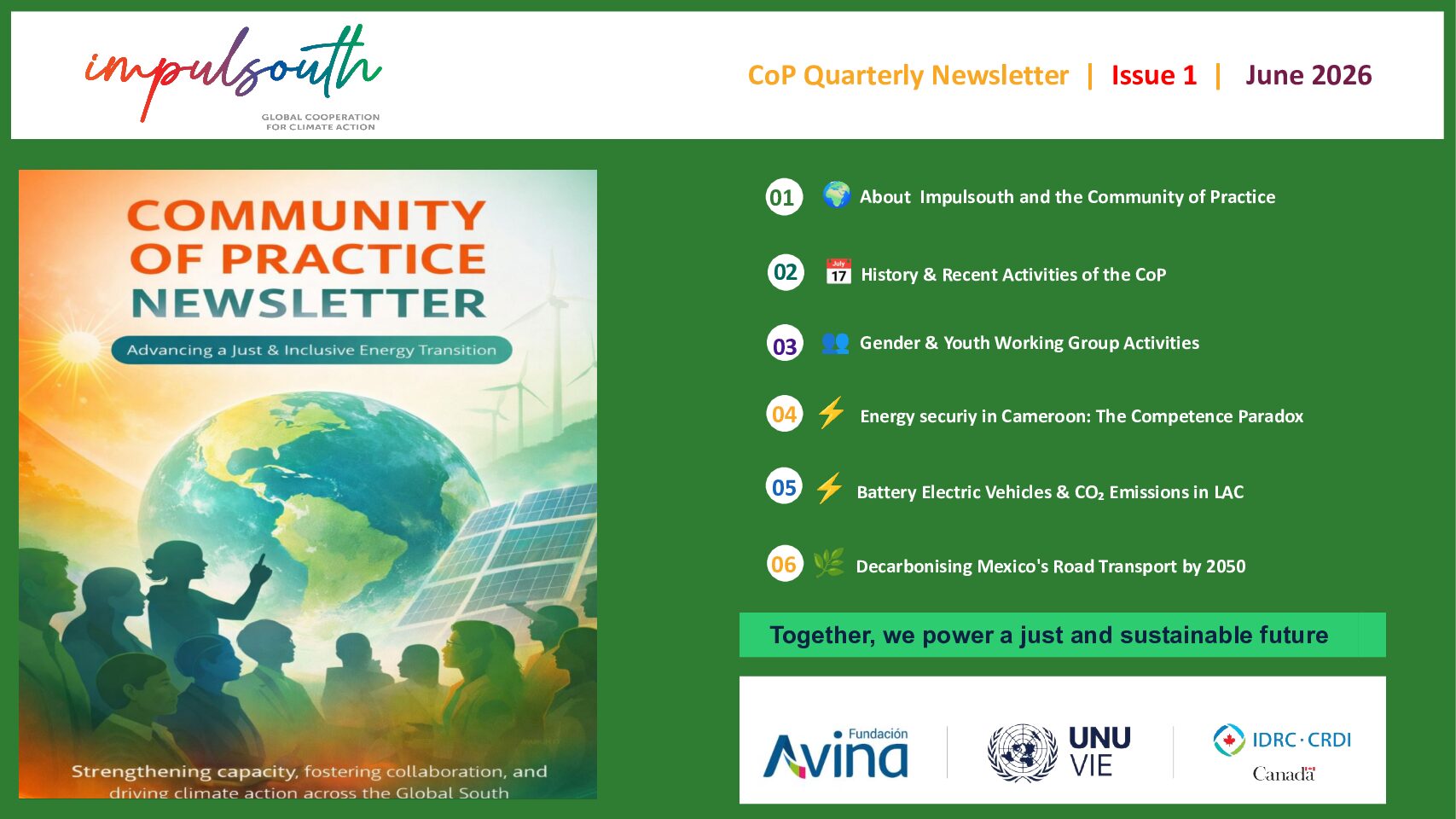
This is the Impulsouth Community of Practice (CoP) newsletter. The CoP is a collaborative platform that strengthens capacities within the energy sector, supporting a just and inclusive energy transition with a strong focus on gender equality. Bringing together diverse stakeholders, the CoP fosters knowledge exchange, strengthens institutional capacity, and promotes effective South-South cooperation across nine … Continue reading “CoP Quarterly Newsletter – Issue 1 – June 2026”
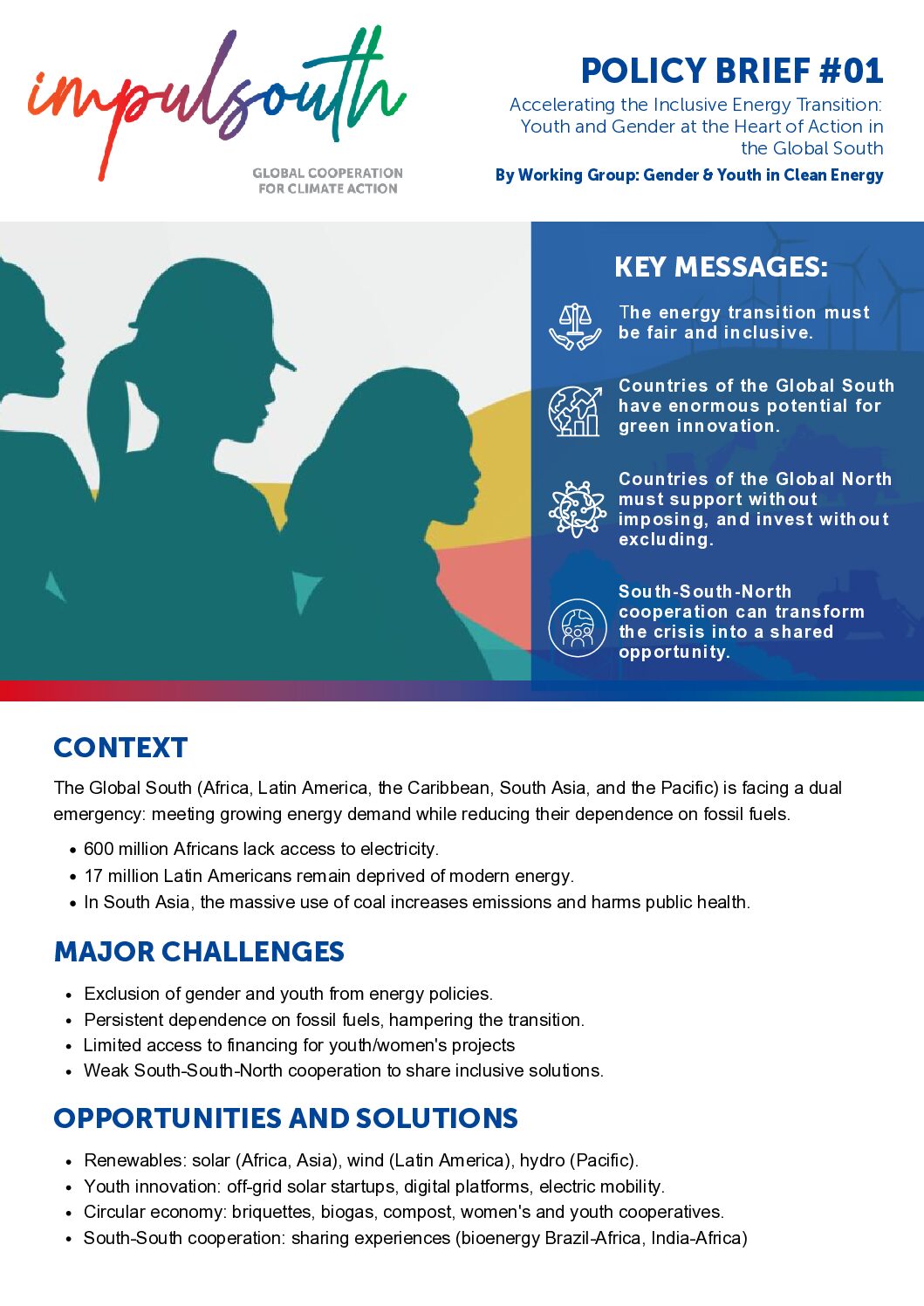
This resource was developed by members of the Working Group on Gender & Youth in Clean Energy, within Impulsouth’s Community of Practice.
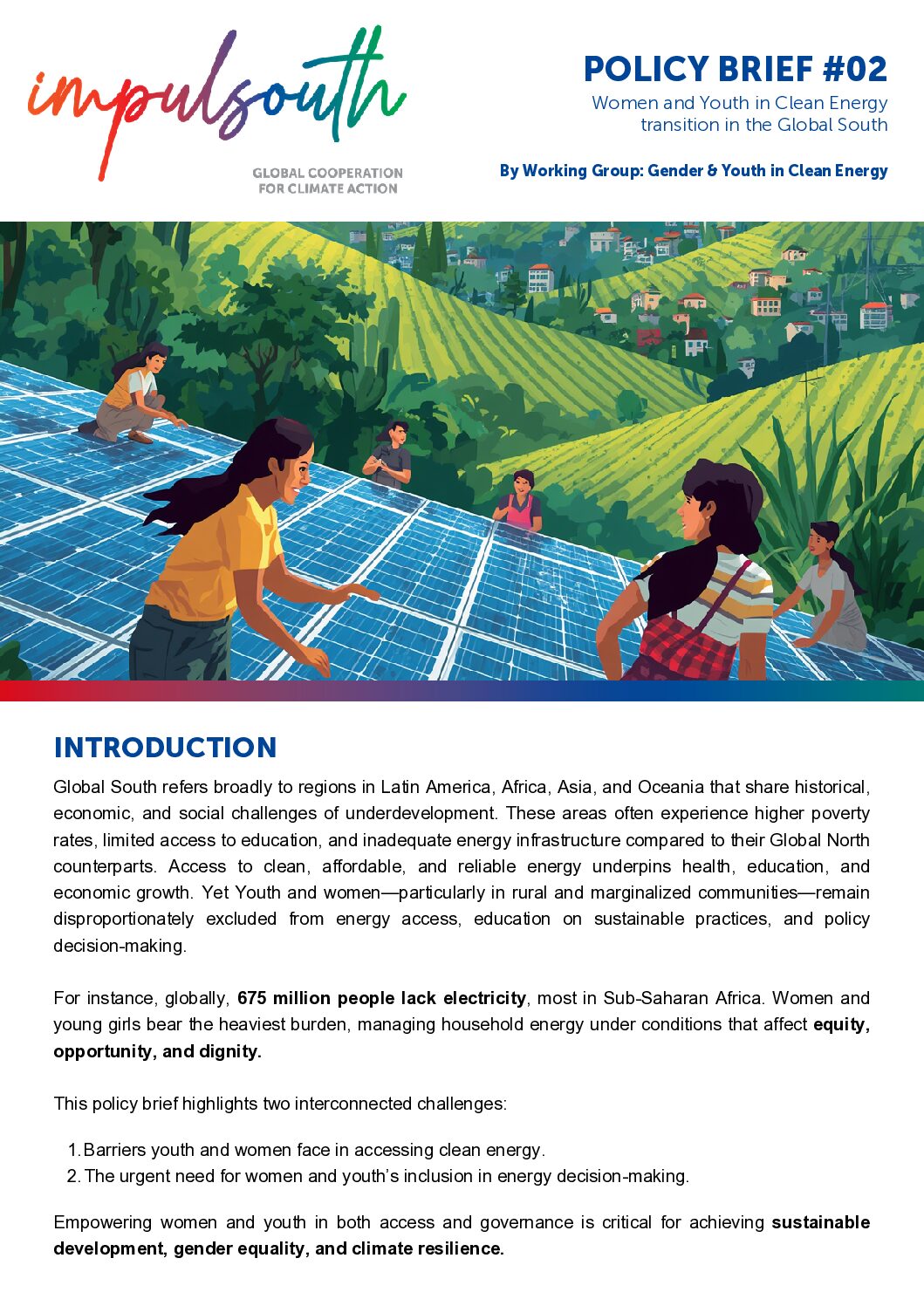
This resource was developed by members of the Working Group on Gender & Youth in Clean Energy, within Impulsouth’s Community of Practice.
This report explores the opportunities and challenges that lie ahead in Latin America’s energy transition. It provides insights on the ways in which the outlook for the region and the biggest global energy trends are deeply intertwined – as well as recommendations on policies that could allow Latin America and the Caribbean to take full … Continue reading “Latin American Energy Outlook”
This report shares successful industrial efficiency practices from the Republic of Korea.
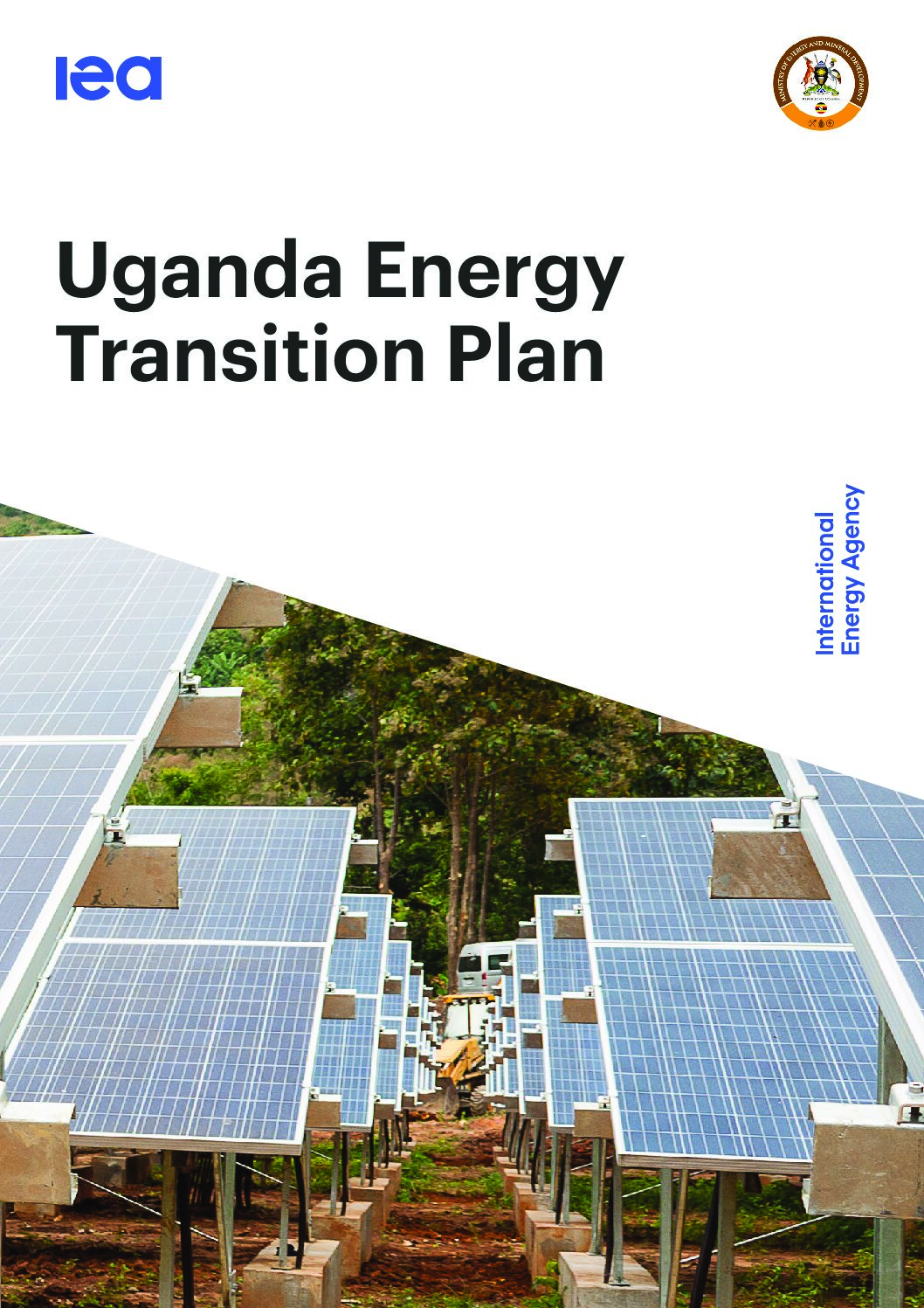
Uganda’s Energy Transition Plan sets goals for different sectors and discusses enablers for implementation, including financing.
This web page gives advice on public advocacy for energy efficiency, focusing on four concepts: Getting the message right; Getting the message across; Combining information with behavioural insights; and Campaigns for a crisis context.
This page explains the role of digitalisation in energy transitions, tracks digitalisation progress, and provides policy recommendations.
This blog describes four opportunities for digitalisation to accelerate just energy transitions: smart energy management, decentralized energy systems, climate-resilient farming, and public transport.
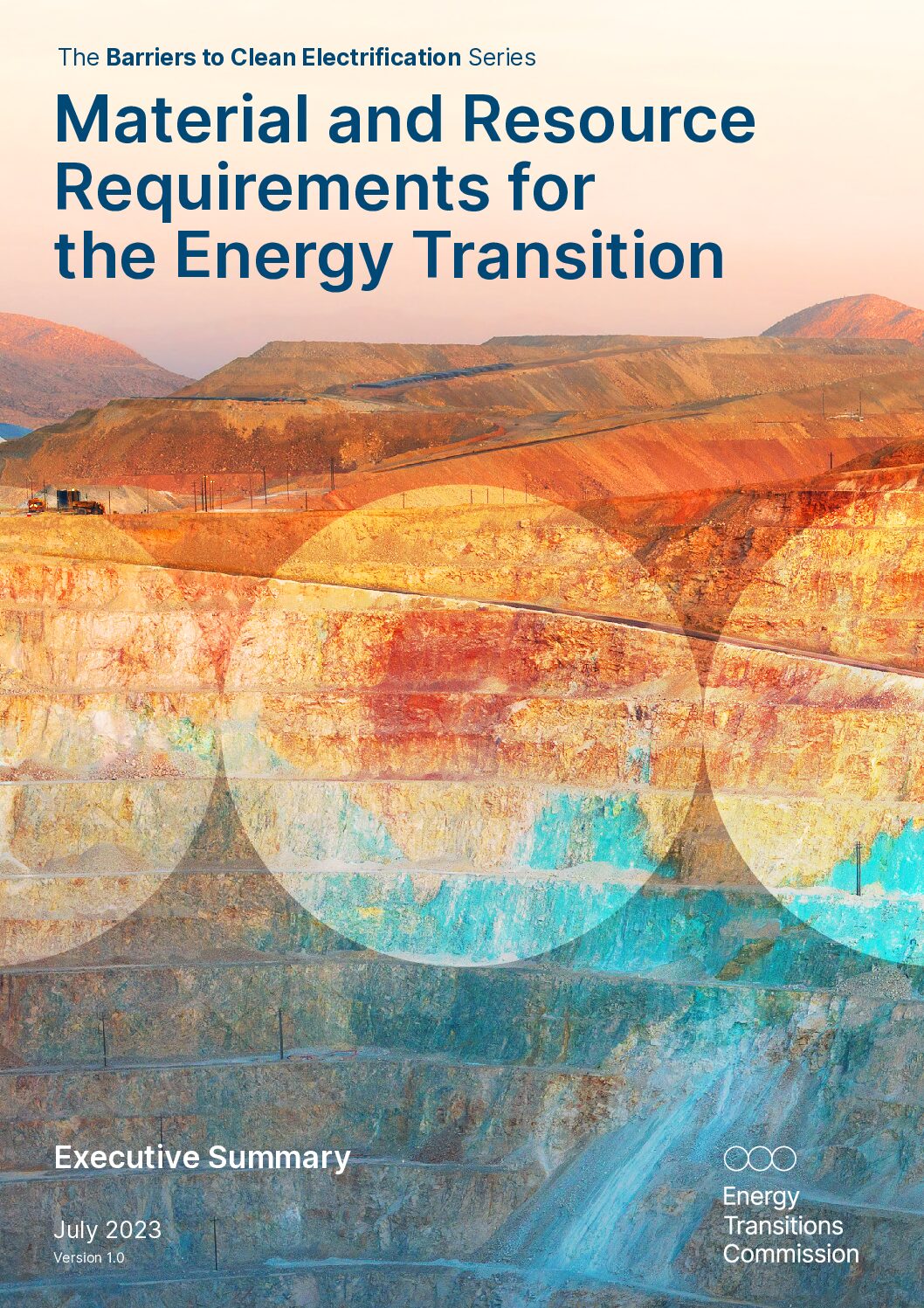
This report focuses on the material resources required for the energy transition and demonstrates that there are plentiful resources available to support a prosperous net-zero global economy.