
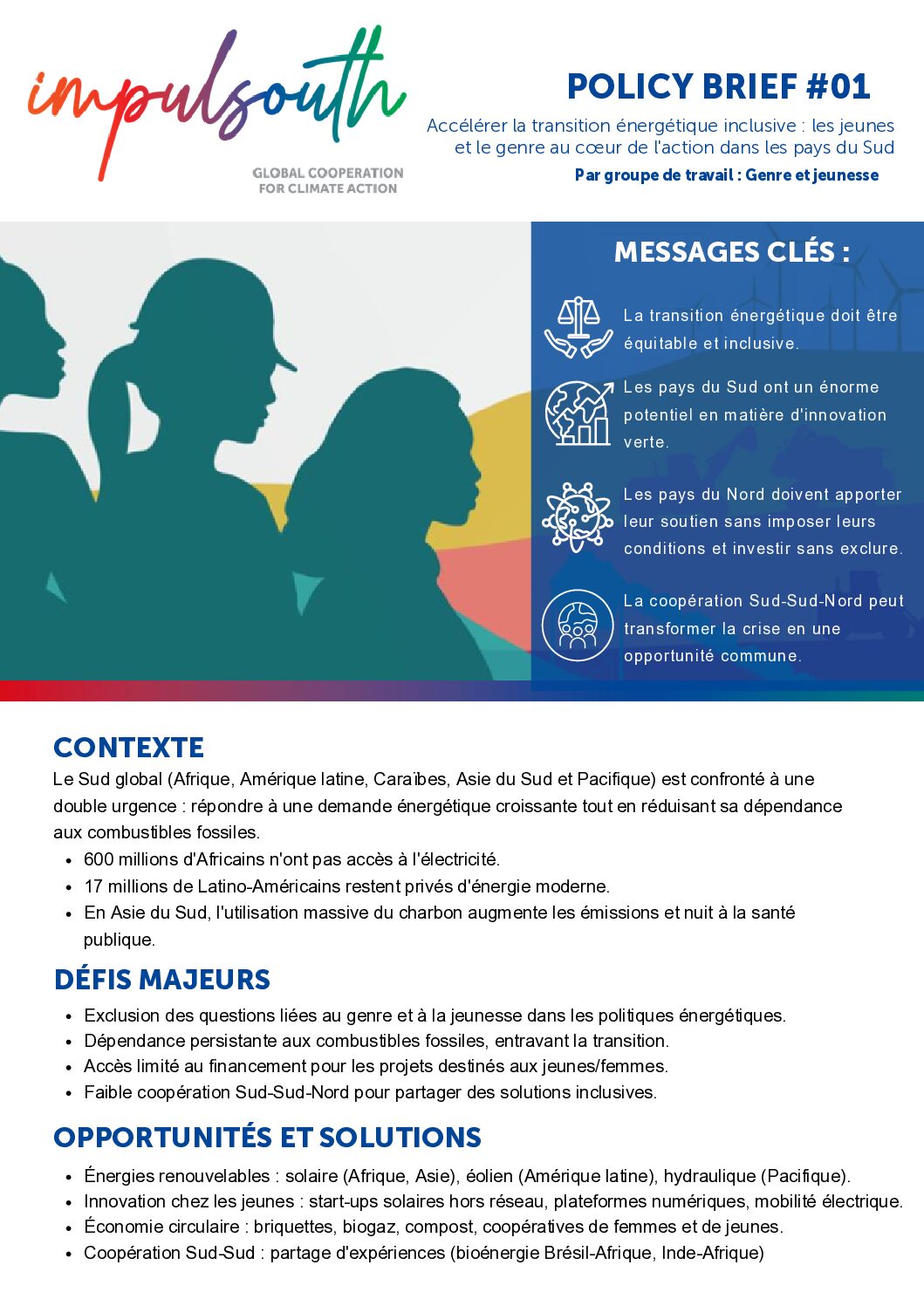
Cette ressource a été élaborée par les membres du groupe de travail « Genre et jeunesse », qui fait partie de la communauté de pratique d’Impulsouth.
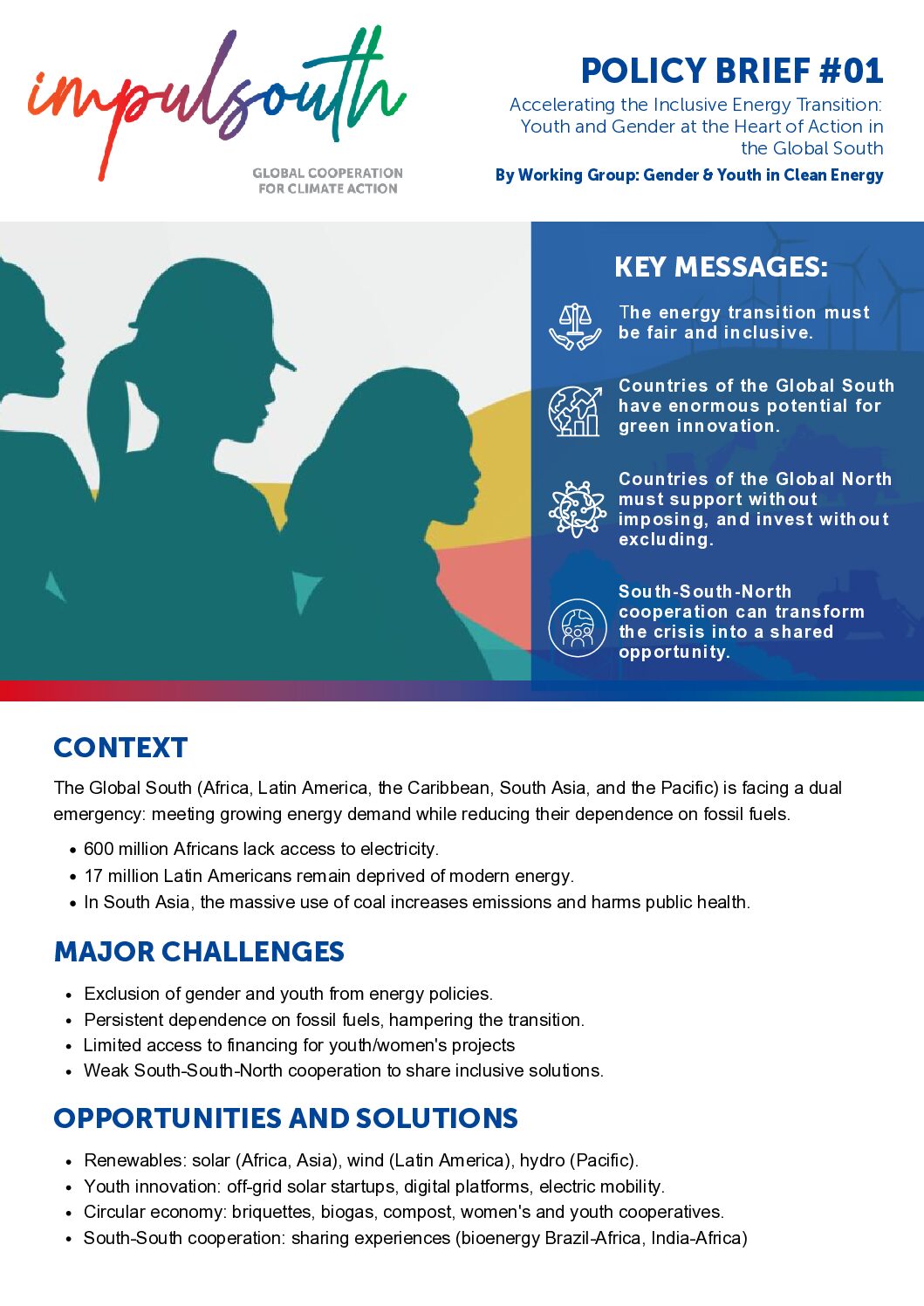
This resource was developed by members of the Working Group on Gender & Youth in Clean Energy, within Impulsouth’s Community of Practice.
This second edition from 2025 provides an update to the landmark report from 2019, based on a new survey of 1192 individuals working in the sector, and 233 companies and organizations. The headline finding was that despite widespread efforts, the share of women in renewable energy has not grown over the past six years: it … Continue reading “Renewable energy: A gender perspective (Second edition)”
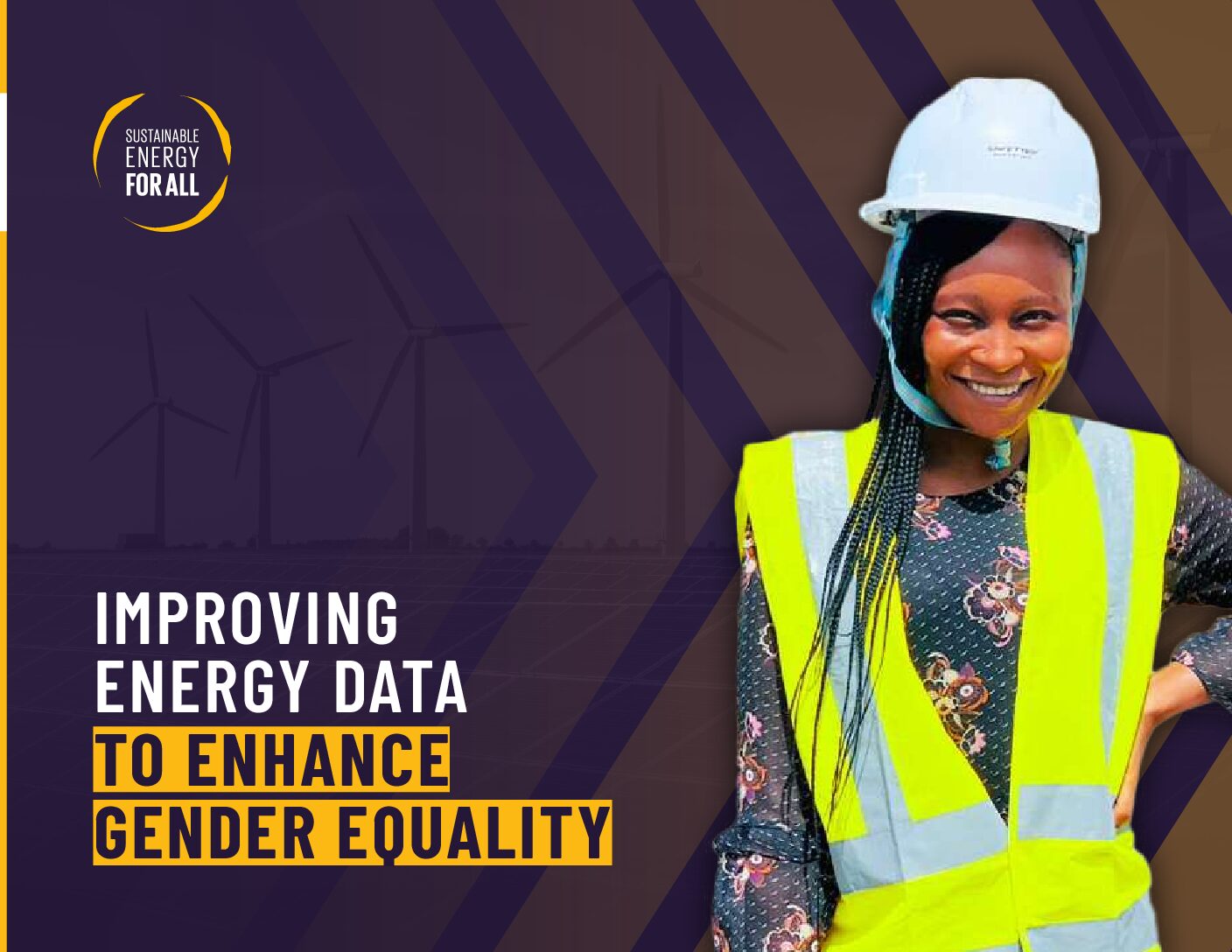
This report provides recommendations for improving the availability of sex-disaggregated and specific gender equality data in the energy sector, to improve decision making and programme design.
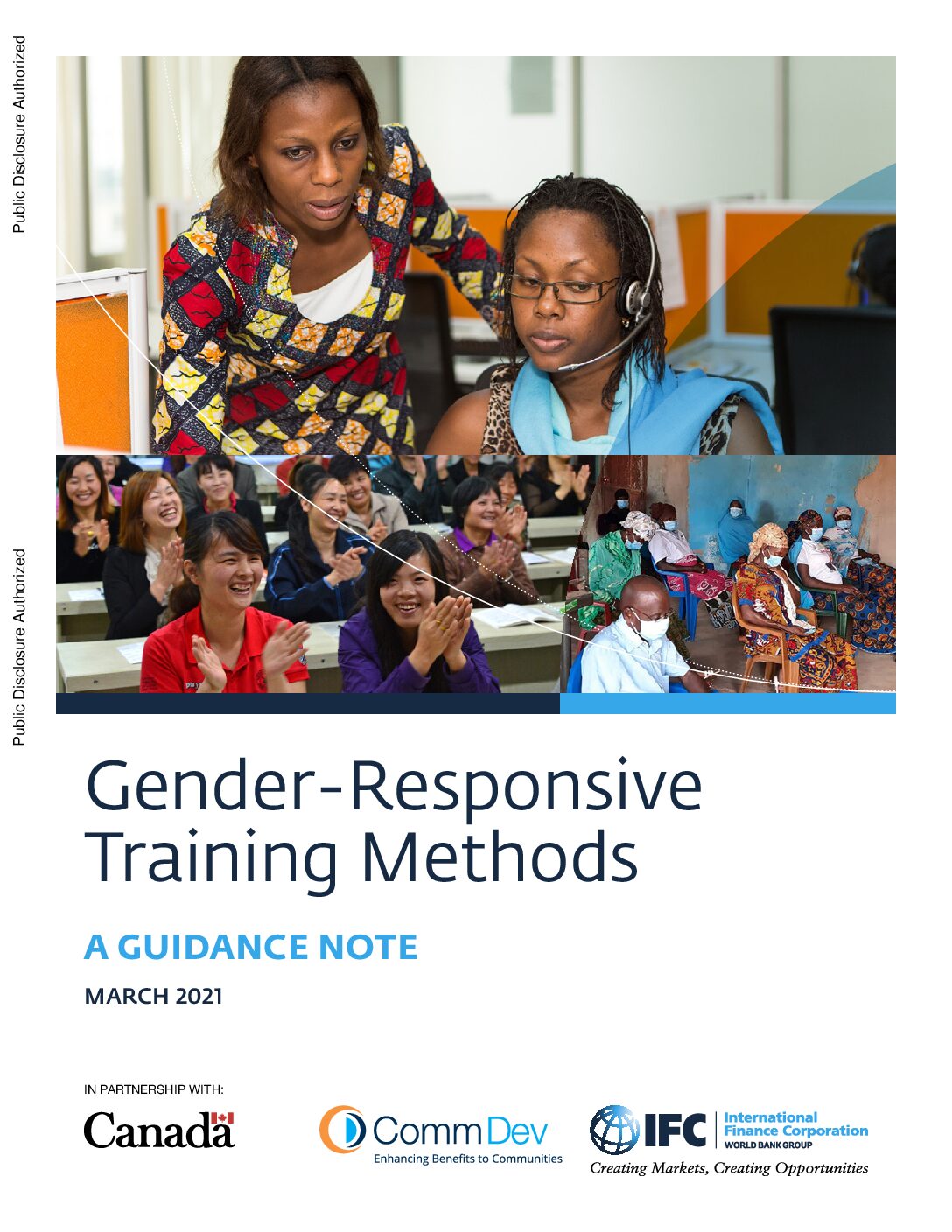
This guidance note provides practical tools and strategies for training providers to design and deliver gender-responsive learning programs, especially within technical and business education contexts. It highlights how gender dynamics, norms, and barriers influence learning outcomes and participation—especially for women and marginalized groups.
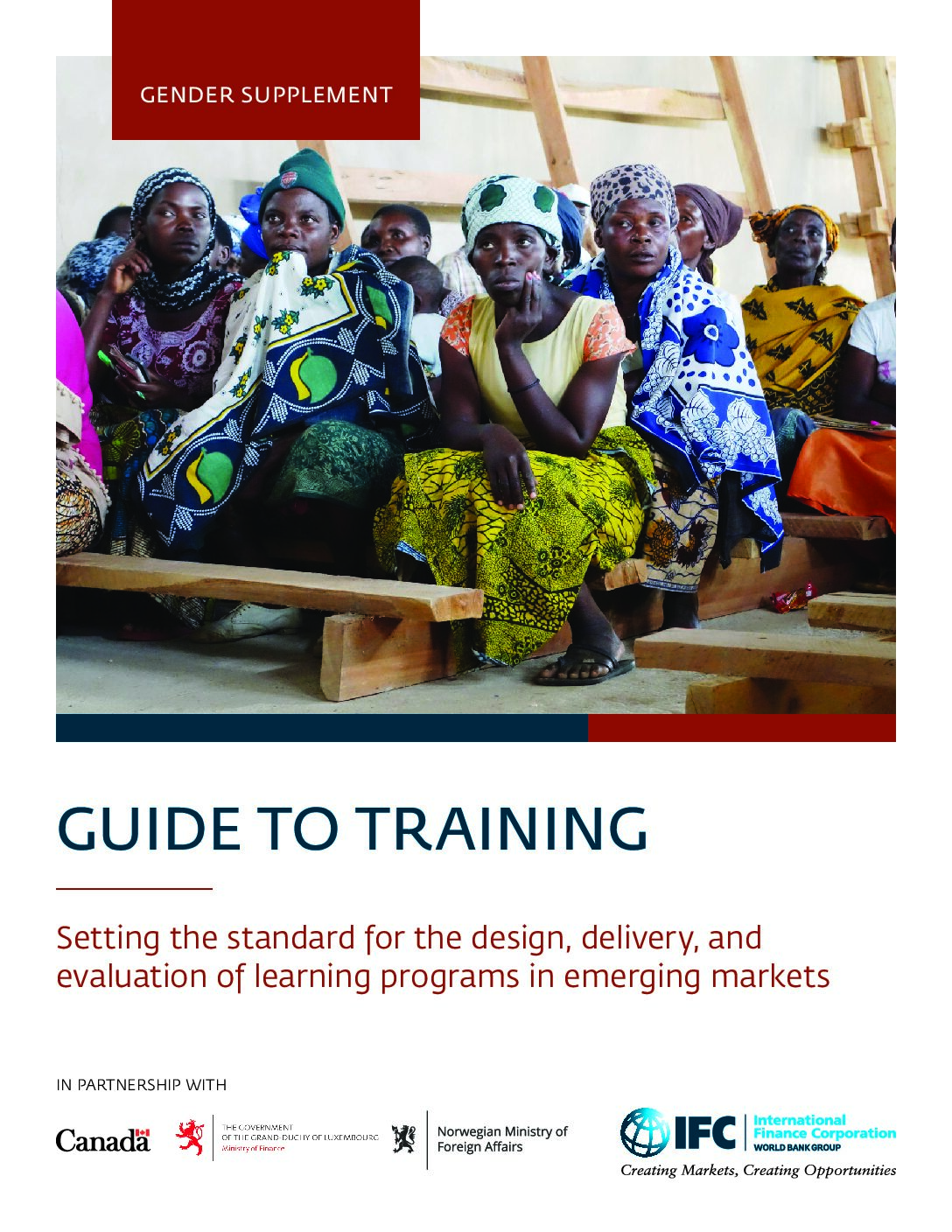
This guide helps practitioners design, implement and evaluate training programmes in a way that enables equal access and provides equal benefits to women and men. It provides tips and approaches based on international good practice and lessons learned from programmes implemented by IFC, the World Bank and other organisations.
This report provides baseline data on women’s employment in wind energy, as well as information on barriers to gender equality and recommendations to close gender gaps.
This report provides baseline data on women’s employment in solar energy, as well as information on barriers to gender equality and recommendations to close gender gaps.
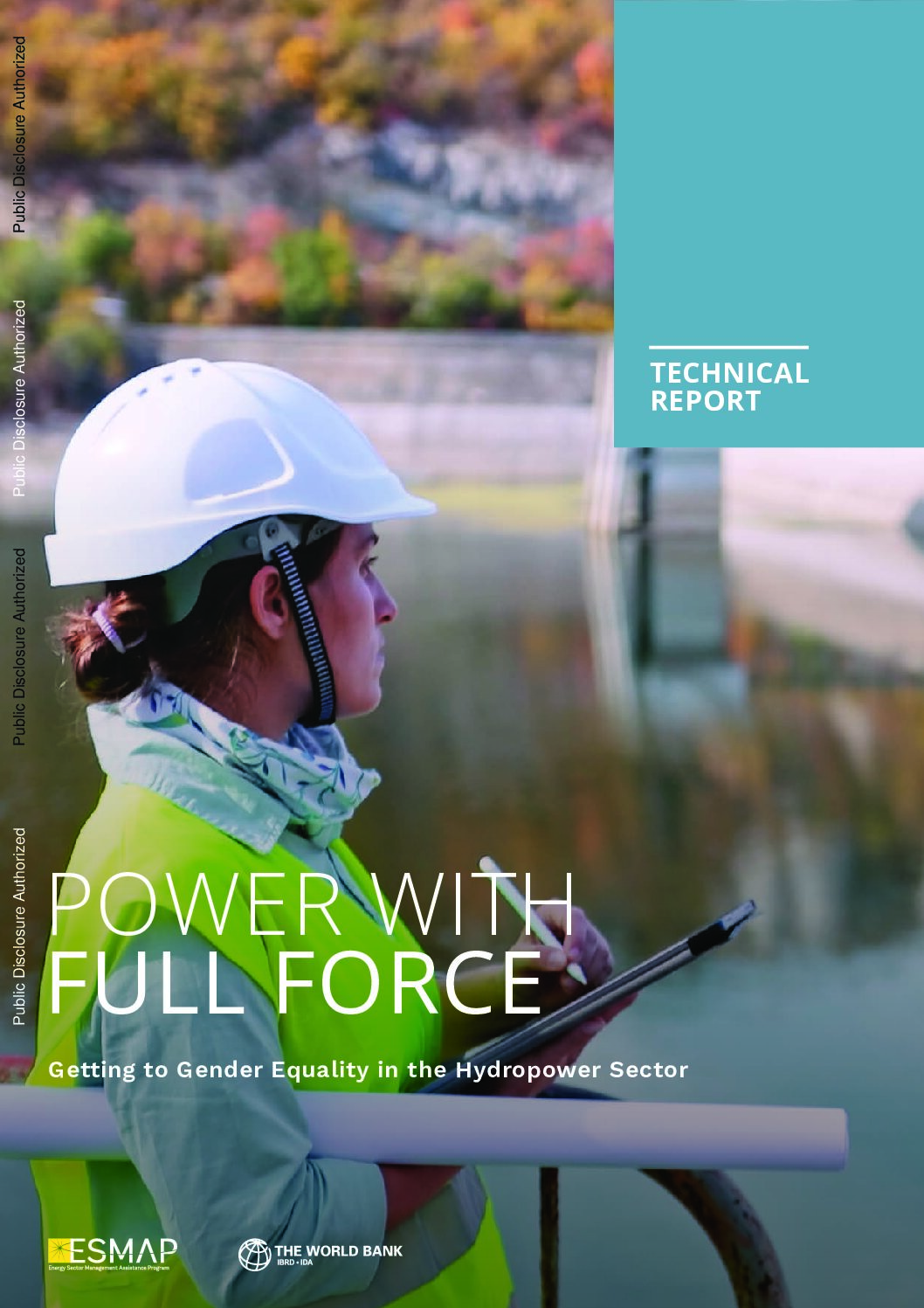
This report provides baseline data on women’s employment in hydropower, as well as information on barriers to gender equality and recommendations to close gender gaps.
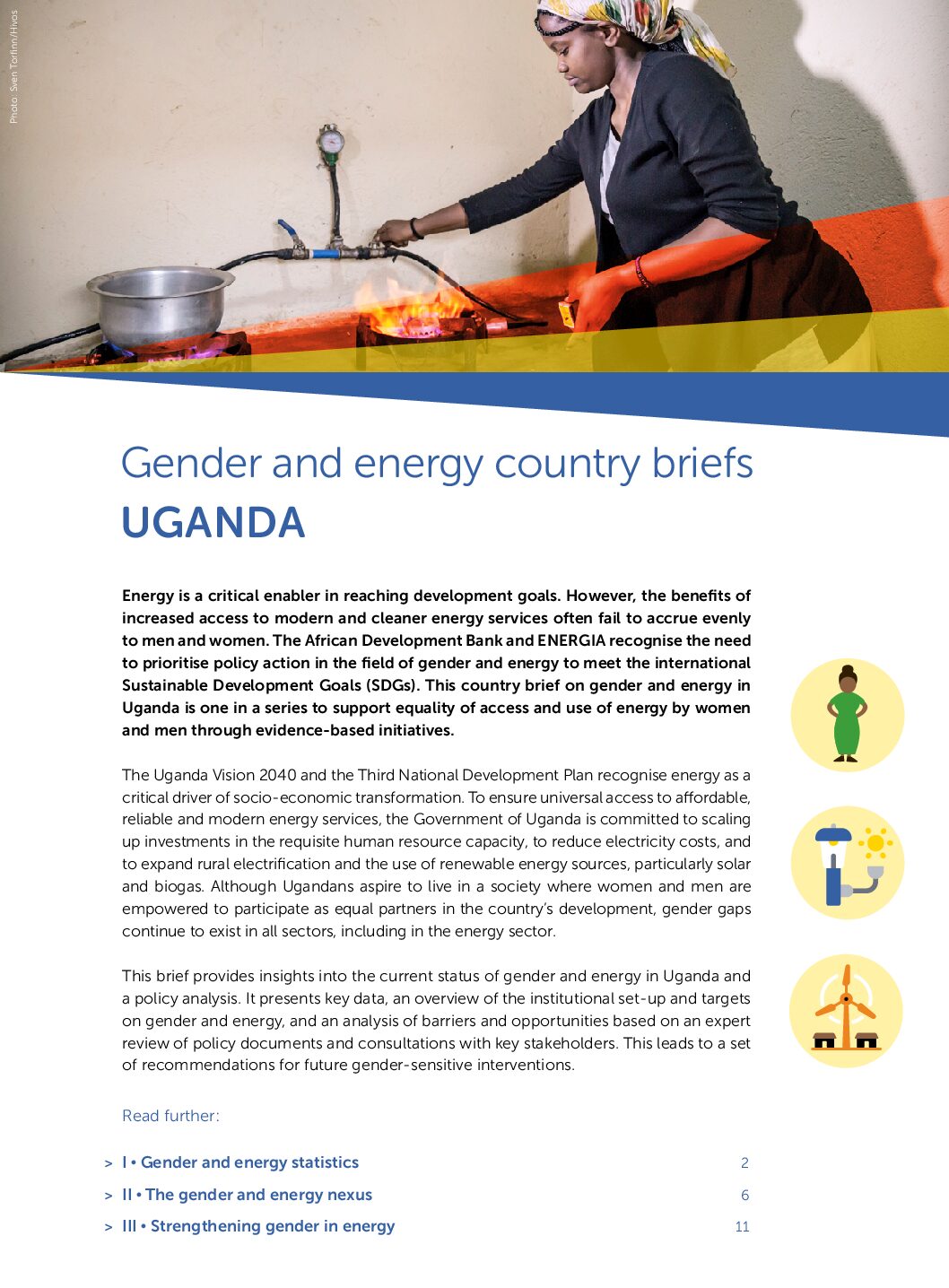
This brief provides statistics about gender and energy in Uganda, as well as an analysis of relevant policies and recommendations to further close gender gaps.