
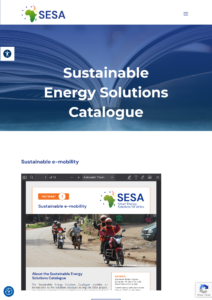
The Sustainable Energy Solutions Catalogue contains a series of briefs to help stakeholders plan, fund and implement projects related to: sustainable e-mobility, productive use of solar energy, second-life lithium-ion batteries, climate proofing sustainable energy solutions, solar mini-grids, the water-energy-food nexus, circularity and sustainable energy, clean cooking, energy efficiency, and e-waste from off-grid solar solutions.
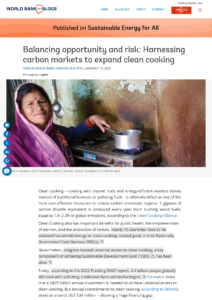
This blog assesses the opportunities of carbon finance to fill financing gaps for clean cooking, and highlights the integrity, reputational and regulatory risks associated with the sale of carbon credits.
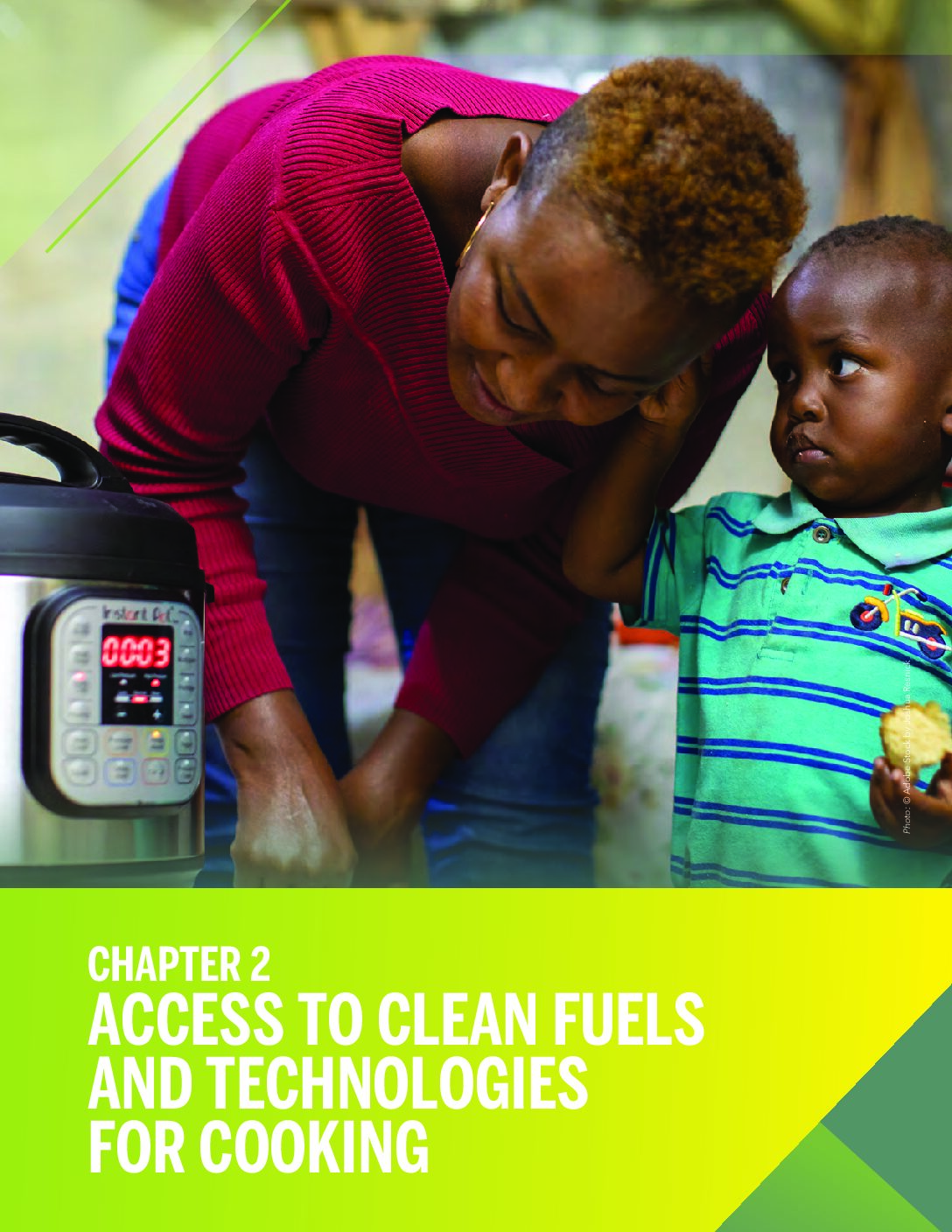
This chapter of the 2024 Tracking SDG 7 report provides an update on progress towards univeral access to clean cooking worldwide.
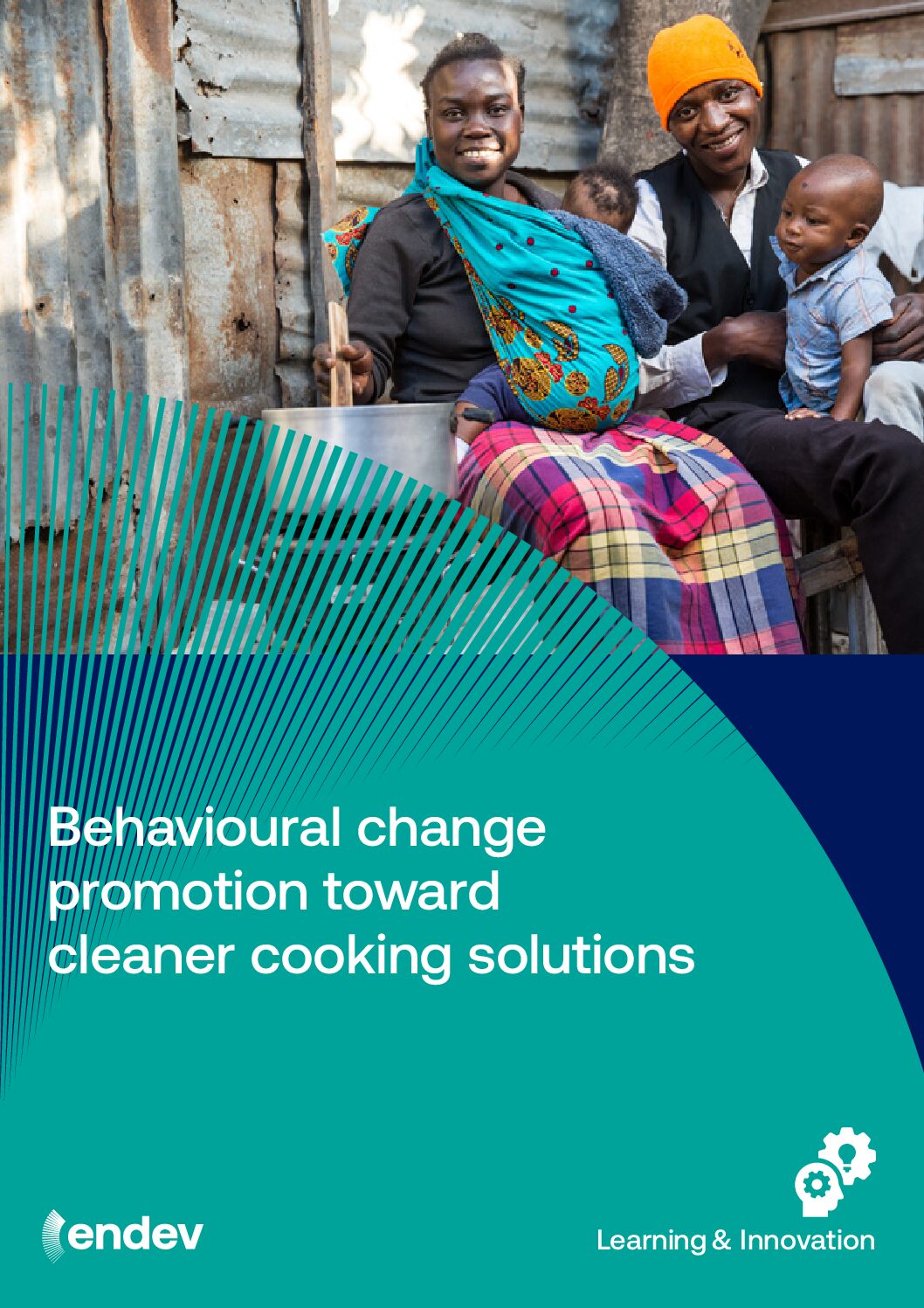
This report provides background information and guidance on the types of behavioural changes needed to advance access to clean cooking, and ways to promote these changes.
This blog and inforgraphic present the results of a World Bank study on the decision-making journey towards adopting and using clean cooking solutions in Rwanda, Madagascar and Ghana.
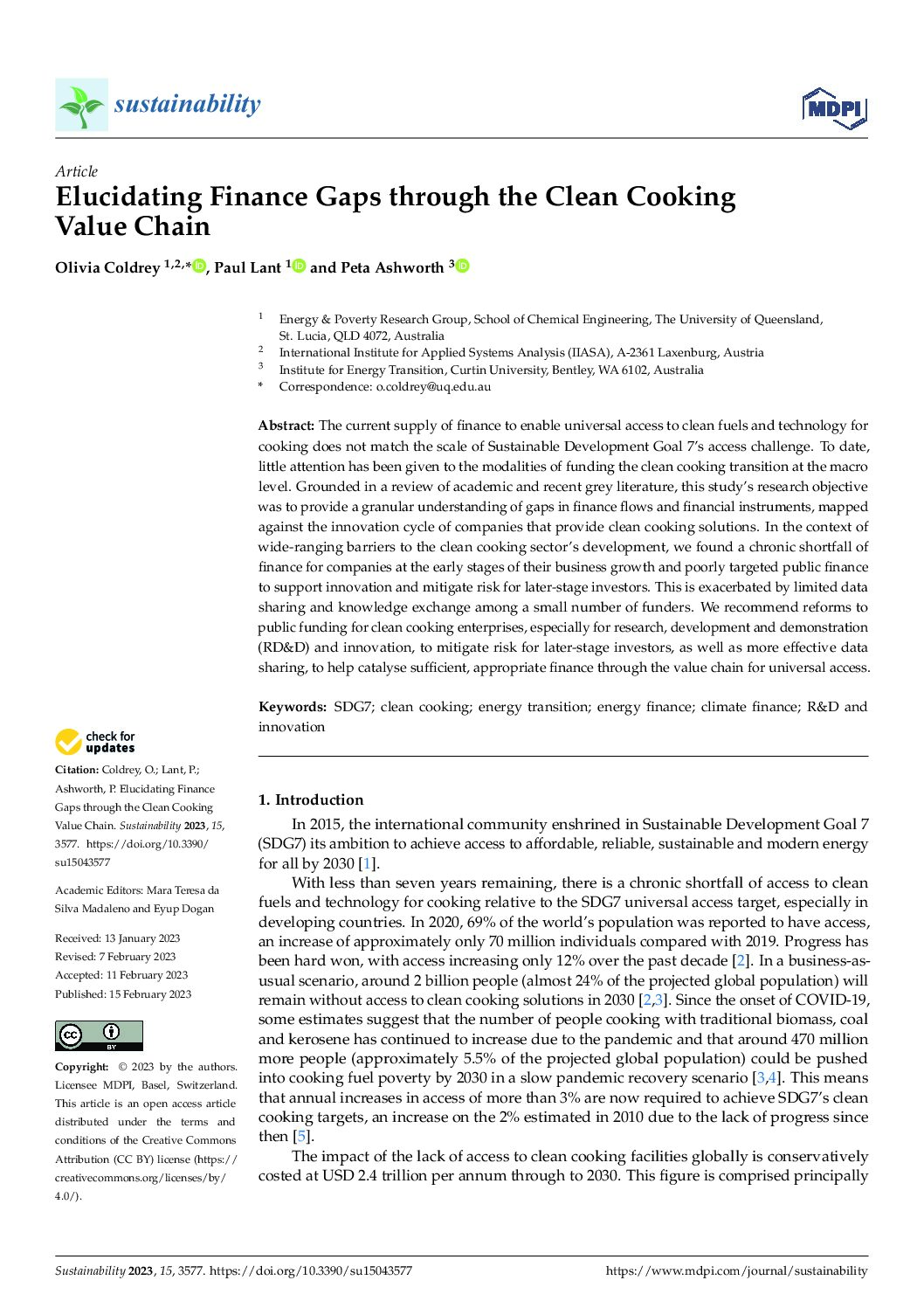
This study identifies gaps in clean cooking financing and recommends reforms to public funding for clean cooking enterprises, especially for research, development and demonstration (RD&D) and innovation, to mitigate risk for later-stage investors, as well as more effective data sharing.
This document introduces measurement, reporting, and verification (MRV) approaches and recommendations as they apply to cooking energy interventions. It is intended for any professional involved in the planning, execution, or funding of clean cooking energy programs and projects that aim to reduce climate-harming emissions.
This report takes stock of the status of the voluntary carbon market for clean cooking, and identifies current trends influencing its likely direction in the next five years.
This page presents all relevant materials for the adoption of a multi-dimensional framework to assess and monitor gender equality, equity and women’s empowerment in modern energy cooking services (MECS).
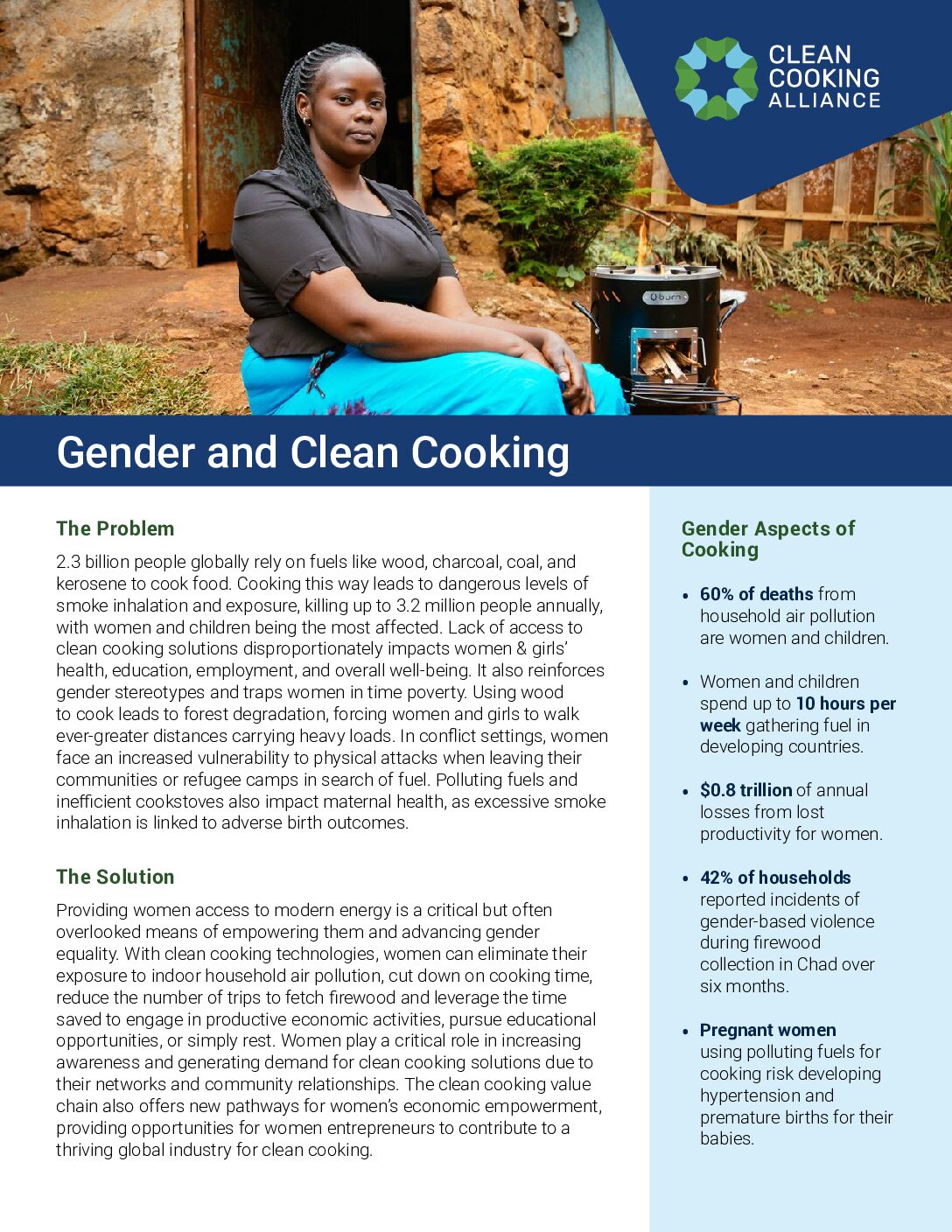
This two-pager introduces the nexus between clean cooking and gender equality.