
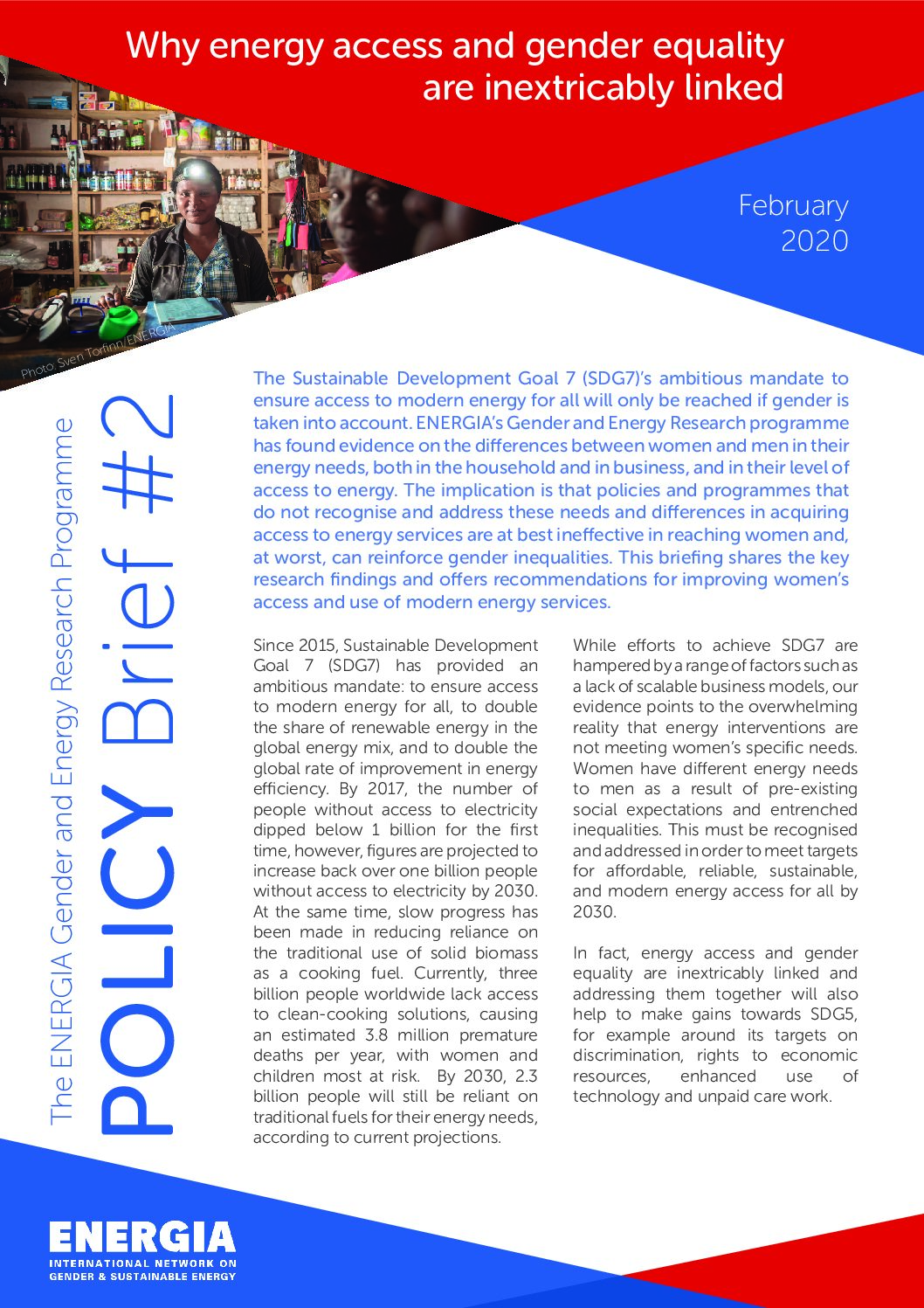
This policy brief explains the links between energy access and gender equality, and provides policy considerations.
This report provides baseline data on women’s employment in renewable energy, as well as information on barriers to gender equality and recommendations to close gender gaps.
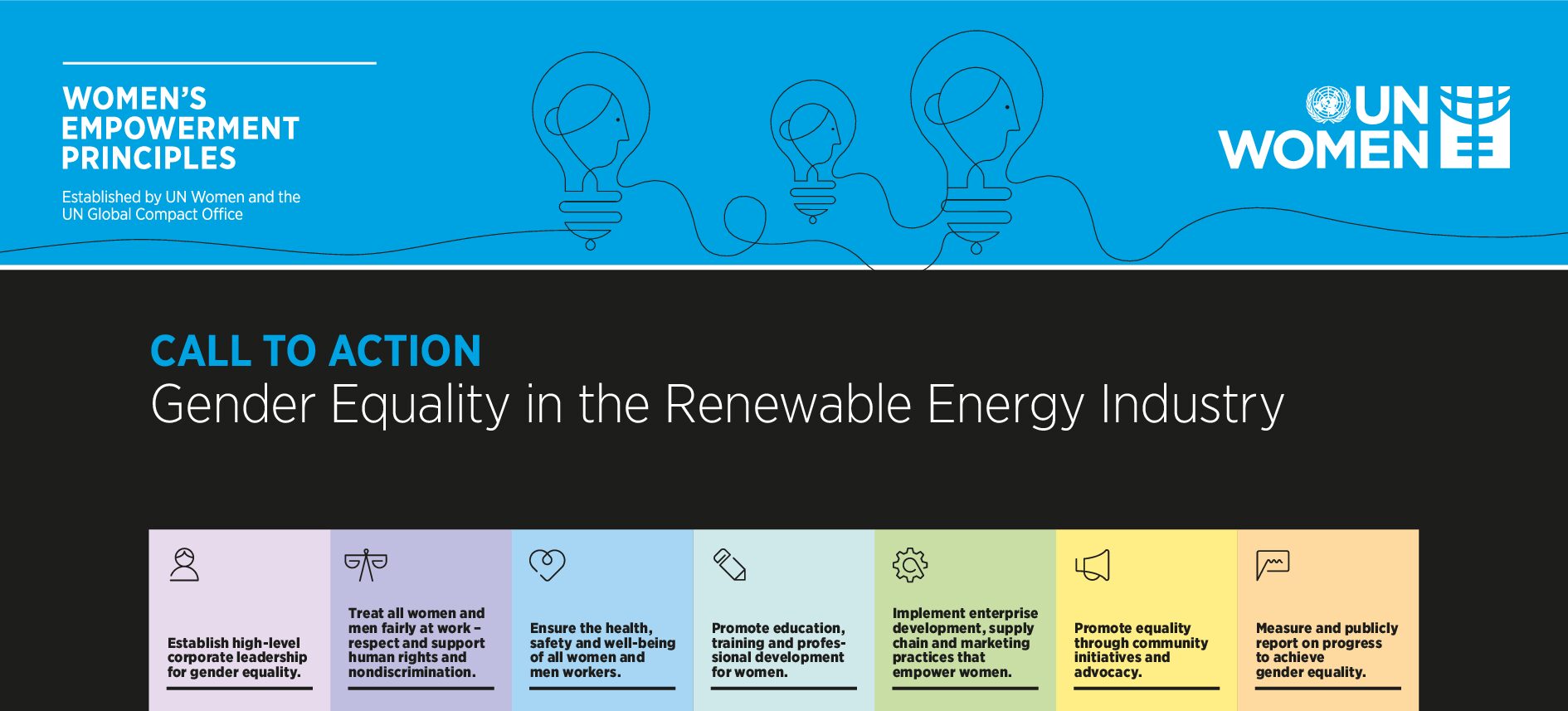
This UN Women brief explains why and how gender equality should be promoted in the renewable energy industry.
This report shares good practices in advancing women’s economic empowerment in the workplace, the marketplace and the community.
This report provides concrete instructions on how to develop a gender-sensitive energy policy.
This report provides concrete instructions on how to develop gender-responsive energy projects.
Institutions all over the world are setting up microcredentials in responses to calls from governments and industry: short courses, usually offered online by accredited institutions, with an emphasis on the needs of the workplace. They are also often used for retraining and upskilling. This book explains how to start offering microcredentials as an academic institution.
This guide aims to accelerate the flexibility and responsiveness of learning systems by providing guidance on the design, issue and recognition of micro-credentials.
This paper presents a value chain approach to identify priority areas for developing national hydrogen strategies, focussing on emerging and developing economies.
This paper focuses on strategies, policies, and programs that industry and government can develop to ensure that supply chains for EVs and their batteries are secure, circular, and reduce the need for mining virgin minerals, thus reducing adverse impacts on the planet and its people.