
This report provides baseline data on women’s employment in renewable energy, as well as information on barriers to gender equality and recommendations to close gender gaps.
This policy brief explains the links between energy access and gender equality, and provides policy considerations.
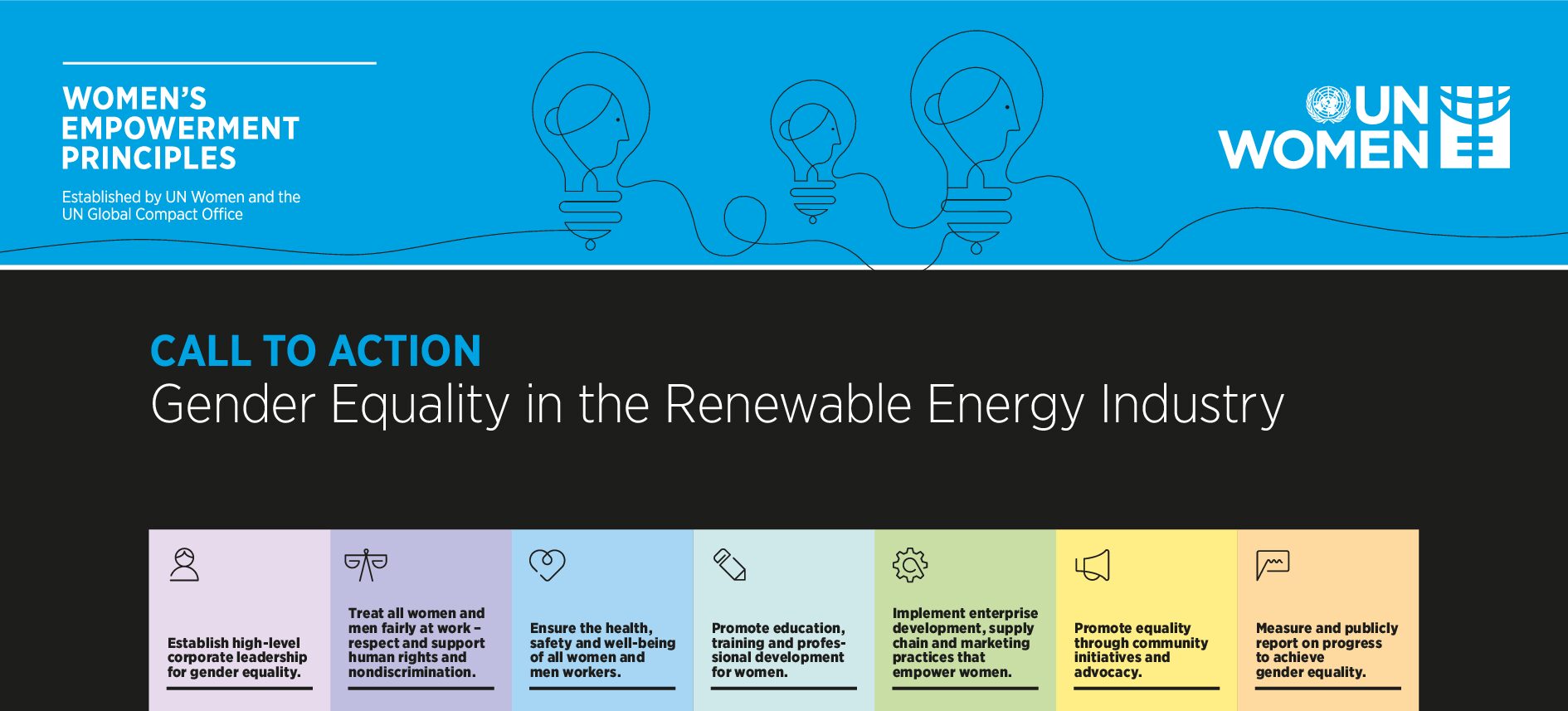
This UN Women brief explains why and how gender equality should be promoted in the renewable energy industry.
This report shares good practices in advancing women’s economic empowerment in the workplace, the marketplace and the community.
This report provides concrete instructions on how to develop a gender-sensitive energy policy.
This report provides concrete instructions on how to develop gender-responsive energy projects.
This web page highlights the role of buildings in the energy transition (heating, cooling, lighting, etc), and presents data and recommendations.
This report highlights the economic, social and environmental benefits that energy and transport sector-coupling and a transition towards EV- and RE-based, efficient systems can create in small island settings, and provides tools for the planning of such a transition.
This paper explains how minimum energy performance standards for buildings can be implemented effectively while remaining socially just, using a differentiated approach that carefully follows a series of design principles.
This guidance note outlines how cities can tap into a wide array of proven technologies, policies, and financing mechanisms to improve energy efficiency and capture cost-effective energy savings in buildings.