
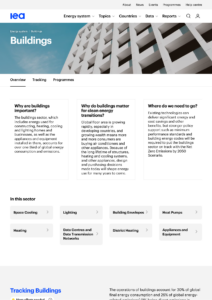
This web page highlights the role of buildings in the energy transition (heating, cooling, lighting, etc), and presents data and recommendations.
This report identifies the main risks and barriers limiting investment in the energy transition, supplying a toolkit for policy makers, public and private investors, and public finance institutions to scale up their investments in renewable energy.
This journal article describes risks and mitigation strategies in renewable energy investment.
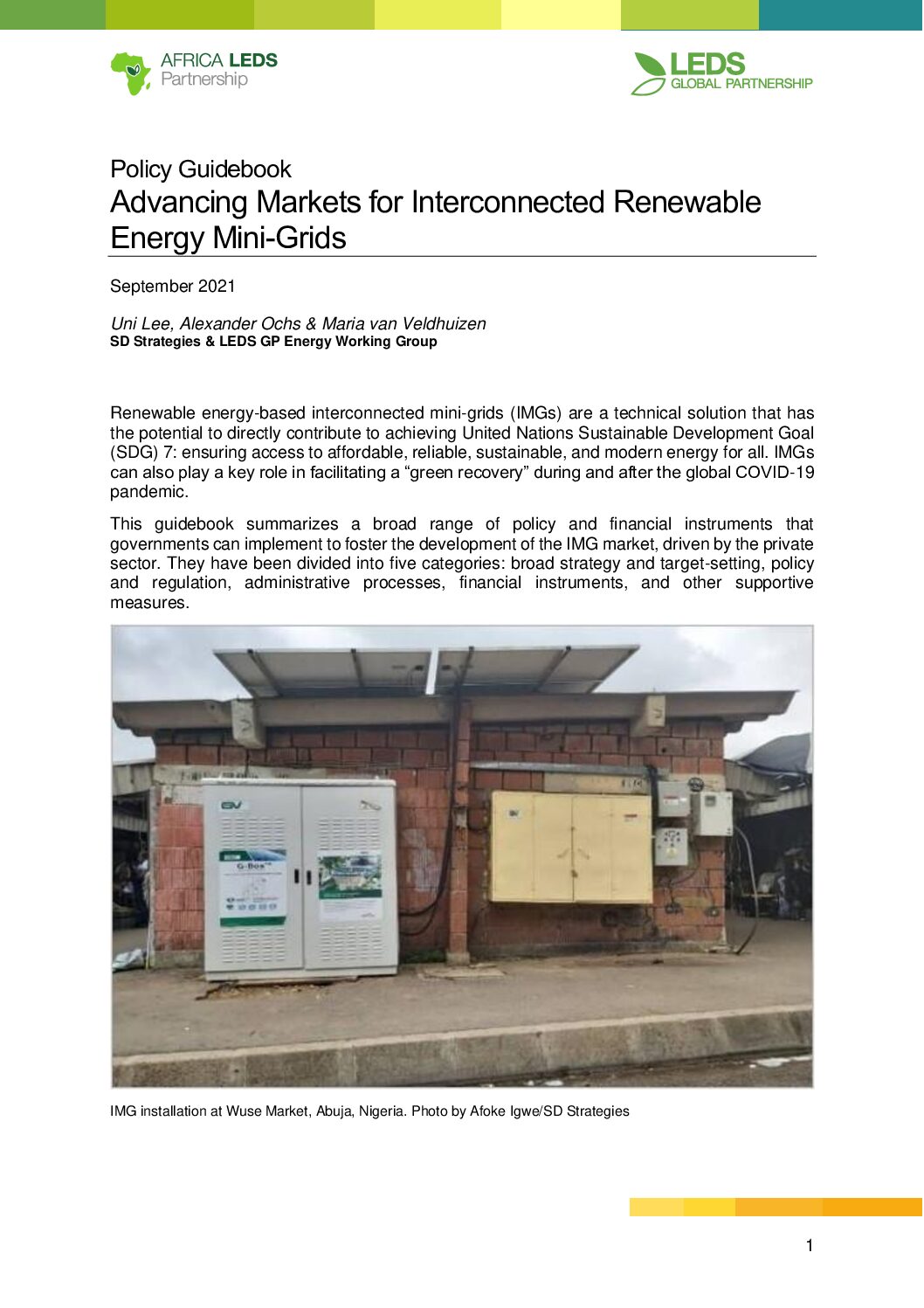
This guidebook summarizes a broad range of policy and financial instruments that governments can implement to foster the development of the interconnected mini-grid market, driven by the private sector.
Derisking Renewable Energy Investment (DREI) introduces an innovative, quantitative framework to assist policymakers in developing countries to cost-effectively promote and scale-up private sector investment in renewable energy.
This paper provides general guidelines for conducting Environmental Impact Assessments for waste-to-energy projects.
This paper gives an overview of waste to energy technologies, discusses barriers to its wider adoption in developing countries, and helps researchers and decision-makers to make informed decisions on the feasibility of WtE as a pathway for sustainable waste management and renewable energy generation.
This article discusses the potential of heat and electricity co-generation from biomass waste to both expand energy access and improve waste management in rural areas.
This page explores the best practice regulatory, fiscal and economic instruments available today to encourage a more efficient/electric vehicle stock.
This page presents quality standards for pico-PV solar kits in various versions and languages.