
The Global Innovation Hub aims to promote transformative innovations for a low-emission and climate-resilient future.
This handbook is provides an overview of the mechanisms and strategy behind successful Power Project Procurements, and provides advice for both governments and the private sector on ways to cooperate succesfully.
This paper shares lessons for donors, policymakers in beneficiary governments, and financial institutions on whether and how best to deploy blended finance in the clean energy sector.
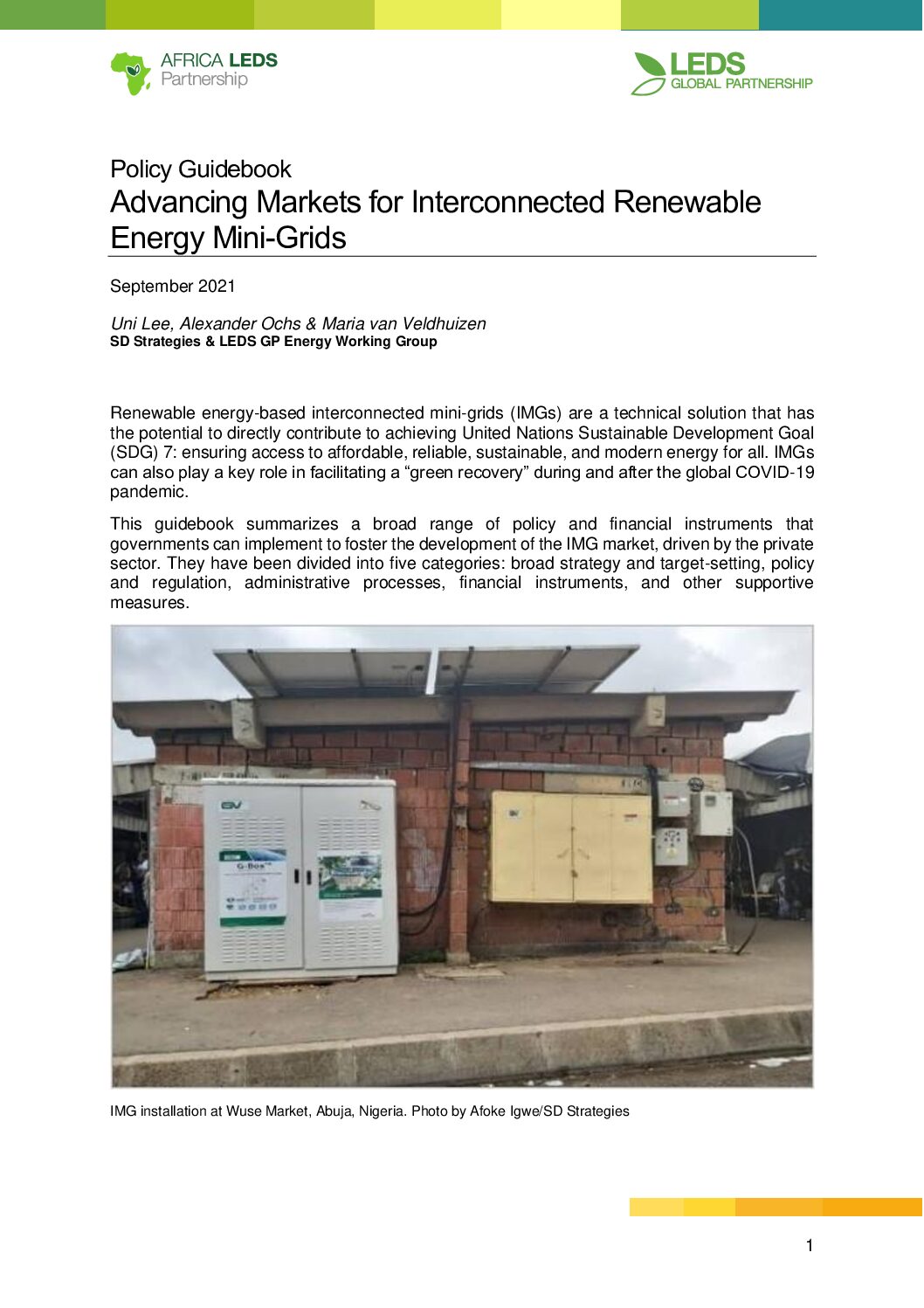
This guidebook summarizes a broad range of policy and financial instruments that governments can implement to foster the development of the interconnected mini-grid market, driven by the private sector.
This report highlights the economic, social and environmental benefits that energy and transport sector-coupling and a transition towards EV- and RE-based, efficient systems can create in small island settings, and provides tools for the planning of such a transition.
Derisking Renewable Energy Investment (DREI) introduces an innovative, quantitative framework to assist policymakers in developing countries to cost-effectively promote and scale-up private sector investment in renewable energy.
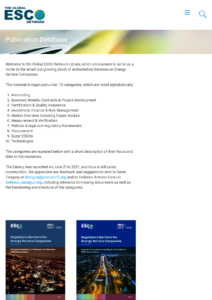
This publication database provides a range of materials about the ESCO business model, on the following topics: Accounting; Business Models, Contracts & Project Development; Certification & Quality Assurance; Investment, Finance & Risk Management; Market Overview, including Cases studies; Measurement & Verification; Policies & legal and regulatory frameworks; Procurement; Super ESCOs; and Technologies
The ESCO Model Contract Library provides a list of ESCO contracts and supporting documents provided by a variety of countries and organisations. In some cases, the resources also provide a wider set of documents related to public procurement of ESCO services.
This report describes regulatory barriers reported by 25 ESCO associations, and offers advice to policymakers to address these barriers.

This report provides perspectives on the potential role of ESCOs in developing and implementing ambitious NDCs.