
This second edition from 2025 provides an update to the landmark report from 2019, based on a new survey of 1192 individuals working in the sector, and 233 companies and organizations. The headline finding was that despite widespread efforts, the share of women in renewable energy has not grown over the past six years: it … Continue reading “Renewable energy: A gender perspective (Second edition)”
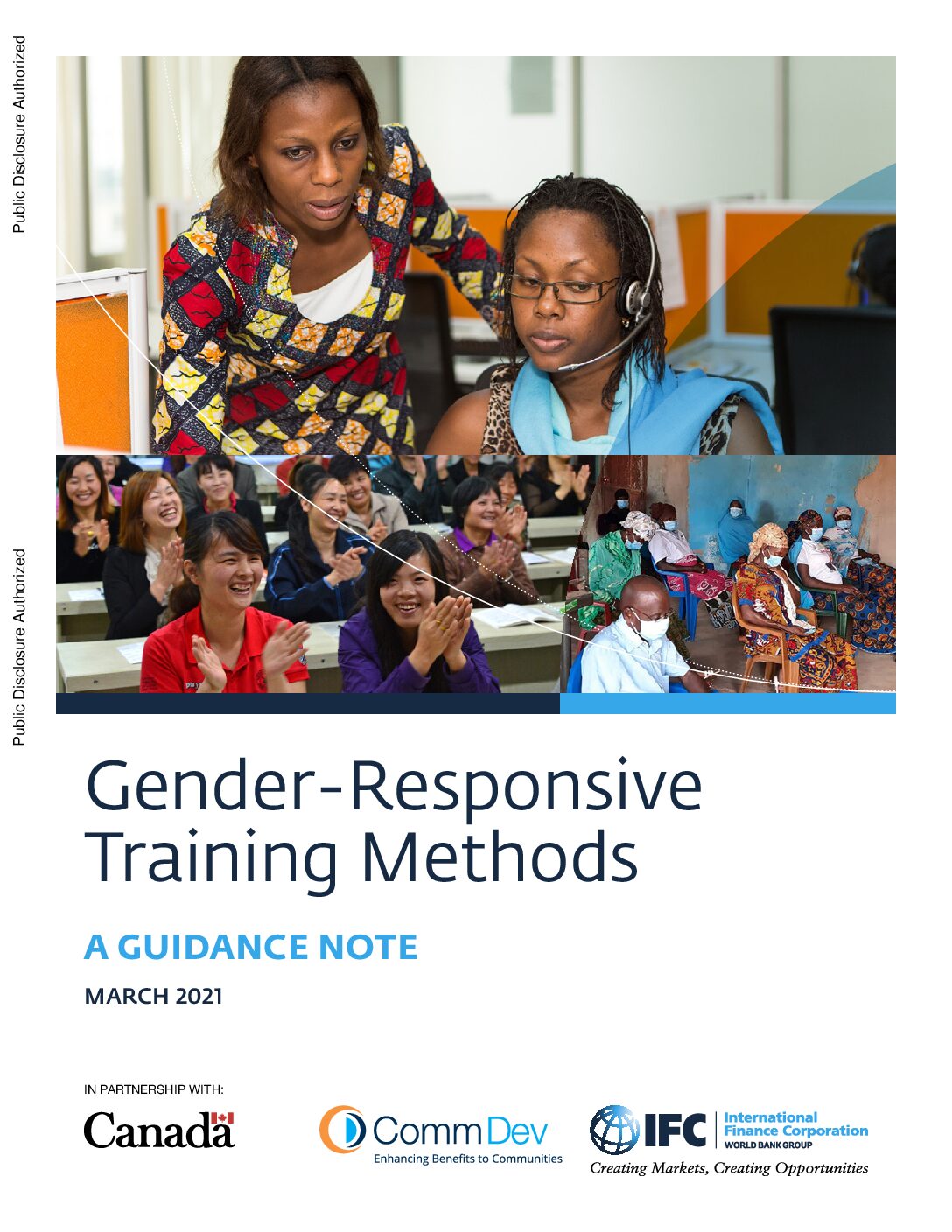
This guidance note provides practical tools and strategies for training providers to design and deliver gender-responsive learning programs, especially within technical and business education contexts. It highlights how gender dynamics, norms, and barriers influence learning outcomes and participation—especially for women and marginalized groups.
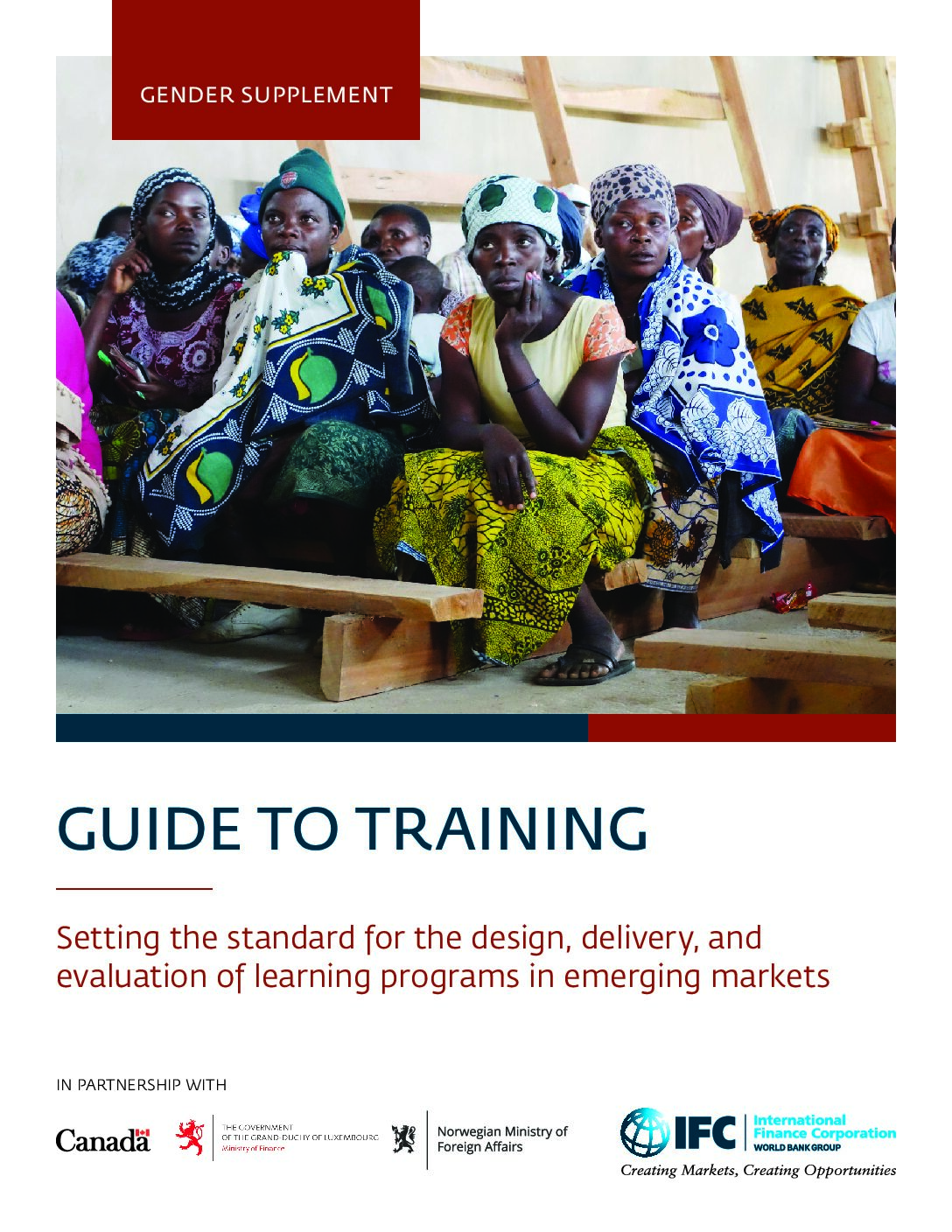
This guide helps practitioners design, implement and evaluate training programmes in a way that enables equal access and provides equal benefits to women and men. It provides tips and approaches based on international good practice and lessons learned from programmes implemented by IFC, the World Bank and other organisations.
This report shares insights and tools to support more inclusive and effective entrepreneurship education and training, especially for people from underrepresented and marginalized groups. It includes a list of assessment criteria to evaluate whether a programme is gender-smart.
This article by ILO’s International Training Centre explains the importance of learning objectives, introduces the competencies framework, and provides a practical guide for writing effective learning objectives.
This factsheet provides some general information about needs analyses and guides learning and development specialists through the process of analysing learning needs in their organisation.
This report presents insights into processes, practices and policies that vocational education and training institutions can adopt to ensure they equip learners with the knowledge, skills and mindsets they need to contribute to just transitions. It is based on experiences collected in the European Training Foundation’s Network of Excellence – a global network of centres … Continue reading “Greening of Vocational Education and Training: Processes, Practices and Policies”
This resource guides trainers in conducting activities on greening TVET. It compiles content from various sources and offers practical strategies tailored for TVET leaders, managers, and instructors. The manual provides a step-by-step approach to help trainers, administrators, and academics lead TVET toward sustainability.
Desisining A CurriculUM or DACUM is a methodology used to analyse jobs and develop training programmes. This training-of-trainers resource guides trainers in planning, preparing, and implementing DACUM Facilitator Training sessions. It supports those involved in occupational analysis and curriculum development, aiming to standardize DACUM practices internationally and help participants become experts in the DACUM process.