
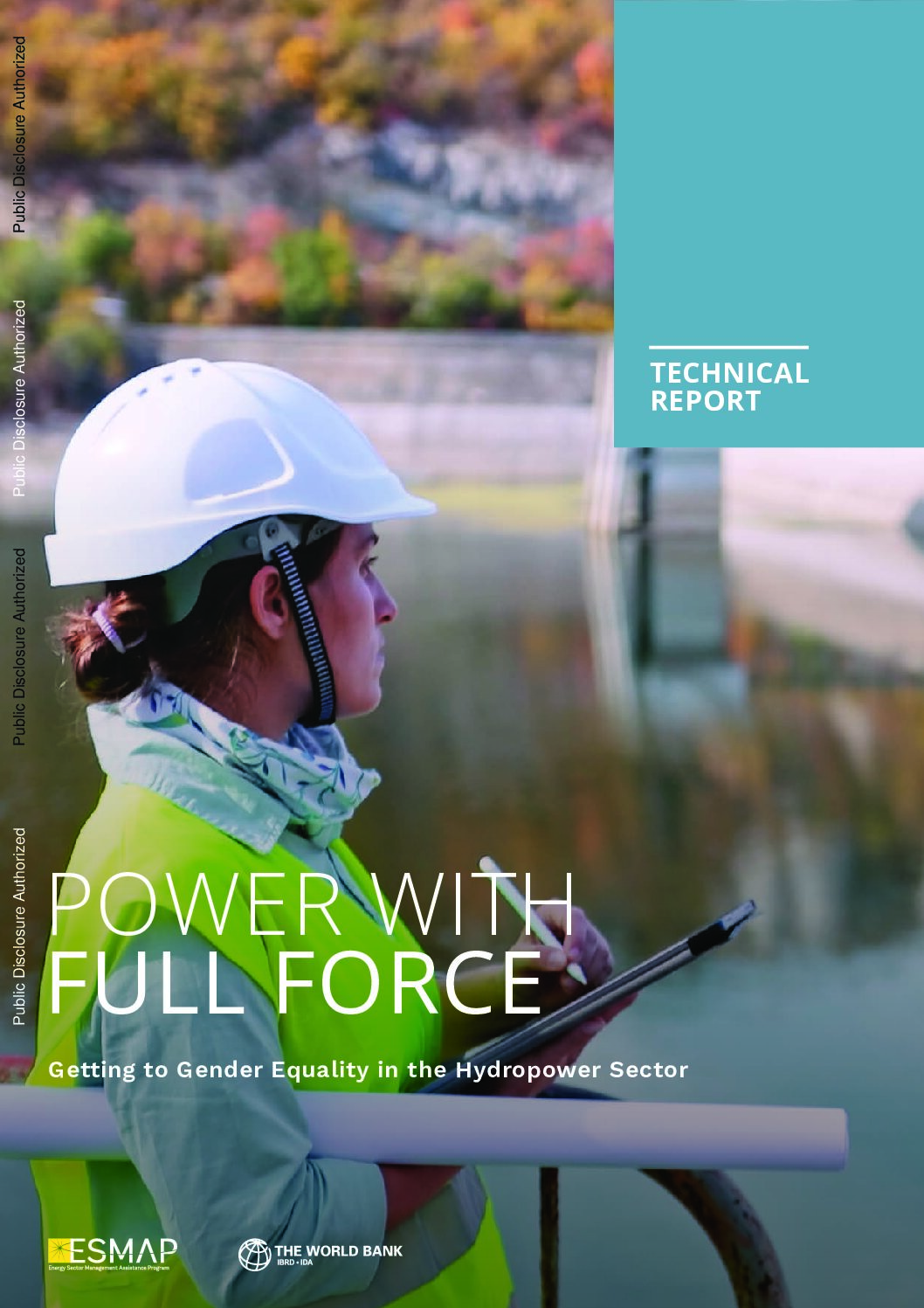
This report provides baseline data on women’s employment in hydropower, as well as information on barriers to gender equality and recommendations to close gender gaps.
This web page highlights the role of buildings in the energy transition (heating, cooling, lighting, etc), and presents data and recommendations.
This web portal provides an extensive introduction into hydropower technology, policy, financing and more.
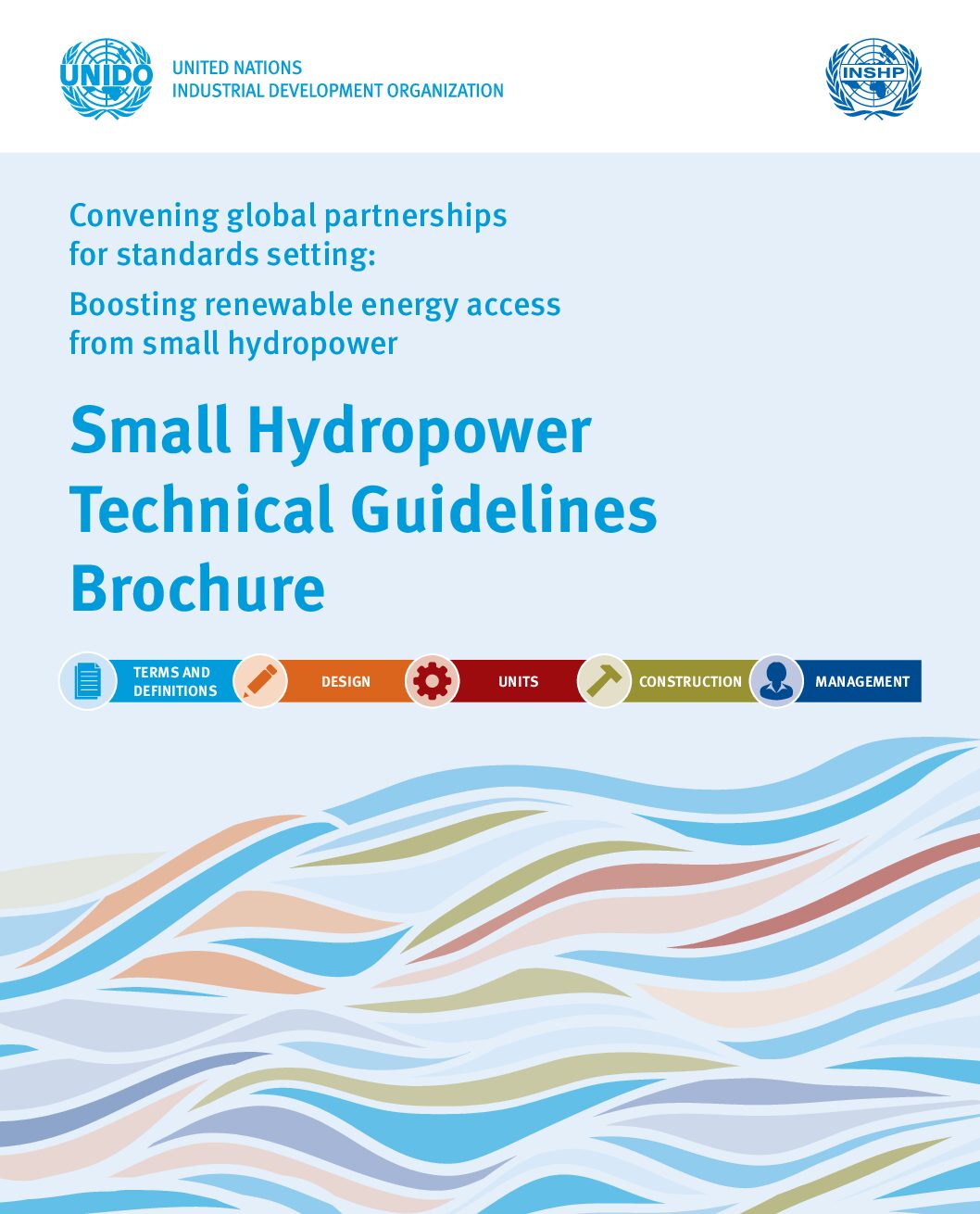
These guidelines aim to support countries to improve their policies, technologies and environmental conditions for the deployment of small hydropower.
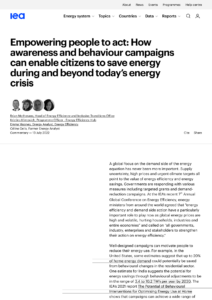
This web page gives advice on public advocacy for energy efficiency, focusing on four concepts: Getting the message right; Getting the message across; Combining information with behavioural insights; and Campaigns for a crisis context.
This paper explains how minimum energy performance standards for buildings can be implemented effectively while remaining socially just, using a differentiated approach that carefully follows a series of design principles.
This guidance note outlines how cities can tap into a wide array of proven technologies, policies, and financing mechanisms to improve energy efficiency and capture cost-effective energy savings in buildings.
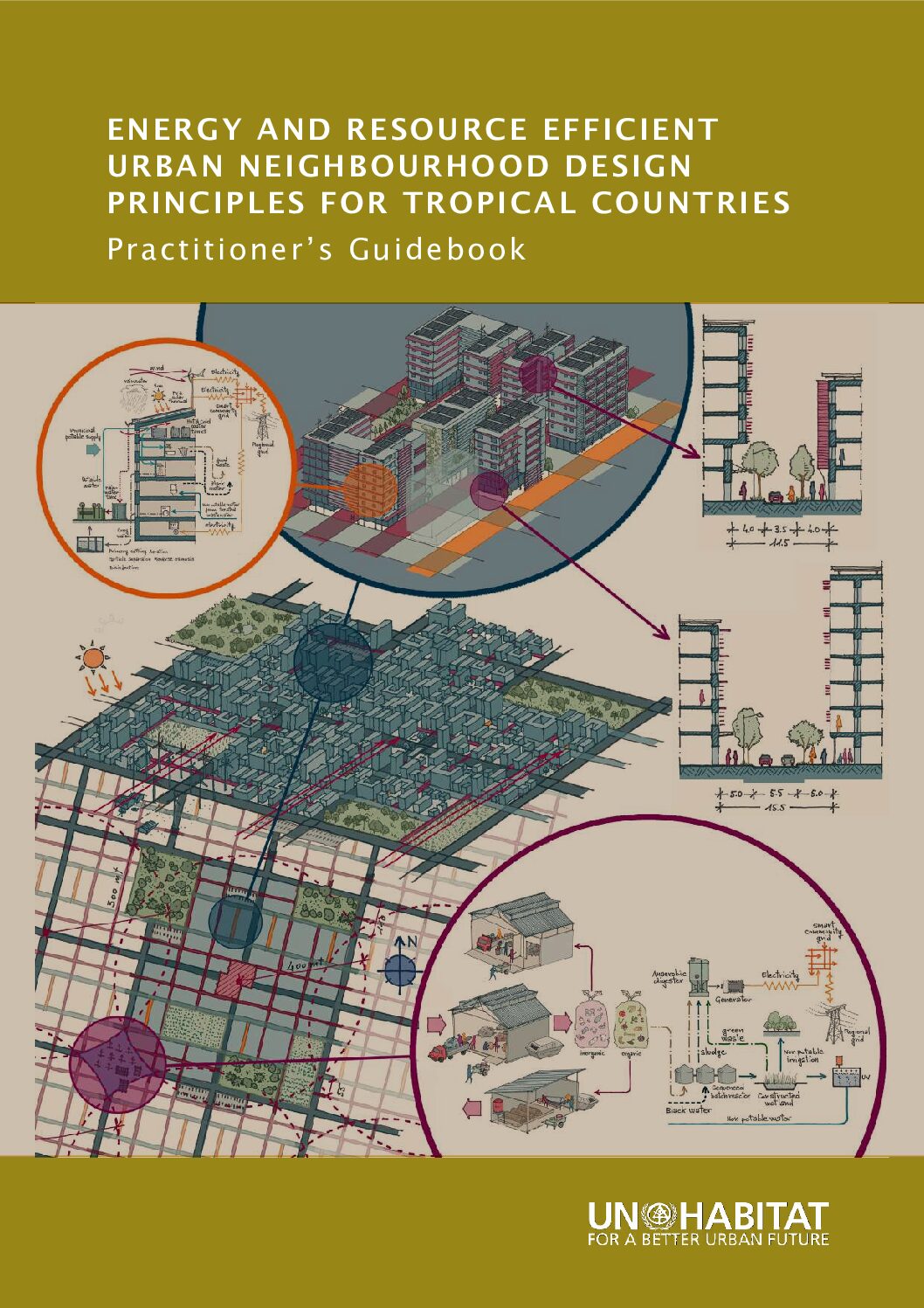
This guidebook helps practitioners adopt a holistic approach to sustainable neighbourhood design, integrating the design of efficient energy, water, wastewater and solid waste systems, and low energy mobility.

This report helps policymakers develop building codes and regulations that promote the construction of green buildings.
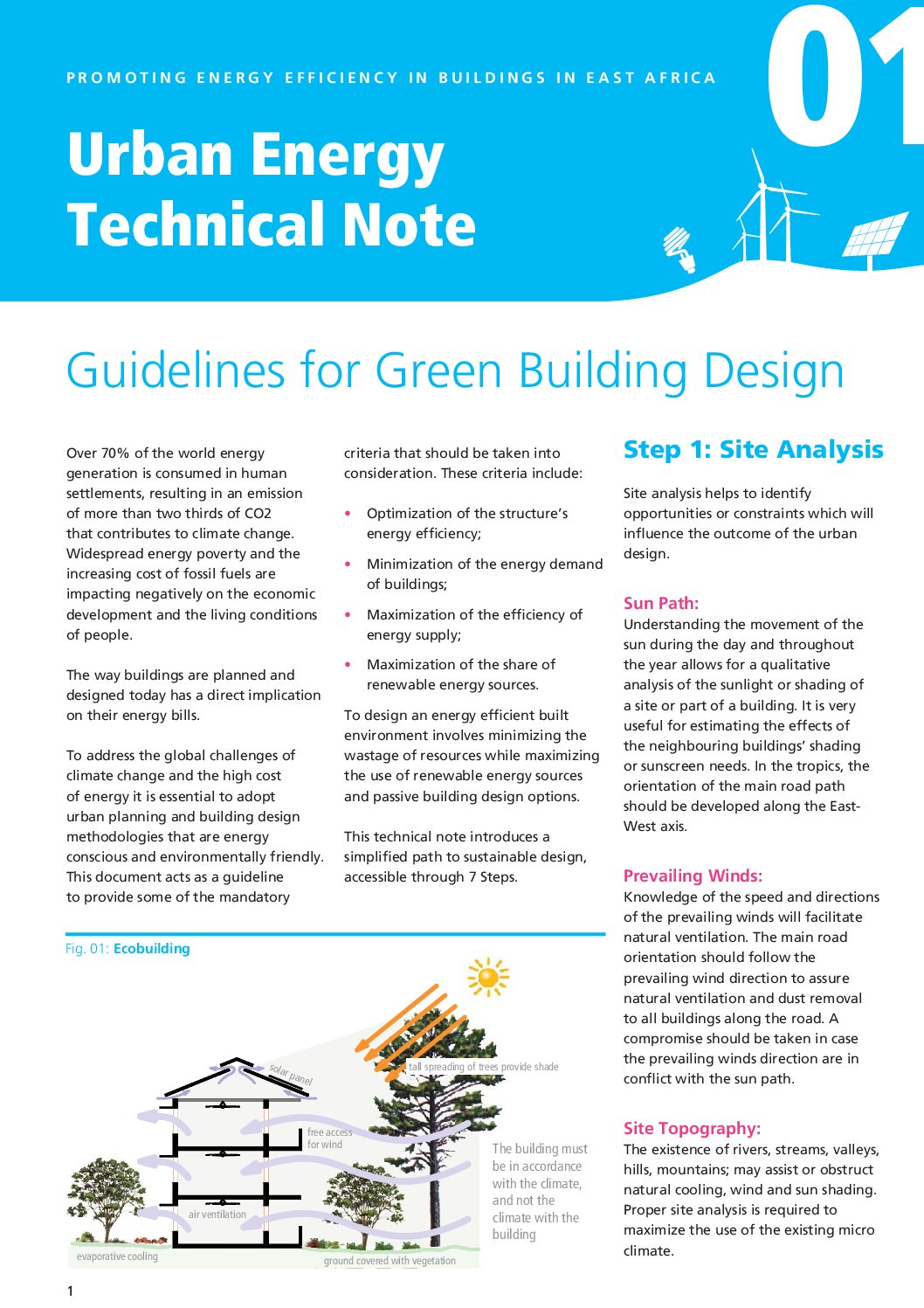
This technical note introduces a simplified path to sustainable design in seven steps: site analysis, site plan, building design, energy, water, solid waste and agriculture.