
The Global Innovation Hub aims to promote transformative innovations for a low-emission and climate-resilient future.
This article provides an introduction to ESG and its relevance to the energy transition.
This report identifies the main risks and barriers limiting investment in the energy transition, supplying a toolkit for policy makers, public and private investors, and public finance institutions to scale up their investments in renewable energy.
This journal article describes risks and mitigation strategies in renewable energy investment.
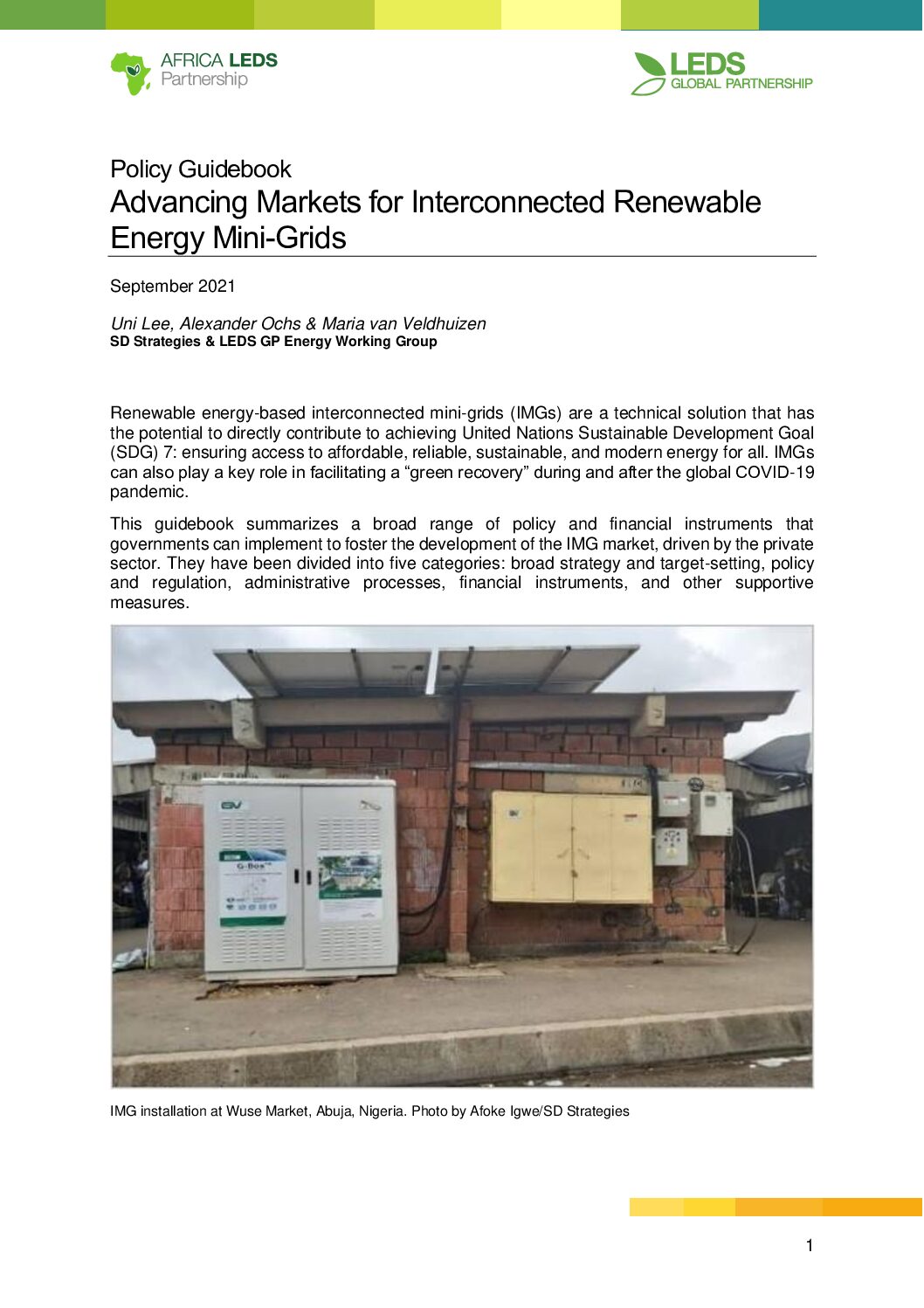
This guidebook summarizes a broad range of policy and financial instruments that governments can implement to foster the development of the interconnected mini-grid market, driven by the private sector.
Derisking Renewable Energy Investment (DREI) introduces an innovative, quantitative framework to assist policymakers in developing countries to cost-effectively promote and scale-up private sector investment in renewable energy.
This paper provides general guidelines for conducting Environmental Impact Assessments for waste-to-energy projects.
This article explores how system planning, and in particular assessments of system adequacy, will need to innovate and evolve to allow power systems to keep delivering secure and affordable electricity supply during energy transitions.
This report looks at the mineral demand for a net-zero emissions energy system, focusing on seven critical minerals and discussing the role of technological choices, circular economy strategies, and responsible mining in reducing the environmental impact of the transition.

This report investigates the potential to develop circular supply chains for EV batteries.