
Specialising in action research, technical support and assistance for local initiatives, A.V.E.S aims to combat poverty by improving basic social services and sound environmental management through voluntary and charitable work. AVES works on programs whose objectives are to (i) contribute to improving the living conditions of disadvantaged, marginalised and most vulnerable populations by giving them … Continue reading “AVES (Association des Volontaires pour l’Environnement Sain)”
The University of Bahri, though a recent addition to the set of Sudanese universities, is a university that inherited rooted traditions from its predecessors of Juba, Upper Nile, Bahr El Ghazal and Rumbeik universities. The University of Bahri was officially inaugurated in July 2011. Due to the political strive that ensued in Sudan through 1983 … Continue reading “University of Bahri”
This is a brief news article that explains the key context and opportunities for African countries to benefit from their critical minerals deposits.
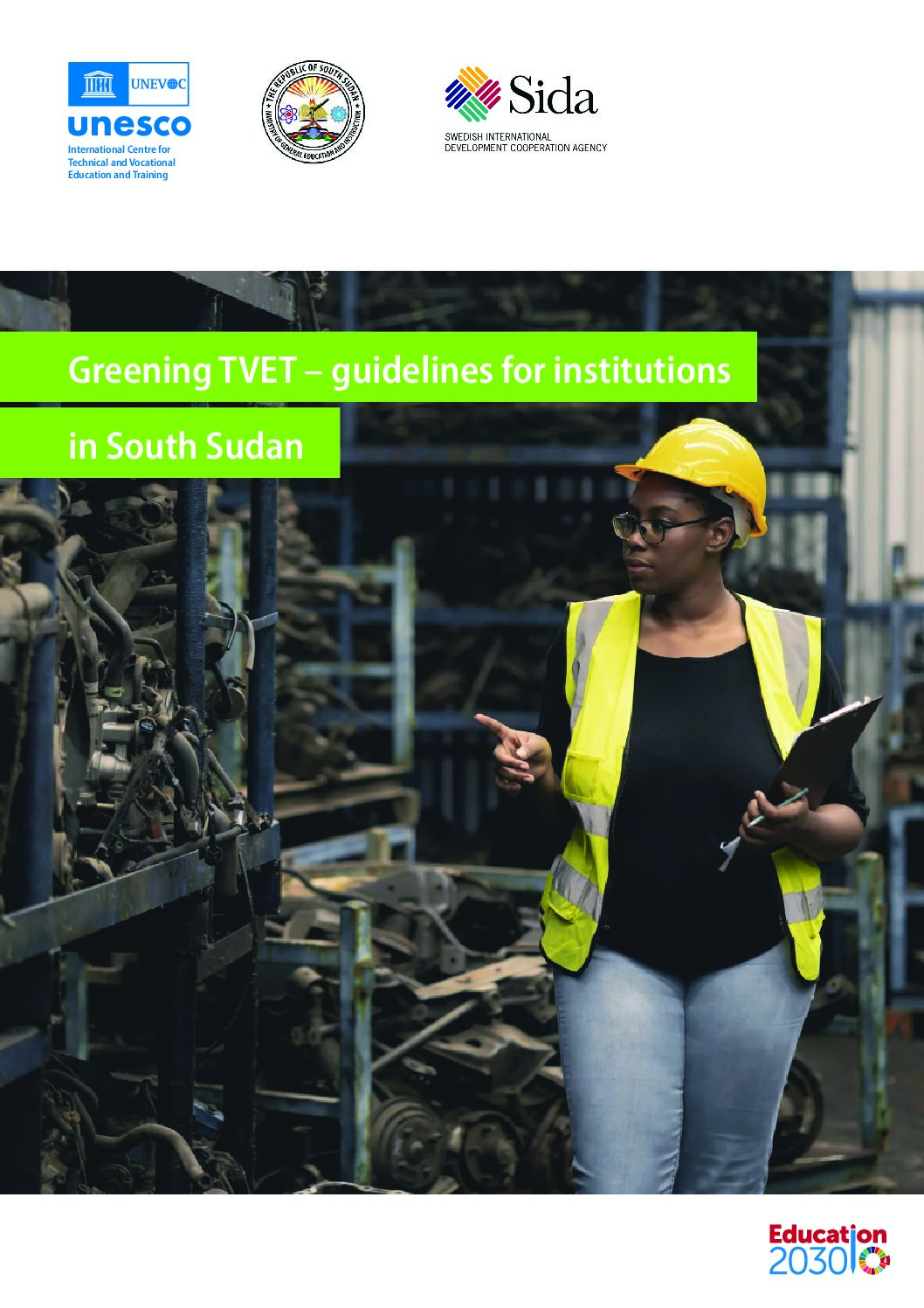
These Greening TVET guidelines provide a comprehensive framework to promote sustainable development within TVET institutions. By showing how to embed environmental sustainability and gender equity into institutional practices, the guidelines aim to equip TVET institutions with the tools needed to foster a green economy.

AJEC est une association dédiée à mobiliser les jeunes environnementalistes et amoureux (ses) de l’environnement autour des différents enjeux environnementaux de l’heure pour mener les actions visant à protéger la planète et à préserver la vie.
This article provides a summary of a webinar in which experts discussed how trade policies can boost renewable energy manufacturing in Africa and other regions of the Global South.
This article announces the adoption of harmonised minimum energy performance standards for air conditioners and refrigerators in the 16 member countries of the Southern African Development Community (SADC). It also explains the process by which these harmonised standards were developed and adopted.
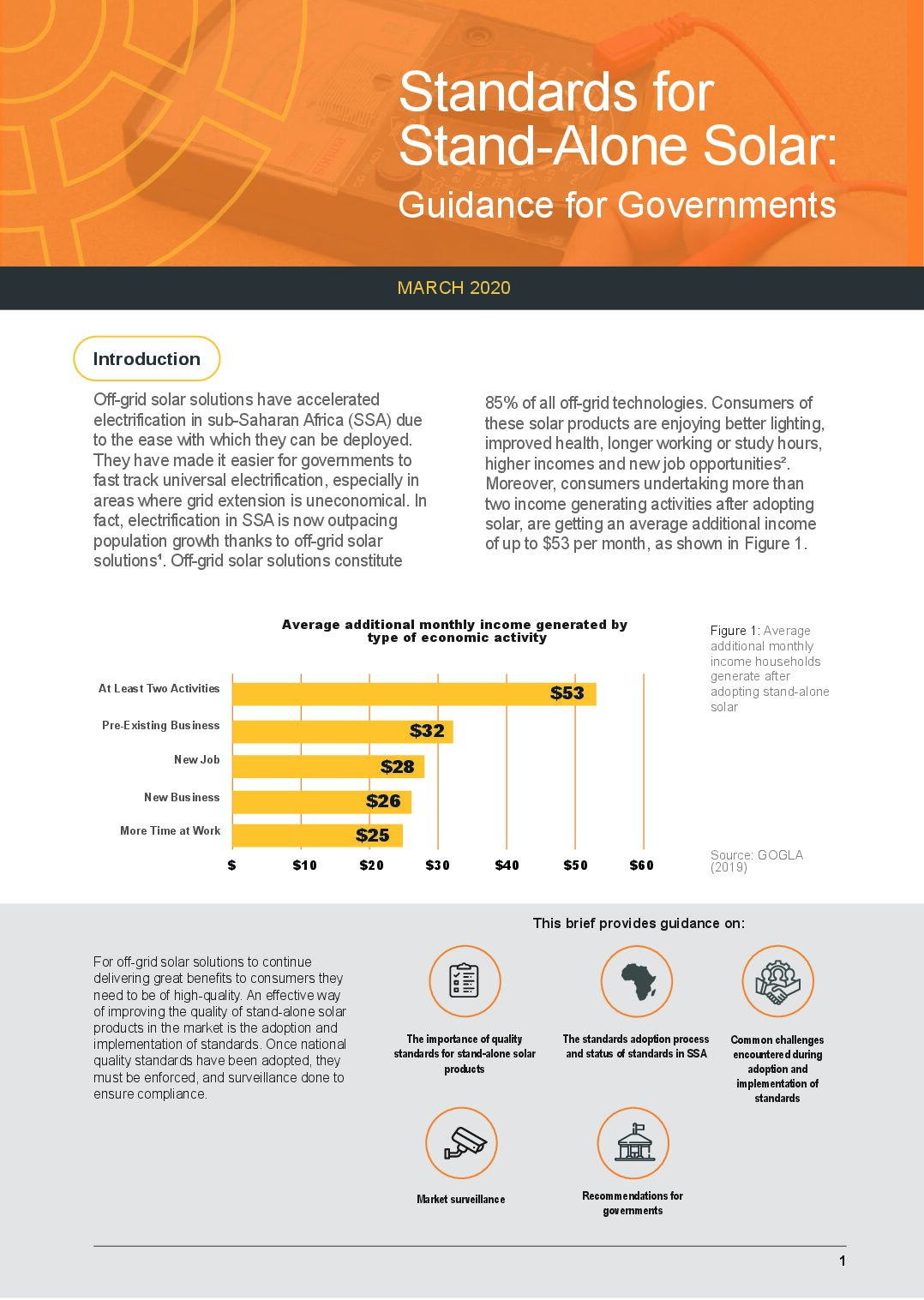
This policy brief provides guidance on the importance of quality standards for stand-alone solar products; how to develop and adopt standards, and the current status in Africa; common challenges encountered in this process; and market surveillance; as well as recommendations for governments.
This is an example of an energy transition roadmap for Uganda. It explores different renewable energy scenarios and identifies the actions, investments and policies that are required to make these reality.
This brief provides an overview and a lot of data and visuals on skills gaps and challenges for Africa’s e-mobility transition. It also suggests possible solutions with respective advantages and disadvantages.